Part of a $100 bill (Benjamin Franklin’s eye) peeks through a sheet of paper with a hole cut in it.

Finding Unclaimed Money From the Government

About one in seven Americans has unclaimed funds lurking somewhere. In fact, there’s an estimated $70 billion in unclaimed assets in the United States. Typically, the amounts people receive when retrieving this money can be small (say, $20) or, in rare cases, it can be a significant amount of six figures or higher.

States typically manage these funds, which can come from forgotten bank accounts, pensions, insurance benefits, wages, savings bonds, and other sources.

If you’re wondering whether there’s any money out there that belongs to you, read on. This guide will walk you through where unclaimed money may be hiding and how to claim it.

Key Points

•  About 1 in 7 Americans have unclaimed funds, totaling approximately $70 billion in assets.

•  Searching state databases for unclaimed property is one route to find funds.

•  Check for unpaid wages and pensions, and look for unclaimed tax refunds.

•  Research can also help identify insurance funds which may be due you.

•  Unclaimed funds may also be found by investigating closed bank accounts.

How to Find Unclaimed Money 5 Ways

Money usually remains unclaimed because owners have no idea it exists. That’s why it may be worth searching for unclaimed funds in your name just in case. You might be due some cash that you could sock away in your savings or checking account. So how do you go about it? Unfortunately, there’s no single place you can look for all potential unclaimed cash. It may take some work, but here are some steps you can take to help make sure you’re claiming everything that’s yours.

1. Searching State Databases

A good first step may be to hunt for unclaimed funds at the state level. Each state has an office that oversees unclaimed property, typically housed in the state treasurer’s, controller’s, or comptroller’s office. You can link to your state by visiting the website unclaimed.org, which is run by the National Association of Unclaimed Property Administrators.

Don’t forget to search your name in the database of each state where you have lived, not just the one where you live now. Make sure that you are searching the official state site (it should have .gov in the URL) to avoid scams. If you are married and changed your name, you may want to consider searching under your maiden name too.

You can continue your search by checking MissingMoney.com, which offers a multi-state database endorsed by the National Association of Unclaimed Property Administrators.

All of these searches are free to complete. If someone asks you for money to complete a search, that’s a red flag. There’s no reason to pay to access money that’s yours, unless there is a small processing fee.

If you happen to find unclaimed property, each state has its own process for proving that you’re the true owner and getting your hands on the cash. Many states allow you to file a claim electronically.

Usually you need to provide some kind of official documents to prove that you’re the person named as the owner. Luckily, there is typically no time limit for claiming the money. If the owner has died, you can often claim funds from a deceased relative. You can typically file a claim if you’re an heir, trustee, or executor of the estate.

2. Looking for Unpaid Wages and Pensions

Here’s another possibility in terms of how to find unclaimed funds: Hunt for back pay. If your employer owes you back wages, you can search the Department of Labor’s database. Start by inputting the name of the employer. You typically have to move quickly in this case, since the agency only keeps unpaid wages for three years.

You can also look for pensions from a former employer. Pension funds may be unclaimed if a company closed its doors or ended a particular pension plan. You can look for funds through the website of the Pension Benefit Guaranty Corporation, which is a government agency.

3. Checking for Unclaimed Tax Refunds

If you think you may have failed to receive a tax refund at some point, you can track that down through the Internal Revenue Service’s website. Keep in mind that you will need to know the exact refund amount in order to conduct the search.

4. Searching for Insurance Funds

Many insurance companies transfer unclaimed funds to states, but a couple of federal government agencies maintain their own unclaimed funds databases. The U.S. Department of Veterans Affairs holds onto unclaimed VA life insurance funds for most policyholders and, if they’re deceased, their beneficiaries.

People who had mortgages insured by the Federal Housing Administration can check for potential unclaimed refunds on the website of the U.S. Department of Housing and Urban Development.

5. Finding Closed Bank Accounts

You may also want to see if you have any money that is in a lost bank account or one that was held at a now-closed bank. It’s a very rare occurrence, but bank failures do occasionally happen. If you believe you had funds in one that you never received, you can contact the FDIC Claims Depositor Services at 877-275-3342.

Increase your savings
with a limited-time APY boost.*


*Earn up to 4.00% Annual Percentage Yield (APY) on SoFi Savings with a 0.70% APY Boost (added to the 3.30% APY as of 12/23/25) for up to 6 months. Open a new SoFi Checking and Savings account and pay the $10 SoFi Plus subscription every 30 days OR receive eligible direct deposits OR qualifying deposits of $5,000 every 31 days by 3/30/26. Rates variable, subject to change. Terms apply here. SoFi Bank, N.A. Member FDIC.

Being Aware of Scams

Where there’s unclaimed money, there are bound to be con artists trying to take advantage of it. Some companies may offer to help you find unclaimed funds and recover the money for a percentage of the amount owed you. Be cautious: These can be scams. Paying these fees is pointless, since you can search for unclaimed property and reclaim it for free (or perhaps for a small processing fee to the state).

The IRS recently warned of another kind of unclaimed money scam, in which a letter arrives, claiming to be from the government, alerting you to a refund you have not yet accessed. This fraudulent communication then says that your banking details are needed to receive the money. If you send that sensitive information, you could end up losing money and having your accounts compromised.

Using Your Unclaimed Money

If you happen to be one of the lucky people who finds cash waiting for them, what should you do with it? You may be tempted to blow the surprise windfall on those new shoes you’ve been eyeing or on a dream vacation.

But depending on the sum you receive and your financial situation, there may be smarter ways to put the unexpected money to use. Consider these possibilities.

Paying Off Debt

If you have high-interest debt, many people suggest putting much of your extra cash toward knocking it out. That’s because interest rates can cause a balance to balloon significantly over time, meaning the longer you wait to pay off your high-interest debt, the more you’ll likely pay overall.

Credit cards and payday loans tend to have high interest rates, but you may also want to check the rate you’re paying on your student loans, car loan, personal loan, or mortgage. One method for potentially paying off your debt faster is to tackle your highest-interest debt first, while staying on top of minimum payments for your other liabilities.

Building an Emergency Fund

Once you’re on top of your debt or at least the highest-interest liabilities, it may be a good idea to establish or pump up an emergency fund.

Financial experts suggest having enough saved to cover three to six months’ worth of living expenses.

It may be a good idea to keep this money in a safe place, like a high-interest savings account, for unexpected emergencies such as car repairs, medical bills, or a layoff. Having an emergency fund may help you avoid getting into high-interest debt in the future since you have that cash cushion to see you through challenging times. And an emergency fund calculator can help you do the math to figure out how much money to save each.

Saving for a Goal

Once you have a basic emergency fund, you may want to start setting aside money to get closer to a big financial goal. Maybe you want to have a wedding, travel, start a business, or buy a home.

Saving in advance means you may need to take out less in loans or pay less in credit card charges. Or you might be able to avoid them altogether, keeping more of your money in your pocket.

Investing for the Future

Another option is to invest your money in an individual retirement account, college savings plan, brokerage account, or another financial vehicle.

Investing your money for the long-term could allow you to take advantage of the power of compounding returns and potentially increase your chances of reaping solid growth over time. It can be tempting to spend your lucky find on short-term fun, but investing may set you up for financial freedom in the future.

Recommended: Weird Ways to Make Money

The Takeaway

How do you find unclaimed funds? Typically, it involves searching on websites to see what pops up. These are usually specific to the kind of money that is sitting unclaimed, whether that means going searching for tax refunds, the contents of closed bank accounts, back wages, or insurance payments.

Whether it’s deciding what to do with reclaimed cash, if you’re owed any, or figuring out how to afford a big goal, life poses plenty of personal finance challenges. Finding the right financial partner can be an important step in making your money work harder for you.

Interested in opening an online bank account? When you sign up for a SoFi Checking and Savings account with eligible direct deposit, you’ll get a competitive annual percentage yield (APY), pay zero account fees, and enjoy an array of rewards, such as access to the Allpoint Network of 55,000+ fee-free ATMs globally. Qualifying accounts can even access their paycheck up to two days early.


Better banking is here with SoFi, NerdWallet’s 2024 winner for Best Checking Account Overall.* Enjoy 3.30% APY on SoFi Checking and Savings with eligible direct deposit.

FAQ

What is the best website to find unclaimed money?

Using a website to find unclaimed money will depend somewhat on the source of the unclaimed funds, such as whether it’s from an insurance claim, a forgotten safety deposit box, or other source. One good place to start can be unclaimed.org, which is run by the National Association of Unclaimed Property Administrators.

What happens if money is unclaimed?

When money is unclaimed, it often goes through a dormancy period (perhaps five years), after which the state takes control of the funds.

How do you claim unclaimed money from the IRS?

If you were expecting a federal tax refund and didn’t receive it, visit the IRS’ Where’s My Refund page and/or call their helpline at 800-829-1040. For state taxes, contact your local Department of Revenue.


SoFi Checking and Savings is offered through SoFi Bank, N.A. Member FDIC. The SoFi® Bank Debit Mastercard® is issued by SoFi Bank, N.A., pursuant to license by Mastercard International Incorporated and can be used everywhere Mastercard is accepted. Mastercard is a registered trademark, and the circles design is a trademark of Mastercard International Incorporated.

Annual percentage yield (APY) is variable and subject to change at any time. Rates are current as of 12/23/25. There is no minimum balance requirement. Fees may reduce earnings. Additional rates and information can be found at https://www.sofi.com/legal/banking-rate-sheet

Eligible Direct Deposit means a recurring deposit of regular income to an account holder’s SoFi Checking or Savings account, including payroll, pension, or government benefit payments (e.g., Social Security), made by the account holder’s employer, payroll or benefits provider or government agency (“Eligible Direct Deposit”) via the Automated Clearing House (“ACH”) Network every 31 calendar days.

Although we do our best to recognize all Eligible Direct Deposits, a small number of employers, payroll providers, benefits providers, or government agencies do not designate payments as direct deposit. To ensure you're earning the APY for account holders with Eligible Direct Deposit, we encourage you to check your APY Details page the day after your Eligible Direct Deposit posts to your SoFi account. If your APY is not showing as the APY for account holders with Eligible Direct Deposit, contact us at 855-456-7634 with the details of your Eligible Direct Deposit. As long as SoFi Bank can validate those details, you will start earning the APY for account holders with Eligible Direct Deposit from the date you contact SoFi for the next 31 calendar days. You will also be eligible for the APY for account holders with Eligible Direct Deposit on future Eligible Direct Deposits, as long as SoFi Bank can validate them.

Deposits that are not from an employer, payroll, or benefits provider or government agency, including but not limited to check deposits, peer-to-peer transfers (e.g., transfers from PayPal, Venmo, Wise, etc.), merchant transactions (e.g., transactions from PayPal, Stripe, Square, etc.), and bank ACH funds transfers and wire transfers from external accounts, or are non-recurring in nature (e.g., IRS tax refunds), do not constitute Eligible Direct Deposit activity. There is no minimum Eligible Direct Deposit amount required to qualify for the stated interest rate. SoFi Bank shall, in its sole discretion, assess each account holder's Eligible Direct Deposit activity to determine the applicability of rates and may request additional documentation for verification of eligibility.

See additional details at https://www.sofi.com/legal/banking-rate-sheet.

*Awards or rankings from NerdWallet are not indicative of future success or results. This award and its ratings are independently determined and awarded by their respective publications.

We do not charge any account, service or maintenance fees for SoFi Checking and Savings. We do charge a transaction fee to process each outgoing wire transfer. SoFi does not charge a fee for incoming wire transfers, however the sending bank may charge a fee. Our fee policy is subject to change at any time. See the SoFi Bank Fee Sheet for details at sofi.com/legal/banking-fees/.
^Early access to direct deposit funds is based on the timing in which we receive notice of impending payment from the Federal Reserve, which is typically up to two days before the scheduled payment date, but may vary.

INVESTMENTS ARE NOT FDIC INSURED • ARE NOT BANK GUARANTEED • MAY LOSE VALUE

SoFi Invest is a trade name used by SoFi Wealth LLC and SoFi Securities LLC offering investment products and services. Robo investing and advisory services are provided by SoFi Wealth LLC, an SEC-registered investment adviser. Brokerage and self-directed investing products offered through SoFi Securities LLC, Member FINRA/SIPC.

For disclosures on SoFi Invest platforms visit SoFi.com/legal. For a full listing of the fees associated with Sofi Invest please view our fee schedule.

Financial Tips & Strategies: The tips provided on this website are of a general nature and do not take into account your specific objectives, financial situation, and needs. You should always consider their appropriateness given your own circumstances.

External Websites: The information and analysis provided through hyperlinks to third-party websites, while believed to be accurate, cannot be guaranteed by SoFi. Links are provided for informational purposes and should not be viewed as an endorsement.
Third-Party Brand Mentions: No brands, products, or companies mentioned are affiliated with SoFi, nor do they endorse or sponsor this article. Third-party trademarks referenced herein are property of their respective owners.

Tax Information: This article provides general background information only and is not intended to serve as legal or tax advice or as a substitute for legal counsel. You should consult your own attorney and/or tax advisor if you have a question requiring legal or tax advice.

Third Party Trademarks: Certified Financial Planner Board of Standards Center for Financial Planning, Inc. owns and licenses the certification marks CFP®, CERTIFIED FINANCIAL PLANNER®

SOBNK-Q425-001

Read more
A wallet has money, credit cards, and a mobile phone spilling out of it.

How to Avoid Overdraft Fees

In your financial life, overdrafting your bank account is bad enough; no one likes to feel as if they’ve run out of money. But being charged an overdraft fee can dig you even deeper into the hole.

That’s why it can make sense to take some simple steps to avoid overdraft fees. You may be able to get a reprieve by contacting your bank or by linking accounts, among other moves.

In this guide, you’ll learn more about overdrafting and the charges involved, plus smart ideas for how to avoid overdraft fees.

Key Points

•  Regularly monitor your account balance to track available funds and avoid spending more than you have to prevent an overdraft.

•  Set up low balance alerts to receive notifications and take action before overdrafts occur.

•  Manage overdraft coverage options to control when and how overdrafts are handled.

•  Link your checking account to a savings account for automatic transfers to cover low balances.

•  Use a modern mobile banking app for real-time account management and alerts.

What Is an Overdraft Fee?

If you pay out more than is in your bank account when writing a check, using your debit card, or making an electronic bill payment, your bank may go ahead and process the payment you’ve initiated, leaving you with a negative balance.

The bank will likely charge you for the privilege of letting you spend more than you have, and that is an overdraft fee.

How Much Do Overdraft Fees Cost?

Overdraft fees aren’t cheap. The cost can vary somewhat depending on the bank or financial institution, with the current average being $26.77 according to survey data. However, the fee can be as high as $30 to $35.

It’s important to note that the overdraft fee is generally per overdraft. So if you overdraft your account and don’t realize you overdrafted, you might make multiple purchases and incur a separate fee on each one.

And these fees can add up quickly. At almost $27 a pop, just three small purchases could set you back over $75. That’s why it’s helpful to learn how to get rid of overdraft fees.

Some banks may also charge extended overdraft fees (sometimes called continuous or sustained fees) if your account doesn’t go back into positive territory within a few days.

In 2024, Americans paid $12.1 billion in overdraft and related non-sufficient funds (NSF) fees each year. However, some banks are beginning to lower their overdraft fees. Other financial institutions don’t charge any fees for the first $50 of overdraft, which is the SoFi overdraft limit, for example.

8 Smart Ways to Avoid Overdraft Fees

If your bank does charge an overdraft fee, you’ll want to make sure there’s enough money in your account so that you don’t spend more than you have. These strategies can help you avoid overdraft fees.

1. Monitor Your Account Balance Regularly

How often do you monitor your balance? It’s a good idea to make a habit of checking your accounts weekly or even more frequently to make sure your balances aren’t too low.

This can be done quickly online, via mobile app, when you withdraw money from the ATM, and/or by calling the bank and getting an automated update on your account.

One simple way to avoid overdraft fees is to keep a cash cushion in your checking account. A cushion means you have a little more stashed in your account than you typically spend each month in order to cover unexpected or forgotten charges.

This cash cushion can help prevent overdraft. You might even add it as an item on your budget to make sure it gets replenished if you use it up.

Increase your savings
with a limited-time APY boost.*


*Earn up to 4.00% Annual Percentage Yield (APY) on SoFi Savings with a 0.70% APY Boost (added to the 3.30% APY as of 12/23/25) for up to 6 months. Open a new SoFi Checking and Savings account and pay the $10 SoFi Plus subscription every 30 days OR receive eligible direct deposits OR qualifying deposits of $5,000 every 31 days by 3/30/26. Rates variable, subject to change. Terms apply here. SoFi Bank, N.A. Member FDIC.

2. Set up Low Balance Alerts

An easy way to help avoid unexpected overdrafts, plus possible overdraft fees, is to set up some automatic alerts.

•   One that is particularly helpful is a low balance alert, which means you will be notified (by text, email, or cell phone notification) whenever your balance falls below a certain amount.

You could then immediately transfer money from savings, make a mobile deposit into your account, or hold off on making any purchases until another paycheck comes in.

•   Another useful alert you may be able to set up is the overdraft alert. This means you would be notified whenever you overdraft your account.

This alert won’t help you avoid the initial overdraft fee, but it could stop you from continuing to make purchases and incurring more overdraft fees.

3. Understand and Manage Overdraft Coverage

Customers typically have to “opt-in” to a bank’s overdraft coverage program, which many do without thinking much about it when they open their accounts.

This gives the institution permission to clear a transaction even if there is not enough money to cover it in the account by essentially loaning you the money. They may then charge you a fee for this service. You can opt out of overdraft coverage. Once you do this, any purchase you make that you don’t have money in your account to pay for will be declined without a fee.

If you’re unsure about whether you’re enrolled in an overdraft program when you opened your account, you can contact your bank to find out whether you have this coverage or not.

Keep in mind, though, that opting out of overdraft coverage programs typically does not protect you from fees charged for bounced checks.

4. Link Your Checking to a Savings Account

Next on the list of how to avoid overdraft fees: Connect your accounts for overdraft protection.

Overdraft protection service is different from overdraft coverage. This service, which typically involves signing a contract to set up, will link your checking account to another account at the same institution.

Then, in the event that there’s not enough cash in your checking account to cover a transaction, the needed money would be transferred from the linked account to cover it. Some banks may charge a fee for the funds transfer, but these charges are typically lower than overdraft fees. Other banks offer overdraft protection transfers for free.

It’s important to remember, however, that some savings accounts have a limit of six withdrawals per month. If you go over the limit you could be charged an excessive transaction fee.

Recommended: How to Make Money From Home

5. Manage Your Autopay and Bill Pay Dates

It’s a good idea to check when monthly payments are due, and see how that dovetails (or doesn’t) with your paycheck schedule. For instance, you might be more likely to overdraft your account if your credit card payment is due a couple of days before your paycheck hits. If that’s the case, you might try contacting your credit card issuer and see if they could move your due date slightly to better accommodate your cash flow. Many companies will do that for you.

Check the autopay dates for all your bills to make sure you’ll have enough in your account to cover them.

6. Use a Modern Mobile Banking App

Another way to avoid overdraft fees is to use a mobile bank app, which can let you see your account balance, pending payments, and spending in one quick glance at your mobile device.

Mobile banking can make it easy to eyeball how your money looks so you can avoid overspending. You can check your balance on the app before you make purchases in stores or online to make sure you have sufficient funds in your account.

7. Use Direct Deposit to Your Advantage

When you enroll in direct deposit for your paychecks, you’ll generally get your money faster since it’s directly deposited into your account by your employer. You’ll also know exactly when the money will be deposited into the account — typically on every pay day, which might be bi-weekly. Otherwise, if you have an actual paper check to deposit, you have to take it to the bank, which can be inconvenient and time consuming. It also usually takes a few days for the check to clear and the money to be available to you.

Not only that, at some banks, if you have direct deposit, you can get paid up to two days early.

It’s possible to use direct deposit for other payments as well, such as tax refunds and Social Security payments.

8. Switch to a Bank With No Overdraft Fees

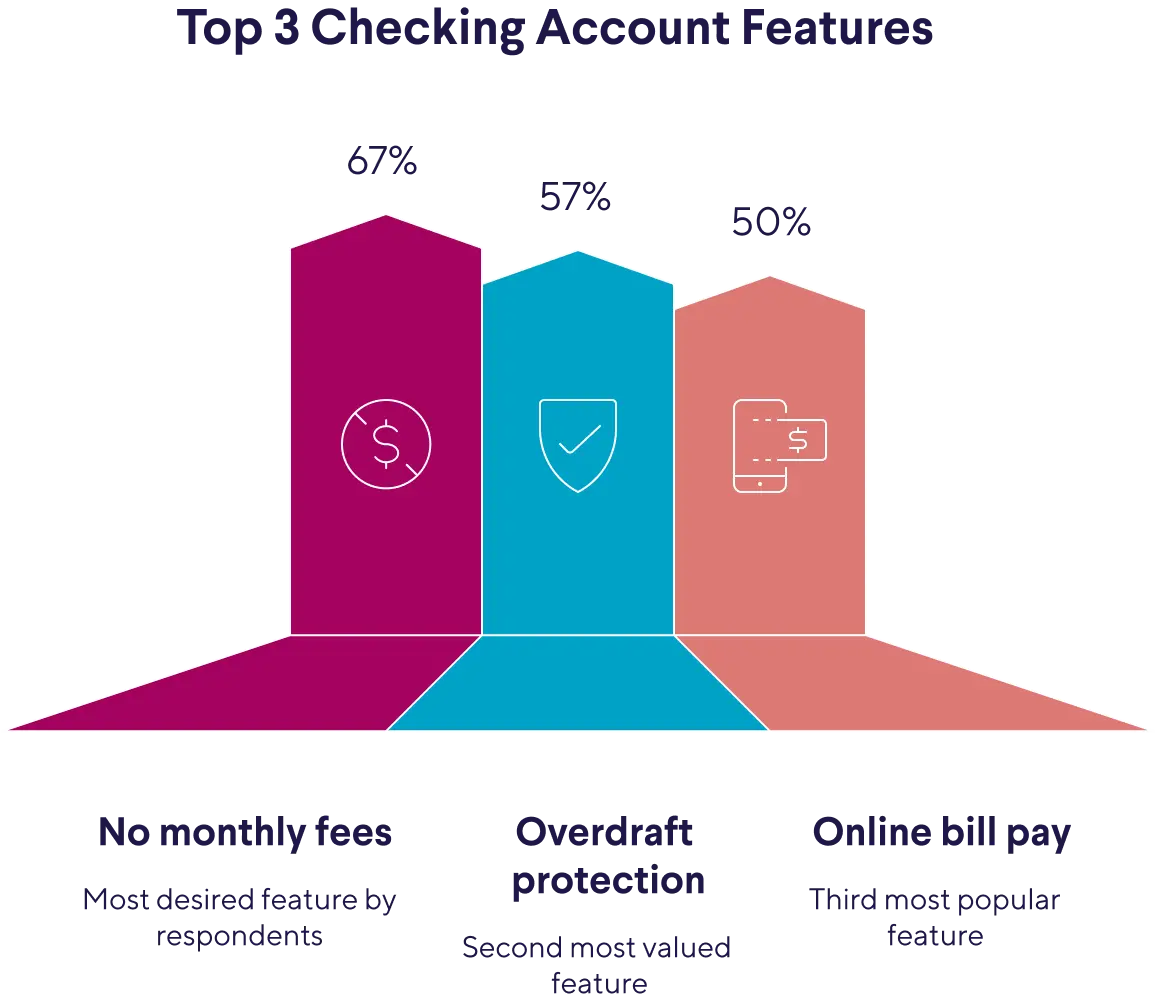
Banks are recognizing that overdraft fees can be a pain point for consumers. In fact, in a 2024 SoFi Banking survey, 57% of respondents said overdraft protection is an important feature in a bank account.

top 3 checking account features based on sofi survey

Source: SoFi’s 2024 Banking Survey

Some banks are now providing fee-free overdraft coverage. This may be limited to a certain amount, such as covering the first $50 of an overdraft, as mentioned earlier. It may also require the customer to get back to a positive balance within a certain period of time (say, until your next direct deposit hits).

It can be wise to shop around for this feature and check online vs. traditional banks for it.

What to Do If You’ve Already Been Charged an Overdraft Fee

If you’ve overdrawn your account, here are some steps to take to help avoid overdraft fees or limit them:

•  The best first action is generally to transfer money into the account right away. You might still be able to prevent an overdraft fee.

You can check to see if your provider has a daily cutoff time or deadline for adding money to an account to correct a negative balance that same day to avoid fees.

Even if you miss the cutoff, transferring money into the account quickly can prevent other fees. That’s because leaving a balance negative for several days can sometimes result in an extended overdraft fee.

•  If you are charged an overdraft fee, however, that doesn’t automatically mean you are stuck paying it. It doesn’t hurt to negotiate with the institution to try to have the fee reimbursed.

You can try to get overdraft fees waived by calling the bank and politely asking if they will remove the charge — if it’s your first offense, you might prevail. You may also want to ask your bank if it has a forgiveness program. Some institutions have policies to waive the first fee charged each year or if a customer is experiencing economic hardship.

How to Avoid an Overdraft Fee at the Checkout

One helpful habit to try: When you’re at the checkout about to make a purchase, first make sure you have enough money in your bank account before you proceed with the transaction. Here’s how.

•  Use your mobile banking app to get an instant balance check on your account (many banking apps offer this feature). That way you can see at a glance if your purchase will be covered.

•  Know your current balance vs. your available balance. There may be deposits or other transactions still pending in your current balance, which could affect what you have available to spend. Focus on the available balance of your account.

•  When using a debit card to make a purchase online, an item may be on back order, and your card might not be charged until the item ships. It can be easy to forget about it and then not have enough funds in your account to cover it when the item does ship. To avoid an overdraft, make a note about delayed charge in your transaction register. You can also set a reminder on your phone to check on the item and the money in your account.

The Takeaway

There are a few simple ways to avoid overdraft fees, such as opting out of overdraft coverage, setting up an automatic low-balance alert, linking your accounts, keeping a little cash cushion in your account, or banking where you get a level of no-fee overdraft coverage.

Interested in opening an online bank account? When you sign up for a SoFi Checking and Savings account with eligible direct deposit, you’ll get a competitive annual percentage yield (APY), pay zero account fees, and enjoy an array of rewards, such as access to the Allpoint Network of 55,000+ fee-free ATMs globally. Qualifying accounts can even access their paycheck up to two days early.


Better banking is here with SoFi, NerdWallet’s 2024 winner for Best Checking Account Overall.* Enjoy 3.30% APY on SoFi Checking and Savings with eligible direct deposit.

FAQ

Can I get an overdraft fee refunded?

It may be possible to get an overdraft fee refunded. Call the bank and ask if they will refund the fee. If it’s the first time you’ve ever overdrafted your account, they might give you a refund. Some banks even have policies to waive the fee in certain situations — such as if a customer is facing economic hardship. So if there was an extenuating circumstance, be sure to explain it. But no matter what the circumstances, it doesn’t hurt to ask politely for a refund.

Is it better to turn off overdraft protection?

You may want to opt out of overdraft coverage, which is different from overdraft protection, which usually triggers a fee. Overdraft protection, on the other hand, typically links your checking account to another account at the same bank and if there’s not enough cash in your checking account to cover a transaction, the needed money would be transferred to cover it. Some banks charge a fee for these transfers, others don’t.

Do overdraft fees affect my credit score?

Overdraft fees generally don’t affect your credit score because your checking account activity is not typically reported to the credit bureaus. However, if you overdraft the account and don’t pay the overdraft and any fees incurred, the bank could send the debt you owe to collections. The collection agency can then report the debt to the credit bureaus which can negatively impact your credit score.

How long do I have to pay an overdraft?

How long you have to pay an overdraft is determined by your bank. Some institutions may give you just a day to cover the overdrawn amount plus any fees, others may give you one or two days. It’s important to find out what your bank’s specific policy is, and then follow it to avoid further negative consequences.

What’s the difference between overdraft protection and overdraft coverage?

Overdraft coverage is a service that gives your bank permission to clear a transaction even if there is not enough money in the account to cover it by essentially fronting you the money. They may then charge you a fee for doing so. Overdraft protection, on the other hand, usually links your checking account to another account at the same bank. If there’s not enough cash in your checking account to cover a transaction, the funds would be transferred to cover it. Some banks offer these transfers free of charge.


SoFi Checking and Savings is offered through SoFi Bank, N.A. Member FDIC. The SoFi® Bank Debit Mastercard® is issued by SoFi Bank, N.A., pursuant to license by Mastercard International Incorporated and can be used everywhere Mastercard is accepted. Mastercard is a registered trademark, and the circles design is a trademark of Mastercard International Incorporated.

Annual percentage yield (APY) is variable and subject to change at any time. Rates are current as of 12/23/25. There is no minimum balance requirement. Fees may reduce earnings. Additional rates and information can be found at https://www.sofi.com/legal/banking-rate-sheet

Eligible Direct Deposit means a recurring deposit of regular income to an account holder’s SoFi Checking or Savings account, including payroll, pension, or government benefit payments (e.g., Social Security), made by the account holder’s employer, payroll or benefits provider or government agency (“Eligible Direct Deposit”) via the Automated Clearing House (“ACH”) Network every 31 calendar days.

Although we do our best to recognize all Eligible Direct Deposits, a small number of employers, payroll providers, benefits providers, or government agencies do not designate payments as direct deposit. To ensure you're earning the APY for account holders with Eligible Direct Deposit, we encourage you to check your APY Details page the day after your Eligible Direct Deposit posts to your SoFi account. If your APY is not showing as the APY for account holders with Eligible Direct Deposit, contact us at 855-456-7634 with the details of your Eligible Direct Deposit. As long as SoFi Bank can validate those details, you will start earning the APY for account holders with Eligible Direct Deposit from the date you contact SoFi for the next 31 calendar days. You will also be eligible for the APY for account holders with Eligible Direct Deposit on future Eligible Direct Deposits, as long as SoFi Bank can validate them.

Deposits that are not from an employer, payroll, or benefits provider or government agency, including but not limited to check deposits, peer-to-peer transfers (e.g., transfers from PayPal, Venmo, Wise, etc.), merchant transactions (e.g., transactions from PayPal, Stripe, Square, etc.), and bank ACH funds transfers and wire transfers from external accounts, or are non-recurring in nature (e.g., IRS tax refunds), do not constitute Eligible Direct Deposit activity. There is no minimum Eligible Direct Deposit amount required to qualify for the stated interest rate. SoFi Bank shall, in its sole discretion, assess each account holder's Eligible Direct Deposit activity to determine the applicability of rates and may request additional documentation for verification of eligibility.

See additional details at https://www.sofi.com/legal/banking-rate-sheet.

*Awards or rankings from NerdWallet are not indicative of future success or results. This award and its ratings are independently determined and awarded by their respective publications.

We do not charge any account, service or maintenance fees for SoFi Checking and Savings. We do charge a transaction fee to process each outgoing wire transfer. SoFi does not charge a fee for incoming wire transfers, however the sending bank may charge a fee. Our fee policy is subject to change at any time. See the SoFi Bank Fee Sheet for details at sofi.com/legal/banking-fees/.
^Early access to direct deposit funds is based on the timing in which we receive notice of impending payment from the Federal Reserve, which is typically up to two days before the scheduled payment date, but may vary.

Financial Tips & Strategies: The tips provided on this website are of a general nature and do not take into account your specific objectives, financial situation, and needs. You should always consider their appropriateness given your own circumstances.

Third-Party Brand Mentions: No brands, products, or companies mentioned are affiliated with SoFi, nor do they endorse or sponsor this article. Third-party trademarks referenced herein are property of their respective owners.

Third Party Trademarks: Certified Financial Planner Board of Standards Center for Financial Planning, Inc. owns and licenses the certification marks CFP®, CERTIFIED FINANCIAL PLANNER®

SOBNK-Q425-005

Read more
A woman is working on a laptop and doing calculations on a pile of financial documents with charts and graphs.

6 Money Habits to Develop Financial Success

Smart money habits can start you on the path to achieving financial success and realizing your dreams. Adopting small (and repeated) changes in behavior can be one way to start building good financial habits that can last a lifetime. Whether your goals are near-term and relatively small (say, hosting an amazing 30th birthday for your partner) or considerably grander (retiring by age 50), planning and discipline are needed to reach them.

Read on to learn six of the most important money habits that can help steer you to financial success and realizing your money goals.

Key Points

•  Setting financial goals can help guide you towards achieving financial and personal dreams.

•  Budgeting helps manage finances by tracking income and expenses.

•  Consolidating debt can improve your debt-to-income ratio.

•  Automating finances helps ensure timely savings and bill payments.

•  Early and consistent investing can build retirement savings through compounding.

Why Good Money Habits Matter

Good money habits can set you up for financial success. They act like guardrails, keeping you moving towards positives (like an impressive retirement fund) and away from potential challenges (say, too much credit card debt). They are, in fact, similar to other wise habits in your life, whether that means eating well, exercising regularly, not staying up too late watching Netflix, or remembering to call your folks often.

Yes, good habits can require some time and energy to establish, and then you likely need to maintain focus to stay on track. Some will become second nature or no-brainers; others may require more ongoing effort. But by sticking with them, good money habits can guide you to help manage your personal finances well, make smart decisions with your funds, and achieve your future goals.

6 Good Money Habits to Adopt

Here’s a closer look at six key money habits that can help you develop financial success.

1. Set Financial Goals

Formulating your financial goals can be an important step. Goals can guide you as you go about building a financial plan for the years ahead.

One person’s goals might be to pay off their student loans and save for a down payment on a house; another might want to sock away enough cash in an online bank account to start their own business down the road; and yet another might want to achieve a lifestyle where they can pay for their child’s college education and take ski vacations every winter.

Putting pen to paper or opening a document on your laptop can be a helpful way to focus and define specific financial goals to work towards. This can give you clarity and boost your motivation vs. simply saving in the abstract.

Once you have goals in mind, you can begin saving toward them and tracking your progress.

2. Budget Well and Track Your Spending

If you are just winging it in terms of your finances, it’s probably wise to prioritize setting up a budget. The word “budget” can cause a knee-jerk reaction because it smacks of deprivation (as in, no more lattes, ever!) but that’s not what it’s about.

Rather, a budget involves understanding how much money you have coming in and where it’s going (typically towards spending and saving). It can help you be more aware of your finances and balance them, too.

Out of the various techniques, the 50/30/20 budget rule is a popular option. It spells out that 50% of your take-home pay goes towards your needs (housing, food, and healthcare, for instance), 30% towards your wants (dining out, those lattes mentioned above, travel), and 20% towards savings.

There are plenty of other different budgeting methods to try and tools you can use to track your spending, which is an important facet of good budgeting. Your bank may even offer a convenient system for this. By tracking your spending, you can see where you may be spending too much (say, your once-a-week takeout habit has crept up to four times a week), be more mindful with money, and optimize your finances. Perhaps you can put more towards debt payments, for example, than you realized.

It can also be wise to get in the habit of checking in with your money regularly; many people find that a couple of times a week is a good frequency.

3. Consolidate Debt

As you work on your budget, you may want to cultivate another money habit to develop financial success. That involves dealing with debt.

This might mean paying off credit card balances in full and making all other necessary debt payments on time, such as mortgage installments and student loan payments. Calendar reminders can help ensure that all payments get made on time, as can automating your payments (more on that below). It may even help to arrange to have all payments due on the same day. Some lenders are willing to move a monthly due date.

If you have student loan debt, you might look into refinancing options. You might, say, be able to lower your monthly payment, though that could extend the term of your loan and cost you more in interest over the life of the loan. However, doing so may be the right move for some people. (Also keep in mind that if you refinance federal loans as private student loans you will lose access to federal benefits and protections.)

Facing and managing your debt is an important step, regardless of the specific solution you decide upon. It’s a habit that allows you to take control of your money. And it can keep your debt-to-income ratio low, which can be an important factor when you want to borrow money at as low a rate as possible.

Increase your savings
with a limited-time APY boost.*


*Earn up to 4.00% Annual Percentage Yield (APY) on SoFi Savings with a 0.70% APY Boost (added to the 3.30% APY as of 12/23/25) for up to 6 months. Open a new SoFi Checking and Savings account and pay the $10 SoFi Plus subscription every 30 days OR receive eligible direct deposits OR qualifying deposits of $5,000 every 31 days by 3/30/26. Rates variable, subject to change. Terms apply here. SoFi Bank, N.A. Member FDIC.

4. Know When to Consider Balance Transfer vs. Personal Loans

Building on the idea of consolidating debt is the next financial habit. This one involves knowing the warning signs when your debt is getting uncomfortably high and then taking steps to rein it in.

Sometimes, the steps above aren’t enough. If that’s the case, it’s wise to consider your options vs. taking a wait and see approach. Currently, credit card interest rates are over 20% which can be hard for some people to pay off.

So if you see your balance rising to a level you are worried about, consider the following options as you take control of your debt:

•   You might try a balance-transfer credit card, which can give you a reprieve from high interest accruing for a period of time (often 18 months), allowing you to pay down your debt.

•   You might consider taking out a personal loan and using those funds to pay off your credit card debt. The goal here is to have a lower monthly payment on the personal loan than what your credit card bill amounted to.

•   Contact a nonprofit credit counseling service, such as the National Foundation for Credit Counseling, or nfcc.org.

Getting in this habit before debt gets deeper can help you in the long run.

5. Automate Your Finances

It can be a good idea to save money right after getting paid — before the cash sits in checking long enough to spark the urge to spend it. So why not make it simple and save automatically upfront?

A person interested in saving might begin by automating just one kind of transaction. For example, they may opt to have $50 moved from a checking account to a high-yield savings account each month. If that money remains unspent each month, those monthly automatic savings would total to $600 at the end of the year.

That could be a good way to start an emergency fund without expending much effort. You can also automate payments of, say, your utilities and housing costs or your car loan. Paying bills on time this way can help build your credit.

There are also numerous ways to automate your investments. A workplace plan, like a 401(k), may already be doing this. For someone who’s on their own, mutual funds can make auto-investment really easy. Alternatively, a robo-advisor service can automatically invest contributions on behalf of the investor. (Note: This automation may be challenging for those paid irregularly, such as freelancers and seasonal workers.)

By embracing automation, you can nail an important money habit. You can pay yourself first and stash cash away in savings. And you can avoid such bad money habits as not saving enough, paying bills late, or forgetting to pay them at all.

Recommended: Emergency Fund Calculator

6. Investing Early and Often

“I invested too much money for retirement,” said no one, ever. Arguably, there’s no other financial goal that requires more habitual action — spread over decades — than saving and investing for retirement.

It can be tempting to push off planning for retirement until tomorrow. After all, when someone’s in their 20s or 30s, retirement is likely decades and decades away. Psychologically, it’s simple to presume that it’s just not worth thinking about in the now.

But, for many, retirement can be one of life’s biggest and most important expenses. It can secure your comfortable future. Investing early, often, and wisely, can help accomplish that goal.

Adopting this habit ASAP can be a big help; it allows for more time for money to grow via compounding. Compound returns are earnings on both the original amount invested (the principal) and the money earned via investing (the profit). The more months (or years) a person invests, the higher the potential for profits to compound. Note: It is important to note that all investing carries risk as the stock market can fluctuate.

Being consistent about moving money into your portfolio is important, too. Luckily, there are easy and affordable ways to get started investing. First, open an account, like a brokerage or a retirement account. (Investing in a 401(k) also counts as investing.) Then, investors can purchase investments like stocks and funds to help achieve their goals. Or investors can use an automated investing service.

The Takeaway

Building good financial habits can be rewarding. There are more technological tools than ever to help with budgeting or expense tracking. From digital apps to automatic investing to online bank accounts, building healthy financial habits has never been more accessible.

Interested in opening an online bank account? When you sign up for a SoFi Checking and Savings account with eligible direct deposit, you’ll get a competitive annual percentage yield (APY), pay zero account fees, and enjoy an array of rewards, such as access to the Allpoint Network of 55,000+ fee-free ATMs globally. Qualifying accounts can even access their paycheck up to two days early.


Better banking is here with SoFi, NerdWallet’s 2024 winner for Best Checking Account Overall.* Enjoy 3.30% APY on SoFi Checking and Savings with eligible direct deposit.

FAQ

What are money habits for financial success?

Money habits that can help you achieve financial success include setting financial goals, budgeting well, consolidating debt, considering balance transfers and personal loans, automating your finances, and investing wisely.

What is a short-term money goal?

A short-term money goal is typically one you aim to achieve in a year or less.

How do you budget well?

To budget well, track how much money you have coming in and going out, and experiment with different methods of budgeting. Many people like the 50/30/20 budget rule. Budgeting apps can also be helpful.


SoFi Checking and Savings is offered through SoFi Bank, N.A. Member FDIC. The SoFi® Bank Debit Mastercard® is issued by SoFi Bank, N.A., pursuant to license by Mastercard International Incorporated and can be used everywhere Mastercard is accepted. Mastercard is a registered trademark, and the circles design is a trademark of Mastercard International Incorporated.

Annual percentage yield (APY) is variable and subject to change at any time. Rates are current as of 12/23/25. There is no minimum balance requirement. Fees may reduce earnings. Additional rates and information can be found at https://www.sofi.com/legal/banking-rate-sheet

Eligible Direct Deposit means a recurring deposit of regular income to an account holder’s SoFi Checking or Savings account, including payroll, pension, or government benefit payments (e.g., Social Security), made by the account holder’s employer, payroll or benefits provider or government agency (“Eligible Direct Deposit”) via the Automated Clearing House (“ACH”) Network every 31 calendar days.

Although we do our best to recognize all Eligible Direct Deposits, a small number of employers, payroll providers, benefits providers, or government agencies do not designate payments as direct deposit. To ensure you're earning the APY for account holders with Eligible Direct Deposit, we encourage you to check your APY Details page the day after your Eligible Direct Deposit posts to your SoFi account. If your APY is not showing as the APY for account holders with Eligible Direct Deposit, contact us at 855-456-7634 with the details of your Eligible Direct Deposit. As long as SoFi Bank can validate those details, you will start earning the APY for account holders with Eligible Direct Deposit from the date you contact SoFi for the next 31 calendar days. You will also be eligible for the APY for account holders with Eligible Direct Deposit on future Eligible Direct Deposits, as long as SoFi Bank can validate them.

Deposits that are not from an employer, payroll, or benefits provider or government agency, including but not limited to check deposits, peer-to-peer transfers (e.g., transfers from PayPal, Venmo, Wise, etc.), merchant transactions (e.g., transactions from PayPal, Stripe, Square, etc.), and bank ACH funds transfers and wire transfers from external accounts, or are non-recurring in nature (e.g., IRS tax refunds), do not constitute Eligible Direct Deposit activity. There is no minimum Eligible Direct Deposit amount required to qualify for the stated interest rate. SoFi Bank shall, in its sole discretion, assess each account holder's Eligible Direct Deposit activity to determine the applicability of rates and may request additional documentation for verification of eligibility.

See additional details at https://www.sofi.com/legal/banking-rate-sheet.

*Awards or rankings from NerdWallet are not indicative of future success or results. This award and its ratings are independently determined and awarded by their respective publications.

We do not charge any account, service or maintenance fees for SoFi Checking and Savings. We do charge a transaction fee to process each outgoing wire transfer. SoFi does not charge a fee for incoming wire transfers, however the sending bank may charge a fee. Our fee policy is subject to change at any time. See the SoFi Bank Fee Sheet for details at sofi.com/legal/banking-fees/.
^Early access to direct deposit funds is based on the timing in which we receive notice of impending payment from the Federal Reserve, which is typically up to two days before the scheduled payment date, but may vary.

INVESTMENTS ARE NOT FDIC INSURED • ARE NOT BANK GUARANTEED • MAY LOSE VALUE

SoFi Invest is a trade name used by SoFi Wealth LLC and SoFi Securities LLC offering investment products and services. Robo investing and advisory services are provided by SoFi Wealth LLC, an SEC-registered investment adviser. Brokerage and self-directed investing products offered through SoFi Securities LLC, Member FINRA/SIPC.

For disclosures on SoFi Invest platforms visit SoFi.com/legal. For a full listing of the fees associated with Sofi Invest please view our fee schedule.

Financial Tips & Strategies: The tips provided on this website are of a general nature and do not take into account your specific objectives, financial situation, and needs. You should always consider their appropriateness given your own circumstances.

Third-Party Brand Mentions: No brands, products, or companies mentioned are affiliated with SoFi, nor do they endorse or sponsor this article. Third-party trademarks referenced herein are property of their respective owners.

Third Party Trademarks: Certified Financial Planner Board of Standards Center for Financial Planning, Inc. owns and licenses the certification marks CFP®, CERTIFIED FINANCIAL PLANNER®

SOBNK-Q425-004

Read more
Do I Need a Long Term Savings Account?

Do You Need a Long-Term Savings Account?

Saving money is the first step toward achieving your financial goals. But not all savings goals are created equal. Some goals are short-term, like setting aside money for holiday gifts, while others may stretch years into the future, such as buying a home, paying for a wedding, or preparing for retirement. When your savings goals extend beyond a year or two, you may want to consider a long-term savings account.

But what exactly makes a savings account “long-term”? And with so many options — high-yield savings, certificates of deposit, money market accounts, or retirement-specific vehicles — which type is best for your situation?

Below, we’ll explore the essentials of long-term savings accounts, when to use them, and how they can help you reach your biggest financial milestones.

Key Points

•  Long-term savings accounts are designed for goals that are at least a couple of years away.

•  High-yield savings accounts, certificates of deposit, money market accounts, and retirement accounts can be good options.

•  High-yield savings accounts offer higher-than-average interest rates and easy access.

•  Certificates of deposit provide fixed, competitive rates but penalize early withdrawals.

•  Retirement accounts offer tax advantages and long-term growth.

What Makes a Savings Account “Long-Term”?

In simple terms, a savings account becomes “long-term” when the money is meant to stay untouched for several years, and often much longer. Short-term savings, like an emergency fund or paying for an upcoming vacation, are designed for relatively quick use. Long-term savings, on the other hand, are earmarked for goals that might be a few years — or even decades — away.

While long-term savings accounts generally offer lower returns than investment accounts, they provide security, predictability, and liquidity. These three factors are especially important when you know you’ll need the money at a specific point in the future.

4 Best Types of Long-Term Savings Accounts

There is no single savings account that works for every saver. Instead, the best long-term savings option will depend on your timeline, your need for access to the funds, and how much you want to prioritize growth. Here are four types of accounts (including one investment account) that can help you reach your long-term savings goals.

1. High-Yield Savings Accounts (HYSAs)

A high-yield savings account is a type of savings account that offers a significantly higher interest rate, or annual percentage yield (APY), than a traditional savings account. These accounts are typically offered by online banks, which tend to have lower overhead costs than brick-and-mortar institutions and can pass that savings on to customers in the form of higher rates and lower (or no) fees.

HYSAs are usually insured by the Federal Deposit Insurance Corporation (FDIC), which means your deposits are covered up to $250,000 per depositor, per insured bank, for each account ownership category, even if the bank were to fail.

In addition to safety, HYSAs also offer easy access to your funds via debit card or transferring money online. That accessibility can make them a good fit for people who want to earn meaningful interest but still keep the option of withdrawing their money if a goal comes up sooner than expected.

If you’re saving for a home purchase, a new car, or a major renovation within the next few years, you may find an HYSA particularly useful. An HYSA is also a good place to stash your emergency fund (more on that below).

Recommended: Savings Goal Calculator

2. Certificates of Deposit (CDs)

Available at banks, credit unions, and brokerage firms, certificates of deposit are time-locked accounts where you agree to keep your money deposited for a set term — often ranging from six months to five years — in exchange for a fixed interest rate.

Rates on CDs are not only guaranteed but are generally higher than what you could earn in a traditional savings account. CDs are also typically insured by the FDIC or National Credit Union Administration (NCUA), which insures deposits at credit unions.

This type of long-term savings account can be ideal for savers with a clear timeline. For example, if you know you’ll need the money in three years for a down payment, a CD of the same length can help you protect your funds while also ensuring steady growth.

3. Money Market Accounts

A money market account (MMA) is an interest-bearing deposit account offered by banks and credit unions that blends features of both savings and checking accounts. MMAs typically offer higher rates than standard savings accounts, along with some of the conveniences of a checking account, such as checks and a debit card.

Similar to other types of savings accounts, MMAs are usually FDIC- or NCUA-insured. However, they often require higher minimum balances and may charge fees if you don’t meet monthly balance requirements.

An MMA can be a flexible option for long-term savers who want to earn more than the average savings rate but still want to access their funds occasionally. You might consider an MMA for an emergency fund, saving for a large purchase (like a car or wedding), or holding funds for future investments.

4. Retirement Accounts

Retirement-specific accounts — such as 401(k)s, Individual Retirement Accounts (IRAs), or Roth IRAs — are technically investment vehicles but are crucial for long-term savings. These accounts are designed specifically for retirement and offer unique tax advantages.

These accounts also allow savers with decades-long time horizons to benefit from compounding returns (which is when your returns start earning returns of their own) and, in some cases, employer contributions.

Because they are tied to investments like stocks and bonds, retirement accounts do carry risk, meaning balances can fluctuate in the short term. However, the long time frame can help smooth out those fluctuations. Plus, the tax benefits can make them hard to beat for anyone focused on retirement. Their tradeoff is limited liquidity, since withdrawing money early often results in penalties.

When to Use a Savings Account for Long-Term Goals vs an Investment Account

One of the biggest questions savers face is whether to use a savings account or an investment account for long-term goals. The answer largely depends on your exact timeline and tolerance for risk

Generally speaking, you want to use a savings account when:

•  You’ll need the money within the next one to five years.

•  You can’t afford to risk losing your principal.

•  Your goal has a fixed date, such as a wedding or tuition payment.

Consider using an investment account when:

•  Your goal is more than five years away.

•  You’re comfortable with short-term market fluctuations in exchange for the chance for higher long-term growth.

•  You’re saving for retirement or other distant financial milestones.

In short, savings accounts are about security and liquidity, while investment accounts are about growth and long-term wealth building.

Examples of Long-Term Savings Goals

What might you use a long-term savings account for? Here are three common examples.

Saving for a Down Payment on a House

Buying a home is one of the largest financial milestones most people will face. If you plan to buy in the next few years, keeping your down payment in a HYSA, CD, or MMA ensures your money is safe and growing without the risk of market downturns derailing your purchase plans.

Building a Fund for a Future Large Purchase (Like a Car or Wedding)

Whether you’re planning a dream wedding or upgrading your vehicle, large expenses require careful planning. By using a dedicated savings account — such as a money market or HYSA — you can separate these funds from your everyday spending while earning competitive interest.

Creating a Sabbatical or “Freedom Fund”

More people are saving for lifestyle choices, such as taking time off work to travel, study, or recharge. A sabbatical or “freedom fund” can provide peace of mind and flexibility. Keeping these funds in a long-term savings account like a HYSA, CD, or MMA, ensures they’ll be available when the time is right.

When to Consider an Emergency Savings Account

While long-term savings is essential for reaching your future goals, it’s equally important to have a separate emergency savings account.

This account provides a cushion for unexpected events, such as losing a job, facing a sudden illness, or needing to pay for urgent car or home repairs. Knowing you have funds available for emergencies can ease financial anxiety during a crisis. It also prevents the need to rely on high-interest credit cards or loans to cover surprise costs.

Experts generally advise setting aside at least three to six months’ worth of living expenses in a separate savings account earmarked for emergencies.

Emergency funds are generally best stored in HYSAs or money market accounts, where the money is accessible but still earning above-average interest. Having this safety net allows your long-term savings to stay intact, even when life throws an expensive curveball.

How to Use a Savings Account to Organize Your Long-Term Savings

Managing multiple goals can get tricky, but today’s digital banking tools make it easier. Many banks and credit unions allow you to:

•  Open multiple accounts or create customized sub-accounts and label each fund (e.g., “House Fund,” “Wedding Fund”).

•  Automate transfers so savings happen consistently without effort.

•  Track your progress toward each goal with visual dashboards.

By assigning each goal its own dedicated account or sub-account, you reduce the temptation to borrow from one savings pot to pay for a different goal or expense. It also makes it easy to track your progress, since you can see exactly how close you are to reaching each milestone.

The Takeaway

Long-term savings accounts are powerful tools for turning your future plans into reality. Whether you choose a high-yield savings account for flexibility, a CD for guaranteed returns, a money market account for occasional access, or a retirement account for decades-long growth, the right choice depends on your goals and time frame.

The best long-term savings account is ultimately the one that supports your unique plans, provides the right balance of safety and growth, and makes it easy for you to stay disciplined until you achieve the milestones that matter the most.

Interested in opening an online bank account? When you sign up for a SoFi Checking and Savings account with eligible direct deposit, you’ll get a competitive annual percentage yield (APY), pay zero account fees, and enjoy an array of rewards, such as access to the Allpoint Network of 55,000+ fee-free ATMs globally. Qualifying accounts can even access their paycheck up to two days early.


Better banking is here with SoFi, NerdWallet’s 2024 winner for Best Checking Account Overall.* Enjoy 3.30% APY on SoFi Checking and Savings with eligible direct deposit.

FAQ

What type of account is best for long-term savings?

The best account for long-term savings depends on your goals and risk tolerance. For safe, predictable growth, high-yield savings accounts, certificates of deposit (CDs), or money market accounts are good options. If you want higher returns and can tolerate risk, retirement accounts like IRAs or 401(k)s and investment accounts may be better. Many people use a mix: savings accounts for stability and investment accounts for growth. Diversifying helps ensure your money grows while remaining accessible for future needs.

What is a long-term savings account called?

A long-term savings account doesn’t have a single universal name — it depends on the purpose and institution. Common options include certificates of deposit (CDs), individual retirement accounts (IRAs), 401(k)s, or investment accounts. These accounts are designed for goals like retirement, buying a home, or funding education. High-yield savings accounts and money market accounts can also serve mid- to long-term goals, especially if you want to maintain access to your funds.

What is considered long-term savings?

Long-term savings generally refers to money set aside for goals that are several years or even decades away, such as buying a house, funding a child’s education, or retirement. Unlike emergency funds or short-term savings, which cover immediate or near-future needs, long-term savings are designed to grow over time through interest, dividends, or investment returns. These savings often benefit from compound growth, which is when the returns you earn also earn returns, which can help your money grow faster.

How much should I have in my long-term savings account?

The amount you should have in long-term savings depends on your financial goals, age, and income. A common benchmark for retirement savings is to aim to save at least 15% of your pre-tax income each year, including any employer match. By age 30, some experts suggest having one year’s salary saved, increasing to three times by age 40, and six times by age 50. However, smaller long-term saving goals, like a down payment on a house, will require less.

What kind of savings account makes the most money?

If you’re strictly looking at savings accounts, high-yield savings accounts and certificates of deposit (CDs) typically earn the most interest. However, if your goal is maximizing long-term growth, investment-based accounts — such as brokerage accounts, individual retirement accounts (IRAs), or 401(k)s — generally offer much higher returns over time, though with more risk. Money market accounts can also pay higher rates than standard savings. The best choice depends on your timeframe, risk tolerance, and need for liquidity.


Photo credit: iStock/AndreyPopov

SoFi Checking and Savings is offered through SoFi Bank, N.A. Member FDIC. The SoFi® Bank Debit Mastercard® is issued by SoFi Bank, N.A., pursuant to license by Mastercard International Incorporated and can be used everywhere Mastercard is accepted. Mastercard is a registered trademark, and the circles design is a trademark of Mastercard International Incorporated.

Annual percentage yield (APY) is variable and subject to change at any time. Rates are current as of 12/23/25. There is no minimum balance requirement. Fees may reduce earnings. Additional rates and information can be found at https://www.sofi.com/legal/banking-rate-sheet

Eligible Direct Deposit means a recurring deposit of regular income to an account holder’s SoFi Checking or Savings account, including payroll, pension, or government benefit payments (e.g., Social Security), made by the account holder’s employer, payroll or benefits provider or government agency (“Eligible Direct Deposit”) via the Automated Clearing House (“ACH”) Network every 31 calendar days.

Although we do our best to recognize all Eligible Direct Deposits, a small number of employers, payroll providers, benefits providers, or government agencies do not designate payments as direct deposit. To ensure you're earning the APY for account holders with Eligible Direct Deposit, we encourage you to check your APY Details page the day after your Eligible Direct Deposit posts to your SoFi account. If your APY is not showing as the APY for account holders with Eligible Direct Deposit, contact us at 855-456-7634 with the details of your Eligible Direct Deposit. As long as SoFi Bank can validate those details, you will start earning the APY for account holders with Eligible Direct Deposit from the date you contact SoFi for the next 31 calendar days. You will also be eligible for the APY for account holders with Eligible Direct Deposit on future Eligible Direct Deposits, as long as SoFi Bank can validate them.

Deposits that are not from an employer, payroll, or benefits provider or government agency, including but not limited to check deposits, peer-to-peer transfers (e.g., transfers from PayPal, Venmo, Wise, etc.), merchant transactions (e.g., transactions from PayPal, Stripe, Square, etc.), and bank ACH funds transfers and wire transfers from external accounts, or are non-recurring in nature (e.g., IRS tax refunds), do not constitute Eligible Direct Deposit activity. There is no minimum Eligible Direct Deposit amount required to qualify for the stated interest rate. SoFi Bank shall, in its sole discretion, assess each account holder's Eligible Direct Deposit activity to determine the applicability of rates and may request additional documentation for verification of eligibility.

See additional details at https://www.sofi.com/legal/banking-rate-sheet.

*Awards or rankings from NerdWallet are not indicative of future success or results. This award and its ratings are independently determined and awarded by their respective publications.

Financial Tips & Strategies: The tips provided on this website are of a general nature and do not take into account your specific objectives, financial situation, and needs. You should always consider their appropriateness given your own circumstances.

We do not charge any account, service or maintenance fees for SoFi Checking and Savings. We do charge a transaction fee to process each outgoing wire transfer. SoFi does not charge a fee for incoming wire transfers, however the sending bank may charge a fee. Our fee policy is subject to change at any time. See the SoFi Bank Fee Sheet for details at sofi.com/legal/banking-fees/.
Third Party Trademarks: Certified Financial Planner Board of Standards Center for Financial Planning, Inc. owns and licenses the certification marks CFP®, CERTIFIED FINANCIAL PLANNER®

Tax Information: This article provides general background information only and is not intended to serve as legal or tax advice or as a substitute for legal counsel. You should consult your own attorney and/or tax advisor if you have a question requiring legal or tax advice.

SOBNK-Q325-107

Read more
businesswoman handshake

What Are RSUs & How to Handle Them

When an employer offers restricted stock units, or RSUs, as part of a compensation package, these are effectively shares of stock in the company. But restricted stock units typically vest over time, and the employee must meet certain criteria before obtaining the actual stock.

Restricted stock options are similar to, but distinct from, employee stock options (ESOs). RSUs don’t have any value until they’re fully vested, but once they are, each share is given a fair market value. Once the employee takes ownership of the shares, have the right to sell their shares.

Key Points

•   Restricted stock units are a type of equity compensation.

•   RSUs aren’t available immediately, rather they vest according to a schedule.

•   Typically, an employee must meet certain performance metrics or requirements (e.g., time at the company) to obtain their allotted shares.

•   Once the RSUs have fully vested, the shares are given to the employee at a fair market valuation.

•   RSUs are considered a type of income, and typically a portion of the vested units are withheld to cover taxes.

•   The employee cannot sell their shares until they’re fully vested.

What Is a Restricted Stock Unit?

Restricted stock units are a type of equity compensation offered to employees. RSUs are not actual shares of stock that you can trade, as when you buy stocks online; they are a specific amount of promised stock shares that the employee will receive at a future date, assuming certain conditions are met.

Restricted stock units are a type of financial incentive for employees, similar to a bonus, since employees typically receive their shares only when they complete specific tasks or achieve significant work milestones or anniversaries.

RSUs vs Stock Options

Again, RSUs are different from employee stock options. Restricted stock options and employee stock options (ESOs) are both considered deferred compensation. They can be used as incentives to remain at the company, but employee stock options are structured differently.

ESOs are similar to a call option. They give employees the option to buy company stock at a certain price, by a certain date. But the employee must purchase their shares to get the stock.

Once RSUs are vested, the employee simply receives shares of stock on a given date from their employer, which they can then sell.

RSU Advantages and Disadvantages

Among the key advantages of RSUs are, as mentioned, that they provide an incentive for employees to remain with a company.

For employers, other advantages include relatively low administrative costs, and a delay in share dilution.

As for disadvantages, RSUs are considered taxable income for the employee in the year they vest (more on this below). In some cases, similar to a bonus, a 22% obligatory tax is withheld from the vested share amount.

When the employee later sells their shares, any gains or losses based on the original fair market value assigned to the shares are treated according to capital gains rules.

RSUs don’t provide dividends to employees. They also don’t come with voting rights, which some employees may not like.

Know the Dates: Grant and Vesting

In the case of RSU stock, there are two important dates to keep in mind: the grant date and the vesting date.

Grant Date

A grant date refers to the exact day a company pledges to grant an employee company stock.

Employees don’t own shares of company stock starting on the grant date; rather, they must wait for the stock shares to vest before claiming full ownership and deciding to sell, hold, or diversify stock earnings.

Vesting Date

The vesting date refers to the exact day that the promised company stock shares vest. Employees receive their RSUs according to a vesting schedule determined by the employer. Factors such as employment length and job performance goals are taken into consideration, as well as the vesting schedule.

The employer that wants to incentivize a long-term commitment to the company, for example, might tailor the RSU vesting schedule to reward the employee’s tenure. In other words, RSUs would only vest after an employee has pledged their time and hard work to the company for a certain number of years; or, the vested percentage of total RSUs could increase over time.

If there are tangible milestones that the employee must achieve, the employer could organize the vesting schedule around those specific accomplishments, too.

RSU Vesting Examples

Typically, the vesting schedule of RSU stock occurs on either a cliff schedule or a graded schedule. If you leave your position at the company before your RSU shares vest, you generally forfeit the right to collect on the remaining restricted stock units.

•   On a graded or time-based vesting schedule, an employee would keep the amount of RSUs already vested, but would forfeit leftover shares.

•   If an employee is on a cliff vesting schedule and their shares have not yet vested, then they no longer have the right to their restricted stock units.

Cliff Schedule

A cliff schedule means that the bulk of RSUs vest at once. For example, if you receive 4,000 RSUs at the beginning of your job, on a cliff vesting schedule you would receive 3,000 shares, say, after a one-year waiting period, with the rest made available at specific intervals. Again, once shares are vested, you could then consider trading stocks.

Graded Vesting Schedule

With a graded or time-based vesting schedule, you would only receive a portion of those 4,000 RSUs at a time. For example, you could receive 25% of your RSUs once you’ve hit your one-year company anniversary, 25% more after two years, and so on.

Alternatively, a graded vesting schedule might include varying intervals between vesting dates. For example, you could receive 50% of your 4,000 total RSUs after three years at the company, and then the remainder of your shares (2,000) could vest every month over the next three years at 100 per month.

Are Restricted Stock Units Risky?

As with any investment, there is always a degree of risk associated with RSUs. Even companies that are rapidly growing and have appreciating stock values can underperform. While you do not have to spend money to purchase RSUs, the stock will eventually become part of your portfolio (as long as you stay with the company until they vest), and their value could change significantly up or down over time.

If you end up owning a lot of stock in your company through your RSUs, you may also face concentration risk. Changes to your company can not only impact your salary but the RSU stock performance. Therefore, if the company is struggling, you could lose value in your portfolio at the same time that your income becomes less secure.

Diversifying your portfolio can help you minimize the risk of overexposure to your company. A good rule of thumb is to consider diversifying your holdings if more than 10% of your net worth is tied up with your company. Holding over 10% of your assets with your firm exposes you to more risk of loss.

Are Restricted Stock Units Reported on My W-2?

Yes, restricted stock units are reported on your W-2 as income in the year the shares vest.

When your RSUs vest according to their fair market value, your employer will withhold taxes on them, often the same 22% rate applied to company bonuses. The fair market value of the shares at the time of vesting appears on your W-2, meaning that you must pay normal income taxes, such as Social Security and Medicare, on them.

In some cases, your employer will withhold a smaller percentage on your RSU stock than what they withhold on your wages. What’s more, this taxation is only at the federal level and doesn’t account for any state taxes.

Since vested RSUs are considered supplemental income, they could bump you up to a higher income tax bracket, which would subject you to higher taxes. If your company does not withhold enough money at the time of vesting, you may have to make up the difference at tax time, to either the IRS or your state.

So, it might be beneficial to plan ahead and come up with a strategy to manage the consequences of your RSUs on your taxes. It may be wise to consult a professional.

RSU Tax Implications

When your RSUs vest, your employer will withhold taxes on them, just as they withhold taxes on your income during every pay period. The market value of the shares at the time of vesting appears on your W-2, meaning that you must pay normal payroll taxes, such as Social Security and Medicare, on them.

In some cases, your employer will withhold a smaller percentage on your RSU stock than what they withhold on your wages. What’s more, this taxation is only at the federal level and doesn’t account for any state taxes.

Since vested RSUs are considered supplemental income, they could bump you up to a higher income tax bracket and make you subject to higher taxes. If your company does not withhold enough money at the time of vesting, you may have to make up the difference at tax time, to either the IRS or your state.

So, it might be beneficial to plan ahead and come up with a strategy to manage the consequences of your RSUs on your taxes. Talking to a tax or financial professional before or right after your RSU shares vest could help you anticipate future complications and set yourself up for success come tax season.

How to Handle RSUs

If you work for a public company, that means that you can decide whether to sell or hold them. There are advantages to both options, depending on your individual financial profile.

Sell

Selling your vested RSU stock shares might help you minimize the investment risk of stock concentration. A concentrated stock position occurs when you invest a substantial portion of your assets in one investment or sector, rather than spreading out your investments and diversifying your portfolio.

Even if you are confident your company will continue to grow, stock market volatility means there’s always a risk that you could lose a portion of your portfolio in the event of a sudden downturn.

There is added risk when concentration occurs with RSU stock, since both your regular income and your stock depend on the success of the same company. If you lose your job and your company’s stock starts to depreciate at the same time, you could find yourself in a tight spot.

Selling some or all of your vested RSU shares and investing the cash elsewhere in different types of investments could minimize your overall risk.

Another option is to sell your vested RSU shares and keep the cash proceeds. This might be a good choice if you have a financial goal that requires a large sum of money right away, like a car or house down payment, or maybe you’d like to pay off a big chunk of debt. You can also sell some of your RSUs to cover the tax bill that they create.

Hold

Holding onto your vested RSU shares might be a good strategy if you believe your company’s stock value will increase, especially in the short term. By holding out for a better price in the future, you could receive higher proceeds when you sell later, and grow the value of your portfolio in the meantime.

RSUs and Private Companies

How to handle RSUs at private companies can be more complicated, since there’s not always a liquid market where you can buy or sell your shares. Some private companies also use a “double-trigger” vesting schedule, in which shares don’t vest until the company has a liquidity event, such as an initial public offering or a buyout.

The Takeaway

Receiving restricted stock units as part of your employee compensation can be a boon. Even though you don’t get actual shares of stock right away, once they vest they can provide extra income. But it’s important to understand how your company handles the vesting of these shares, and what the tax implications might be.

Perhaps the most pertinent thing to keep in mind, though, is that everyone’s financial situation is different — as so is their respective investing strategy. If you have RSU shares, it may be worthwhile to speak with a financial professional for advice and guidance.

Invest in what matters most to you with SoFi Active Invest. In a self-directed account provided by SoFi Securities, you can trade stocks, exchange-traded funds (ETFs), mutual funds, alternative funds, options, and more — all while paying $0 commission on every trade. Other fees may apply. Whether you want to trade after-hours or manage your portfolio using real-time stock insights and analyst ratings, you can invest your way in SoFi's easy-to-use mobile app.

Invest with as little as $5 with a SoFi Active Investing account.

FAQ

What is the difference between restricted stock units and stock options?

Restricted shares or restricted stock is stock that is under some sort of sales restriction, whereas stock options grant the holder the choice as to whether or not to buy a stock.

Do restricted stock units carry voting rights?

Restricted stock units do not carry voting rights, but the shares or stock itself may carry voting rights once the units vest.

How do RSUs work at private vs public companies?

One example of how RSUs may differ from private rather than public companies is in the vesting requirements. While public companies may have a single vesting requirement for RSUs, private companies may have two or more.


About the author

Rebecca Lake

Ashley Kilroy

Ashley Kilroy is a seasoned personal finance writer with 15 years of experience simplifying complex concepts for individuals seeking financial security. Her expertise has shined through in well-known publications like Rolling Stone, Forbes, SmartAsset, and Money Talks News. Read full bio.


INVESTMENTS ARE NOT FDIC INSURED • ARE NOT BANK GUARANTEED • MAY LOSE VALUE

SoFi Invest is a trade name used by SoFi Wealth LLC and SoFi Securities LLC offering investment products and services. Robo investing and advisory services are provided by SoFi Wealth LLC, an SEC-registered investment adviser. Brokerage and self-directed investing products offered through SoFi Securities LLC, Member FINRA/SIPC.

For disclosures on SoFi Invest platforms visit SoFi.com/legal. For a full listing of the fees associated with Sofi Invest please view our fee schedule.

Tax Information: This article provides general background information only and is not intended to serve as legal or tax advice or as a substitute for legal counsel. You should consult your own attorney and/or tax advisor if you have a question requiring legal or tax advice.

Investing in an Initial Public Offering (IPO) involves substantial risk, including the risk of loss. Further, there are a variety of risk factors to consider when investing in an IPO, including but not limited to, unproven management, significant debt, and lack of operating history. For a comprehensive discussion of these risks please refer to SoFi Securities’ IPO Risk Disclosure Statement. This should not be considered a recommendation to participate in IPOs and investors should carefully read the offering prospectus to determine whether an offering is consistent with their investment objectives, risk tolerance, and financial situation. New offerings generally have high demand and there are a limited number of shares available for distribution to participants. Many customers may not be allocated shares and share allocations may be significantly smaller than the shares requested in the customer’s initial offer (Indication of Interest). For more information on the allocation process please visit IPO Allocation Procedures.

Investment Risk: Diversification can help reduce some investment risk. It cannot guarantee profit, or fully protect in a down market.

Disclaimer: The projections or other information regarding the likelihood of various investment outcomes are hypothetical in nature, do not reflect actual investment results, and are not guarantees of future results.

Financial Tips & Strategies: The tips provided on this website are of a general nature and do not take into account your specific objectives, financial situation, and needs. You should always consider their appropriateness given your own circumstances.

SOIN-Q325-030

Read more
TLS 1.2 Encrypted
Equal Housing Lender