10 Signs You're Living Beyond Your Means

10 Signs You’re Living Beyond Your Means

Living beyond your means can easily happen. Typically, it’s a case of your spending outstripping your earnings. This in turn means it’s hard to pay off debt and save for your financial goals.

Sound familiar? If you find yourself running out of money before the next payday, you could be leaving above your means.

Here, learn more about this issue and the warning signs. Then you can begin to take action and take control of your money.

Key Points

  • Living beyond your means generally involves spending more than you earn, often using credit.
  • Signs that you’re living above your means include not growing your savings, spending more than a third of your income on housing, and carrying credit card balances.
  • To start living below your means, track your spending for a month to identify overspending areas.
  • Use the 50/30/20 rule to establish an effective budget.
  • Build an emergency fund to manage unexpected expenses without debt.

What Does “Living Beyond Your Means” Mean?

Simply put, ”living above your means” means that you are spending more money than you are earning. People are able to do this by relying on credit cards, loans, and prior savings to cover their expenses. However, the process is not sustainable, and eventually overspending is likely to catch up to you.

Living beyond your means can also mean that you’re spending most or all of what comes into your checking account each month and, as a result, don’t have anything left over for saving or investing, such as building an emergency fund, saving for a short-term goal like buying a car or a home, or putting money away for retirement.

Here are ten red flags that you’re living a lifestyle you simply can’t afford — and tips for how to get back on track.

1. You Live Paycheck to Paycheck

One of the most obvious and common signs of living beyond your means is when there’s little to no money left after you pay your bills. If your paycheck disappears within days of receiving it, and you’re counting down the days until the next one, that’s a major warning sign.

Living paycheck to paycheck means you have no cushion for emergencies and would not be able to cover your living expenses if you were to lose your income. This puts you in a precarious situation, where any financial bump in the road could throw your entire financial life into disarray.

2. Your Credit Score Has Dropped

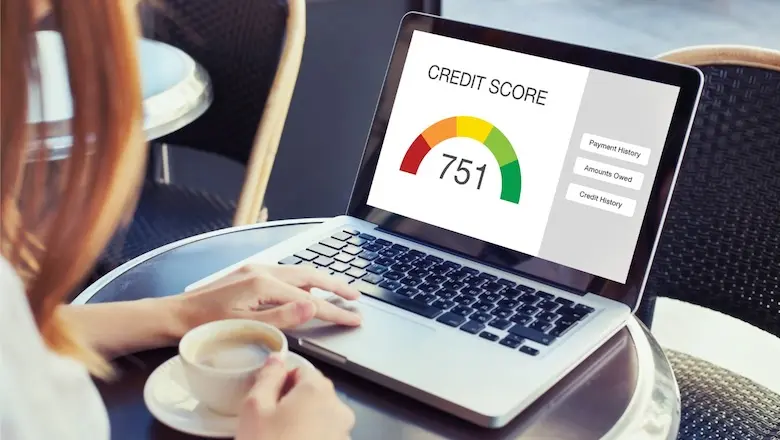
A declining credit score is often a silent but powerful indicator that you’re overspending. This drop can result from late payments, high credit utilization (the amount of credit you’re using compared to your total limit), or accumulating too much debt.

If you’re relying heavily on credit cards to cover basic living expenses — like groceries, gas, or other monthly bills — it likely means your spending has outpaced your income. Over time, this kind of borrowing not only hurts your score but also racks up interest charges that dig you deeper into the hole.

3. You’ve Stopped Your Retirement Contributions

If money is feeling a little tight, you may feel that now is not the time to worry about retirement. While this may seem like a short-term fix, it can significantly damage your long-term financial health.

Halting retirement contributions — even temporarily — means missing out on compound returns (when the returns you earn start earning returns of their own), employer matches, and overall portfolio growth. If you’re regularly suspending or avoiding savings altogether, it may indicate your current expenses are too high to support your financial goals.

Increase your savings
with a limited-time APY boost.*


*Earn up to 4.00% Annual Percentage Yield (APY) on SoFi Savings with a 0.70% APY Boost (added to the 3.30% APY as of 12/23/25) for up to 6 months. Open a new SoFi Checking and Savings account and pay the $10 SoFi Plus subscription every 30 days OR receive eligible direct deposits OR qualifying deposits of $5,000 every 31 days by 3/30/26. Rates variable, subject to change. Terms apply here. SoFi Bank, N.A. Member FDIC.

4. A Big Portion of Your Income Goes to Housing

Housing is typically the largest monthly expense, but if your rent or monthly mortgage payment is above 30% of your monthly pre-tax income, you may be financially overextended.[1] This can make it hard to have enough money leftover to cover other expenses, save, invest, and build wealth over time.

Staying below 30% can be difficult if you live in a region of the country where the cost of housing is high. Nevertheless, spending a lot more than a third of your income on housing can leave you “house poor,” and put your other financial obligations at risk.

5. Your Savings Account Isn’t Growing

If your savings balance has stayed flat — or worse declined — over the past few months, it’s a sign that your lifestyle is too costly. A lack of progress in savings makes it hard to handle unexpected events or set aside funds for the future.

Making regular deposits into a savings account, such as a high-yield savings account — in addition to your 401(k) or IRA — allows you to work towards your short- and medium-term financial goals, such as putting a downpayment on a home or a car or going on vacation.

6. You’ve Been Charged an Overdraft Fee More than Once This Year

An overdraft fee is charged when there’s not enough money in your account to cover a check or debit card payment. Overdrawing from your account often means the bank will lend you money to cover the overage. You’re then responsible for paying back that amount, as well as an overdraft fee, which can potentially be more than the overdrawn amount. (That said, there are some banks that offer no-fee overdraft protection.)

Mistakes happen, and a one-off overdraft isn’t necessarily an indicator of overspending. But repeat offenses can be a sign that you are living too close to the edge and don’t have a clear picture of how much money is going in and coming out of your account each month.

7. You’ve Never Set a Budget

A lack of budgeting can be a fundamental sign of living beyond your means. If you’ve never taken the time to outline your income, expenses, and saving goals, you may well be spending money in ways that aren’t sustainable.

Without a budget, it’s easy to underestimate your monthly expenses or overestimate what you can afford. You might think you’re managing fine but in reality you could be accruing debt, missing saving opportunities, or overspending in certain categories.

Many people think making and following a budget will be too complicated. But having a budget can actually simplify your spending decisions by letting you know exactly what you can and can’t afford. Having a budget also helps to ensure you have enough money to cover essentials, fun, and also sock some away in savings.

8. You’re Leasing a Car You Can’t Afford to Buy

Leasing a vehicle you would not be able to purchase outright or finance can be a major financial red flag. Leasing lets you rent a high-end lifestyle, but many people end up with leases they really can’t afford.

You might be covering your monthly auto payments, but if you can’t do that while meeting your other expenses and also putting money into savings, then your car is likely too expensive. Leasing also means you’re never building equity in a vehicle and may face additional costs for mileage or wear-and-tear penalties.

9. You’re Only Making Minimum Payments on Credit Cards

It’s fine to use your credit card to pay for everyday expenses and the occasional big purchase. But if you can’t pay off most of the balance each month, it’s a red flag that you’re living beyond your means.

While minimum payments keep your account in good standing and avoid late fees, most of the payment goes toward interest, which means they don’t address the underlying debt. Minimum payments are also designed to be small, so it takes much longer to pay off your balance, sometimes even years. This can trap you in a cycle of debt where you’re constantly paying off interest rather than reducing the principal, making it highly challenging to ever become debt-free.

10. You Don’t Have an Emergency Fund

Not having a stash of cash you can turn to in a pinch can be a sign that you’re living above your means. You may be gambling on the fact that nothing will go wrong. But life is unpredictable, and you could well get hit with an unexpected expense (like a major car repair or medical bill) at some point, or potentially lose your job.

Without savings to fall back on, you may be forced to rely on high-interest credit cards or loans, which can lead to debt that’s hard to repay. This financial strain can cause stress, damage your credit, and disrupt long-term goals like saving for retirement or buying a home. An emergency fund provides a buffer that protects your financial stability.

How to Live Below Your Means and Get Back on Track

Overspending can feel like a slippery slope — once you’re living above your means, it can be tough to stop the cycle. But financial recovery is entirely possible. The key is to learn how to live below your means and establish habits that promote long-term stability. Here’s how to get started:

1. Create a Realistic Budget

A solid budget is the foundation of any financial turnaround. Start by tracking all your income sources and listing every expense, from rent to streaming services. Categorize your spending into needs, wants, and goals/savings, then determine if you want to rejigger how much you are spending in each area.

One popular budgeting framework is the 50/30/20 rule. This divides your after-tax income into three categories: 50% for needs, 30% for wants, and 20% for savings and debt repayment beyond the minimum. This set-up ensures that your essential expenses are covered while also allowing for some “fun” spending and future financial security.

Recommended: 50/30/20 Budget Calculator

2. Reduce Unnecessary Expenses

To find room in your budget for saving and paying more than the minimum on debts, you may need to cut back on nonessential spending. For example, you might free up funds by cooking more and eating out less, getting rid of streaming services you rarely watch, and/or quitting the gym and working out at home.

To cut back on impulse purchases, you might institute the 30-day rule: When you feel the urge to buy something you want but don’t need, commit to waiting 30 days before making the purchase. If after the waiting period, you decide you truly want the item and it aligns with your financial goals, go ahead and buy it. There’s a strong chance, however, that the urge to buy it will have passed.

3. Build an Emergency Fund

Living paycheck to paycheck leaves little room for error. An emergency fund is your financial safety net — it prevents one unexpected bill from becoming a crisis.

Financial advisors often recommend setting aside at least three to six months’ worth of living expenses for emergencies. But you don’t have to come up with that entire sum overnight. Begin with whatever amount you can afford, even if it’s just $10 a week. Consider setting up an automatic transfer to a separate savings account earmarked for emergencies so you’re not tempted to spend it. Or, if your bank offers it, you might dedicate a savings vault within your account for emergency savings.

This buffer provides peace of mind and helps you avoid falling into debt when life throws curveballs.

The Takeaway

Living above your means doesn’t always look like luxury vacations or designer clothes. Often, it’s more subtle: relying on credit cards, skipping savings, or struggling to cover basic expenses. The good news is that these warning signs are not life sentences — they’re signals that you can change course.

Learning how to live within your means involves awareness, building a budget, and making one smart money decision at a time. With consistent effort, you can shift from financial survival to financial security — and ultimately, financial freedom.

Interested in opening an online bank account? When you sign up for a SoFi Checking and Savings account with eligible direct deposit, you’ll get a competitive annual percentage yield (APY), pay zero account fees, and enjoy an array of rewards, such as access to the Allpoint Network of 55,000+ fee-free ATMs globally. Qualifying accounts can even access their paycheck up to two days early.


Better banking is here with SoFi, NerdWallet’s 2024 winner for Best Checking Account Overall.* Enjoy 3.30% APY on SoFi Checking and Savings with eligible direct deposit.

FAQ

What are the long-term impacts of living beyond your means?

Living beyond your means can lead to chronic debt, poor credit, and financial instability. Over time, high-interest credit card balances and loans can become unmanageable, making it difficult to build savings or qualify for major purchases like a home. This behavior often leads to stress, strained relationships, and limited future financial opportunities. Without change, it can also delay or prevent retirement, forcing individuals to work longer or rely on others for support later in life.

What are the first steps to take if I’m overspending?

The first step is to track your spending for a full month to understand where your money is going. Then, categorize your expenses and identify areas where you can cut back, such as dining out, subscriptions, or impulse purchases. Creating a realistic budget is crucial — allocate funds for needs, savings, and limited wants. Set financial goals and consider using a budgeting app or cash envelopes to stay disciplined. If overspending is tied to emotional triggers, you might benefit from speaking with a financial counselor.

How can I start saving if I have no extra money?

Start by reviewing your expenses and identifying small, nonessential costs to reduce or eliminate — like daily coffee runs or streaming services. Even setting aside just $5 to $10 a week adds up over time. You might also want to automate your savings (so money is transferred to a savings account before you can spend it) and boost your income through side gigs or selling unused items. The key is to start small and build momentum through consistency and gradual lifestyle adjustments.

What percentage of my income should go toward housing?

Financial experts generally recommend spending no more than 30% of your gross monthly income on housing. This includes rent or mortgage payments, property taxes, insurance, and utilities. Staying within this limit helps ensure you have enough left over for other essential expenses like food, transportation, savings, and debt payments. In high-cost areas, it may be harder to stay under 30%, but exceeding it by too much can strain your finances and reduce your ability to build long-term wealth.

What helpful resources exist if I’m struggling financially?

There are many free and low-cost resources available. Nonprofit credit counseling agencies, like the National Foundation for Credit Counseling (NFCC), offer budgeting help and debt management plans. Local community organizations often provide food assistance, utility aid, and housing support. Government programs like SNAP, Medicaid, and unemployment benefits can also offer relief during tough times. In addition, financial literacy websites, public libraries, and budgeting apps offer tools and guidance to help you regain control of your finances.

Article Sources

Photo credit: iStock/urbazon

SoFi Checking and Savings is offered through SoFi Bank, N.A. Member FDIC. The SoFi® Bank Debit Mastercard® is issued by SoFi Bank, N.A., pursuant to license by Mastercard International Incorporated and can be used everywhere Mastercard is accepted. Mastercard is a registered trademark, and the circles design is a trademark of Mastercard International Incorporated.

Annual percentage yield (APY) is variable and subject to change at any time. Rates are current as of 12/23/25. There is no minimum balance requirement. Fees may reduce earnings. Additional rates and information can be found at https://www.sofi.com/legal/banking-rate-sheet

Eligible Direct Deposit means a recurring deposit of regular income to an account holder’s SoFi Checking or Savings account, including payroll, pension, or government benefit payments (e.g., Social Security), made by the account holder’s employer, payroll or benefits provider or government agency (“Eligible Direct Deposit”) via the Automated Clearing House (“ACH”) Network every 31 calendar days.

Although we do our best to recognize all Eligible Direct Deposits, a small number of employers, payroll providers, benefits providers, or government agencies do not designate payments as direct deposit. To ensure you're earning the APY for account holders with Eligible Direct Deposit, we encourage you to check your APY Details page the day after your Eligible Direct Deposit posts to your SoFi account. If your APY is not showing as the APY for account holders with Eligible Direct Deposit, contact us at 855-456-7634 with the details of your Eligible Direct Deposit. As long as SoFi Bank can validate those details, you will start earning the APY for account holders with Eligible Direct Deposit from the date you contact SoFi for the next 31 calendar days. You will also be eligible for the APY for account holders with Eligible Direct Deposit on future Eligible Direct Deposits, as long as SoFi Bank can validate them.

Deposits that are not from an employer, payroll, or benefits provider or government agency, including but not limited to check deposits, peer-to-peer transfers (e.g., transfers from PayPal, Venmo, Wise, etc.), merchant transactions (e.g., transactions from PayPal, Stripe, Square, etc.), and bank ACH funds transfers and wire transfers from external accounts, or are non-recurring in nature (e.g., IRS tax refunds), do not constitute Eligible Direct Deposit activity. There is no minimum Eligible Direct Deposit amount required to qualify for the stated interest rate. SoFi Bank shall, in its sole discretion, assess each account holder's Eligible Direct Deposit activity to determine the applicability of rates and may request additional documentation for verification of eligibility.

See additional details at https://www.sofi.com/legal/banking-rate-sheet.

*Awards or rankings from NerdWallet are not indicative of future success or results. This award and its ratings are independently determined and awarded by their respective publications.

Financial Tips & Strategies: The tips provided on this website are of a general nature and do not take into account your specific objectives, financial situation, and needs. You should always consider their appropriateness given your own circumstances.

We do not charge any account, service or maintenance fees for SoFi Checking and Savings. We do charge a transaction fee to process each outgoing wire transfer. SoFi does not charge a fee for incoming wire transfers, however the sending bank may charge a fee. Our fee policy is subject to change at any time. See the SoFi Bank Fee Sheet for details at sofi.com/legal/banking-fees/.
Third-Party Brand Mentions: No brands, products, or companies mentioned are affiliated with SoFi, nor do they endorse or sponsor this article. Third-party trademarks referenced herein are property of their respective owners.

Third Party Trademarks: Certified Financial Planner Board of Standards Center for Financial Planning, Inc. owns and licenses the certification marks CFP®, CERTIFIED FINANCIAL PLANNER®

SOBNK-Q225-108

Read more
What Are Traveler's Checks and How Do They Work?

What Is a Traveler’s Check?

Before the age of digital payments, traveler’s checks were considered one of the safest and most convenient ways to carry money while traveling, especially abroad. Though their popularity has waned with the rise of credit cards and mobile wallets, traveler’s checks do still exist and are issued by a limited number of banks and credit unions.

Whether you’re curious about their modern use or holding onto a few from a past trip, understanding traveler’s checks can help you make informed financial decisions on your next journey.

Key Points

  • Traveler’s checks provide a secure method for carrying money while traveling.
  • They are being replaced by more convenient options like credit cards, debit cards, and mobile wallets.
  • Prepaid debit cards offer security but have fixed spending limits.
  • Credit cards provide rewards and robust fraud protection.
  • Mobile wallets are secure and convenient but not accepted everywhere.

Traveler’s Checks Defined

Traveler’s checks are paper checks you can purchase at a bank or credit union then carry when you travel abroad in a place of cash. Unlike cash, however, travelers checks are secured by the issuing financial institution, which means that the issuer will replace the funds if the checks are lost or stolen at any point at home or abroad.

Issuers print checks in varying denominations, such as $10, $20, or $50, and they are available in a range of currencies. Depending on where you buy traveler’s checks, you may be charged a fee in the range of 1% to 3% of the total purchase amount.[1]

You can use travelers checks just like cash to pay merchants for goods and services, as long as they accept traveler’s checks. Typically, any change due back to you will be given in local currency. You may also be able to get the checks converted into cash in the local currency at some banks, hotels, and currency exchange offices, though you may need to pay a fee.

💡 Quick Tip: Banish bank fees. Open a new bank account with SoFi and you’ll pay no overdraft, minimum balance, or any monthly fees.

How Do Traveler’s Checks Work?

Traveler’s checks operate somewhat like regular checks but are pre-paid and come with built-in fraud protection. Here’s a step-by-step explanation of how they work:

  • Purchase: You buy traveler’s checks at some banks and other financial institutions. You’ll need to pay the amount of the checks plus possibly a fee.
  • Sign on purchase: Upon receiving the checks, you may be asked to sign each one in the upper left-hand corner in front of a witness (usually the seller). If not, you’ll want to sign them as soon as possible afterward.
  • Use: When you’re ready to spend a check or cash it in, you sign it again in the presence of the merchant or bank. The signatures must match to validate the check. These checks have no expiration date.
  • Lost or stolen checks: If you lose your checks or they are stolen, the issuing company typically offers a refund or replacement, sometimes within 24 hours, depending on your location and the provider.

Where Can I Get a Traveler’s Check?

While traveler’s checks still exist and people still use them, they are getting increasingly hard to come by. American Express — which issued traveler’s checks for over a century — no longer offers new checks (though they will honor previously issued checks). However, some financial services companies — including Visa —- still issue traveler’s checks, which are sold through various partner banks.

If you’re interested in buying traveler’s checks, you will likely need to contact several banks and credit unions to find one that still offers them.

💡 Quick Tip: Typically, checking accounts don’t earn interest. However, some accounts do, and online banks are more likely than brick-and-mortar banks to offer you the best rates.

Pros and Cons of Traveler’s Checks

Traveler’s checks offer a mix of benefits and drawbacks. For some, they are a nostalgic or extra-safe backup option. For others, they may seem outdated compared to more modern financial tools.

Pros of Traveler’s Checks

  • They keep your money safe. Unlike cash, which cannot be replaced if lost, traveler’s checks allow travelers to get their money back in the event of theft or loss.
  • They don’t expire. If you bought traveler’s checks and did not end up using all of them on your trip, you can use them where they are accepted, or redeem them with the issuer, at any time in the future.
  • They protect your identity. Traveler’s checks are not linked to your bank account or personal line of credit and do not contain personally identifiable information, thus eliminating risk of identity theft.

Cons of Traveler’s Checks

  • They can be hard to get. There are a limited number of issuers today, and the paperwork involved in obtaining them can be time-consuming.
  • They aren’t as widely accepted as they once were. Before you leave for your trip, it’s wise to find exchange locations and check with local merchants to confirm they’ll accept a traveler’s check as payment.
  • You may have to pay a fee. Unless you’re getting them from the financial institution where you have an account, you’ll likely have to pay a fee to purchase a traveler’s check.

Pros of Traveler’s Checks

Cons of Traveler’s Checks

Secure Can be hard to obtain
No expiration Not as widely accepted anymore
Protects your identity May involve fees

Do I Need Traveler’s Checks When Going Abroad?

Generally, no. Modern travelers often find credit cards, debit cards, and mobile wallets to be more convenient, widely accepted, and cost-effective. However, there are exceptions. You might consider traveler’s checks if:

  • You’re visiting a remote or unstable country where card services may be unreliable.
  • You prefer to avoid carrying a lot of cash and want a secure backup.
  • You are traveling to regions with limited ATM access.
  • You have concerns about card fraud or identity theft and want a paper-based fallback.

Still, for the majority of travelers, modern financial tools usually make traveler’s checks unnecessary.

Increase your savings
with a limited-time APY boost.*


*Earn up to 4.00% Annual Percentage Yield (APY) on SoFi Savings with a 0.70% APY Boost (added to the 3.30% APY as of 12/23/25) for up to 6 months. Open a new SoFi Checking and Savings account and pay the $10 SoFi Plus subscription every 30 days OR receive eligible direct deposits OR qualifying deposits of $5,000 every 31 days by 3/30/26. Rates variable, subject to change. Terms apply here. SoFi Bank, N.A. Member FDIC.

4 Alternatives to Traveler’s Checks

Traveler’s checks are no longer the only secure option for carrying money while abroad. Here are four modern, practical alternatives:

1. Prepaid Debit Card

A prepaid travel card is the modern-day version of a traveler’s check. You can load the card with a set amount of money from your bank account before you travel, then use it to get local currency, shop, dine, and more while you’re abroad.

Like traveler’s checks, prepaid cards are not linked to your bank account, which prevents anybody from draining your checking account if the card gets lost or stolen — and you can’t go into debt. On the downside, these cards limit you to a pre-set spending amount. And if you lose your card, there’s no way to get your money back.

2. Credit Card

Using a credit card is a convenient and secure way to pay for goods and services while you travel. These cards come with robust fraud protections that safeguard your money if your card gets stolen or lost while overseas. And many cards also offer spending rewards, such as points, miles, or cash back. However, there may be fees involved with using your card overseas, called foreign transaction fees.

And unless it’s an emergency, you’ll likely want to avoid using your credit card for getting cash at an ATM. When you request a cash advance from a credit card, you can get hit with a fee (often 3% to 5% of the advance amount), as well as interest, which can run as high as 29%. You may also pay an ATM fee of several dollars.

3. Debit Card

Another alternative to traveler’s checks is your debit card, which you can use to get local currency at ATMs and also to make purchases while traveling. Unlike a credit card, you’re spending your own money when you pay by debit card, so you can’t run up debt.

Like a credit card, however, you may get hit with a foreign transaction fee when you pay something overseas using your debit card. You may also have to pay out-of-network ATM fees every time you withdraw cash. However, some banks have partnerships with banks in other countries that allow travelers to make fee-free withdrawals. Before you travel, it’s a good idea to check to see if your bank has this kind of arrangement.

4. Mobile Wallet

Mobile wallets like Apple Pay, Google Pay, and Samsung Wallet are becoming more accepted around the world. You can link your credit and debit cards and pay directly from your phone without needing a physical wallet. This method of payment is not only convenient, it’s also highly secure, since digital wallets use encryption and tokenization to protect your data.

Just keep in mind that not all merchants accept mobile wallets, especially in rural areas, so you may not want to rely on this as your only payment option when you travel.

💡 Quick Tip: Want a simple way to save more everyday? When you turn on Roundups, all of your debit card purchases are automatically rounded up to the next dollar and deposited into your online savings account.

How to Keep Your Money Safe While Traveling

Regardless of your preferred payment method, keeping your money safe while traveling is essential. Here are a few tips:

  • Keep your money hidden: Consider using a money belt or a neck pouch (both are flat pouches that fit under your clothes) to keep your money and other valuables close and secure.
  • Don’t keep all your funds in one place: Consider dividing your money and cards and keeping them in separate places, with some readily accessible and others more hidden.
  • Notify your bank: Let your bank and credit card issuer know about your upcoming travel dates and destinations. This can help prevent your credit or debit card from being flagged for potential fraud and subsequently blocked.
  • Use hotel safes: Store passports, extra cash, and backup cards in the hotel safe when not needed.
  • Have a backup: Keep at least one additional method of payment (e.g., an extra card or a few traveler’s checks) in case your main option fails.

Recommended: How to Keep Your Bank Account Safe Online

What Can I Do With Old Traveler’s Checks?

If you still have old traveler’s checks from past trips, don’t throw them away — they may still be redeemable. Here’s what you can do:

  • Bring them to the issuing bank: Institutions like American Express still honor old traveler’s checks. You may even be able to redeem them online.
  • Deposit them into your bank account: Many banks accept traveler’s checks as deposits, though processing may take longer.
  • Exchange them for cash at participating banks: If you’re abroad, you might be able to cash an old traveler’s check at a bank that still partners with the issuer.
  • Sell or donate as a collectible: Older unused checks may hold value for collectors, especially if they feature historical branding or designs.

Keep in mind that in order to redeem old traveler’s checks, you’ll need to provide identification and possibly documentation proving you were the original purchaser.

The Takeaway

Traveler’s checks were once the gold standard of secure travel funds, but the rise of digital banking has made them largely obsolete. Still, they retain some usefulness as a secure backup for international travelers, especially in less developed regions or for those who prefer not to rely on digital methods.

For most modern travelers, credit cards, debit cards, prepaid cards, and mobile wallets offer more convenience, better exchange rates, and broad acceptance. However, understanding traveler’s checks — and knowing how to use or redeem them — can still come in handy.

Ultimately, the best approach is a balanced one: carry multiple forms of payment, stay aware of local customs and banking norms, and prioritize security. Whether you’re heading off the beaten path or to a major city, having a thoughtful plan for managing your money can make your travels smoother, safer, and more enjoyable.

Interested in opening an online bank account? When you sign up for a SoFi Checking and Savings account with eligible direct deposit, you’ll get a competitive annual percentage yield (APY), pay zero account fees, and enjoy an array of rewards, such as access to the Allpoint Network of 55,000+ fee-free ATMs globally. Qualifying accounts can even access their paycheck up to two days early.


Better banking is here with SoFi, NerdWallet’s 2024 winner for Best Checking Account Overall.* Enjoy 3.30% APY on SoFi Checking and Savings with eligible direct deposit.

FAQ

How does a traveler’s check work?

A traveler’s check is a prepaid, fixed-amount paper check used as a secure alternative to cash while traveling. You purchase it from a financial institution, sign it when issued, and sign it again when spending it or cashing it, allowing merchants or banks to verify your identity. If lost or stolen, traveler’s checks can usually be replaced quickly. However, traveler’s checks are not as widely issued and accepted as they once were. They have largely been replaced by prepaid debit cards and credit cards.

Why are traveler’s checks not used anymore?

Traveler’s checks have largely fallen out of favor due to the convenience and widespread use of credit cards, debit cards, and digital wallets, which are accepted almost everywhere and offer strong fraud protection. ATMs are now globally accessible, making it easy to withdraw local currency as needed. Additionally, it’s hard to find banks that still issue traveler’s checks, and many merchants no longer accept them as payment.

Can you cash traveler’s checks?

Yes, you can still cash traveler’s checks, though it might take some effort. Some major banks will cash them for account holders, especially if they issued the checks. Some currency exchange offices and hotels may also accept them. You’ll need valid identification, and you’ll usually sign the check in front of the cashier. However, because these checks are less common now, it’s best to call ahead and confirm if a location will accept or cash them.

Do financial institutions still carry traveler’s checks?

Some financial institutions still offer traveler’s checks, but their availability is limited. American Express no longer issues travelers checks. However, Visa still offers them through participating banks. You may need to call around to find a bank in your area that offers these checks. Those that do may also require advance notice or only provide them to account holders. As the travel industry shifts toward digital and card-based payment methods, traveler’s checks are now less commonly sold or promoted.

What can I do with old traveler’s checks?

If you have old traveler’s checks, you can generally still cash or deposit them, as they typically don’t expire. Visit a bank — preferably one that issued the checks or one with international banking services — and present valid identification. You can also contact the issuing company (e.g., American Express) for assistance or to process a refund. You may be able to deposit them into your bank account (though check with your bank first). They retain their original value if unused.


Photo credit: iStock/AndreyPopov

SoFi Checking and Savings is offered through SoFi Bank, N.A. Member FDIC. The SoFi® Bank Debit Mastercard® is issued by SoFi Bank, N.A., pursuant to license by Mastercard International Incorporated and can be used everywhere Mastercard is accepted. Mastercard is a registered trademark, and the circles design is a trademark of Mastercard International Incorporated.

Annual percentage yield (APY) is variable and subject to change at any time. Rates are current as of 12/23/25. There is no minimum balance requirement. Fees may reduce earnings. Additional rates and information can be found at https://www.sofi.com/legal/banking-rate-sheet

Eligible Direct Deposit means a recurring deposit of regular income to an account holder’s SoFi Checking or Savings account, including payroll, pension, or government benefit payments (e.g., Social Security), made by the account holder’s employer, payroll or benefits provider or government agency (“Eligible Direct Deposit”) via the Automated Clearing House (“ACH”) Network every 31 calendar days.

Although we do our best to recognize all Eligible Direct Deposits, a small number of employers, payroll providers, benefits providers, or government agencies do not designate payments as direct deposit. To ensure you're earning the APY for account holders with Eligible Direct Deposit, we encourage you to check your APY Details page the day after your Eligible Direct Deposit posts to your SoFi account. If your APY is not showing as the APY for account holders with Eligible Direct Deposit, contact us at 855-456-7634 with the details of your Eligible Direct Deposit. As long as SoFi Bank can validate those details, you will start earning the APY for account holders with Eligible Direct Deposit from the date you contact SoFi for the next 31 calendar days. You will also be eligible for the APY for account holders with Eligible Direct Deposit on future Eligible Direct Deposits, as long as SoFi Bank can validate them.

Deposits that are not from an employer, payroll, or benefits provider or government agency, including but not limited to check deposits, peer-to-peer transfers (e.g., transfers from PayPal, Venmo, Wise, etc.), merchant transactions (e.g., transactions from PayPal, Stripe, Square, etc.), and bank ACH funds transfers and wire transfers from external accounts, or are non-recurring in nature (e.g., IRS tax refunds), do not constitute Eligible Direct Deposit activity. There is no minimum Eligible Direct Deposit amount required to qualify for the stated interest rate. SoFi Bank shall, in its sole discretion, assess each account holder's Eligible Direct Deposit activity to determine the applicability of rates and may request additional documentation for verification of eligibility.

See additional details at https://www.sofi.com/legal/banking-rate-sheet.

*Awards or rankings from NerdWallet are not indicative of future success or results. This award and its ratings are independently determined and awarded by their respective publications.

Financial Tips & Strategies: The tips provided on this website are of a general nature and do not take into account your specific objectives, financial situation, and needs. You should always consider their appropriateness given your own circumstances.

We do not charge any account, service or maintenance fees for SoFi Checking and Savings. We do charge a transaction fee to process each outgoing wire transfer. SoFi does not charge a fee for incoming wire transfers, however the sending bank may charge a fee. Our fee policy is subject to change at any time. See the SoFi Bank Fee Sheet for details at sofi.com/legal/banking-fees/.
Third-Party Brand Mentions: No brands, products, or companies mentioned are affiliated with SoFi, nor do they endorse or sponsor this article. Third-party trademarks referenced herein are property of their respective owners.

SOBNK-Q225-112

Read more
alarm clock on pastel background

What Is a Delinquent Payment for Student Loans?

When a student loan payment is past due — even by just one day — it becomes a delinquent payment. For instance, if your student loan payment is due by the 15th of each month, and the 16th arrives and you haven’t paid the amount you owe, you’re generally considered to be delinquent on that loan.

Once you’re late making a payment, a late fee may be assessed, and late payments may impact your credit report.

Read on to learn more about student loan delinquency and the potential consequences, as well as ways to help prevent student loans from becoming delinquent.

Key Points

•   Federal student loans are considered delinquent when they’re just one day past due.

•   Delinquent student loans can negatively affect your credit score.

•   Delinquency gets reported to credit bureaus after 90 days of nonpayment and remains on your report for up to seven years.

•   Student loans go into default after 270 days of missed payments.

•   Possible consequences of default include wage garnishment and tax refund seizure by the government to collect what’s owed.

How Student Loan Delinquency Impacts Your Credit Score

Late student loan payments can negatively impact a borrower’s credit score. In fact, as of the first quarter of 2025, new student loan delinquencies have reduced borrowers’ credit scores substantially, with amounts ranging from about 100 points to more than 150 points, according to a recent report from the New York Federal Reserve.

How Long Do Delinquent Student Loans Stay on Your Credit Report?

If you are delinquent on your student loans for 90 days or more, your loan servicer will report the delinquency to the national credit bureaus. Delinquent student loans appear on your credit report and they typically remain there for up to seven years.

This can make it harder to get approved for new loans, such as a car loan or mortgage, and credit cards.

Difference Between Delinquency and Default for Student Loans

Your federal student loans are considered delinquent the first day you are late with a payment. They remain delinquent until you pay what you owe or get a deferment or forbearance to temporarily stop your loan payments.

After 270 days, if the loans are still delinquent, they go into student loan default. This means that your loans are now due in full, along with accrued interest and any fees, fines, and penalties.

To collect this amount, the government can garnish up to 15% of your pay, and/or take your tax refund to put towards the debt. They can do the same to your loan cosigner, if you have one. And your loan servicer can even sue you.

Recommended: Student Loan Default Rate

Common Causes of Student Loan Delinquency

There are a number of different causes of student loan delinquency. Some common ones include:

•  The pandemic. The Covid-19 payment pause on student loans meant borrowers were not required to make payments for several years. The pause ended in 2023, but then there was an “on-ramp” to help borrowers prepare to restart their payments until October 2024. At that point, late and missing payments were once again reported to the credit bureaus. According to the New York Federal Reserve, the delinquency rate on student loans soon returned to what it was before the pandemic, with approximately 6 million borrowers in delinquency or default.

•  Higher burden of student debt. The amount of student loan debt in the U.S. has doubled in the last 16 years, and the average borrower’s student loan balance is currently $38,375. Large amounts of debt can be challenging to repay.

•  Accumulating interest. The interest on most student loans accrues daily. When a borrower makes a payment, most of that payment goes toward the interest that has accumulated since the last payment, and whatever is left goes to the principal. This makes it difficult for borrowers to chip away at what they owe, because interest continues to accrue on the loan principal.

•  Financial challenges. Financial hardships, such as job loss, a reduction in income, or having a number of other debts to also repay, can lead to student loan delinquency.

•  Attendance at for-profit colleges. Students who attend for-profit colleges tend to take on greater student loan debt and have more trouble repaying what they owe. These borrowers are also less likely to get good jobs after graduation and often earn less.

•  Not completing a degree. Borrowers who don’t finish school and earn their degrees are more likely to struggle to repay their student loans. That may be because they earn lower wages.

Late Student Loan Payment

Being late with a student loan payment has consequences — even after just one day. Here are some of the potential ramifications you might face.

What Happens If You Miss a Student Loan Payment?

Missing a federal student loan payment makes you delinquent on your loan. After just one day, your loan is considered delinquent, and in 30 days you may be charged late fees, depending on your loan servicer.

After 90 days, the delinquency is reported to the credit bureaus where it goes on your credit reports. After 270 days, your loan goes into default. The loans are then due immediately in full, along with interest and any fees, fines, and penalties. To collect what you owe, the government can garnish 15% of your wages and/or take your tax refund. Your loan servicer may also take you to court.

Federal vs. Private Student Loan Late Payment Policies

In general, federal student loans offer more options for borrowers who are late with their payments. For example, a borrower could choose deferment or forbearance or switch to another payment plan that lowers their monthly payments, such as income-driven repayment plans. Federal student loans might also offer a loan rehabilitation program.

Policies for late payment on private student loans vary by lender, but overall, private lenders tend to have less flexibility and more stringent rules. For example, a private lender might charge you late fees and send your case to collections when you miss payments. Private lenders can also sue borrowers who stop paying their loans.

Options to Get Back on Track After a Late Payment

If you’re late with a federal student loan payment, contact your student loan servicer and let them know that you’re having trouble paying your loan. They may suggest options to help, such as forbearance or deferment. Or you may be able to switch to a different payment plan that could make it easier to repay your loans, such as income-driven repayment.

If you have private student loans, contact your lender immediately to see what they might be able to do to help.

If you simply forgot about the loan payment, make it as soon as you remember. The sooner you get out of delinquency status, the better.

Can You Refinance a Delinquent Student Loan?

It may be possible to refinance a delinquent student loan, depending on the lender. If the delinquency has not yet affected your credit, you may be able to qualify for refinancing. If not, you could ask a creditworthy family member or friend to be your cosigner on the loan, which might help you qualify.

Once a loan goes into default, however, refinancing is much more challenging.

How Refinancing Can Help Prevent Future Delinquency

If you are struggling with high student loan payment, one option that may help you avoid delinquency down the road is refinancing student loans. When you refinance your loans, you exchange them for a new loan from a private lender — ideally with a lower interest rate, which reduces the amount of interest you pay over the life of the loan. Or, you might be able to lower your monthly payments by extending the term of the loan. However, you’ll pay more in interest over the life of the loan with an extended term.

A student loan refinance calculator can help you determine how much you might save to see if refinancing makes sense for you.

Just be aware that if you refinance your federal loans with a private lender, you will forfeit all of your federal benefits, including programs like income-driven repayment plans and deferment.

Recommended: Student Loan Refinancing Guide

How to Avoid Becoming Delinquent on Student Loans

To keep from becoming delinquent on student loans and avoiding possible consequences, here are a few steps you can take.

Setting Up Autopay and Budgeting Tips

Enrolling in autopay means your payments will be automatic so that they are always made on time — without you having to think about them. Plus, federal student loan borrowers get a 0.25% discount on their interest rate when enrolling in autopay. Many private student loan lenders offer a discount for autopay as well.

In addition, create a budget that prioritizes loan payments and stick to it. Pull together all your bills for the month along with your income. Look to see where you can cut back (such as ordering out or eliminating one or two of your streaming subscriptions), and put the money you save toward your loans.

Exploring Deferment, Forbearance, and Income-Driven Repayment Plans

If you’re struggling to make your federal student loan payments, an income-driven repayment plan may help. On these plans, payments are based on a borrower’s discretionary income and family size, and often result in lower payments.

If you’re undergoing financial hardship, perhaps because of a job loss or medical emergency, you can apply for federal student loan deferment, which can postpone payments or reduce them. Borrowers with qualifying loans are not required to pay the interest that accrues.

Another option is forbearance, which also temporarily allows you to reduce or postpone loan payments. However, with forbearance, borrowers are always responsible for paying the interest that accrues.

Refinancing Student Loans with SoFi

When you refinance your student loans, you can combine multiple loans into one loan with one convenient payment. And you may be able to qualify for a lower interest rate, which could help you save money over the life of the loan. SoFi offers loans with flexible loan terms to fit your budget.

With SoFi, refinancing is fast, easy, and all online. We offer competitive fixed and variable rates.

FAQ

What is considered a delinquent student loan payment?

A federal student loan is considered delinquent after just one day of missing a payment. After 90 days, the delinquency is reported to the credit bureaus and it goes on your credit report.

How long before a student loan is in default?

After 270 days of student loan delinquency, your loan goes into default. At that point, the consequences can be serious. The loan payments are due immediately in full, along with interest and any fees, fines, and penalties. The government can garnish 15% of your wages or take your tax refund to collect what you owe, and your loan servicer could take you to court.

Can delinquent student loans be removed from your credit report?

Eventually, yes. Typically, a delinquent student loan remains on your credit report for up to seven years.

How can you fix a delinquent student loan?

If your student loan is delinquent, call your loan servicer or lender right away to see what options you might have. For instance, if you’re struggling to afford your monthly payments, you may be able to switch to an income-driven repayment plan, which is based on your discretionary income and family size, and typically lowers your payments. Other possible options include deferment or forbearance to temporarily reduce or postpone your loan payments.

Does a single late student loan payment affect your credit score?

Missing just one federal student loan payment generally shouldn’t affect your credit score as long as you make the missed payment as soon as possible. After 90 days, delinquent federal student loans are reported to the credit bureaus and go on your credit report.

With private student loans, it depends on the policy of the lender. In general, you may have up to 30 days before a missed payment ends up on your credit report.


SoFi Student Loan Refinance
Terms and conditions apply. SoFi Refinance Student Loans are private loans. When you refinance federal loans with a SoFi loan, YOU FORFEIT YOUR ELIGIBILITY FOR ALL FEDERAL LOAN BENEFITS, including all flexible federal repayment and forgiveness options that are or may become available to federal student loan borrowers including, but not limited to: Public Service Loan Forgiveness (PSLF), Income-Based Repayment, Income-Contingent Repayment, extended repayment plans, PAYE or SAVE. Lowest rates reserved for the most creditworthy borrowers.
Learn more at SoFi.com/eligibility. SoFi Refinance Student Loans are originated by SoFi Bank, N.A. Member FDIC. NMLS #696891 (www.nmlsconsumeraccess.org).

SoFi Loan Products
SoFi loans are originated by SoFi Bank, N.A., NMLS #696891 (Member FDIC). For additional product-specific legal and licensing information, see SoFi.com/legal. Equal Housing Lender.


Third-Party Brand Mentions: No brands, products, or companies mentioned are affiliated with SoFi, nor do they endorse or sponsor this article. Third-party trademarks referenced herein are property of their respective owners.

Non affiliation: SoFi isn’t affiliated with any of the companies highlighted in this article.

Disclaimer: Many factors affect your credit scores and the interest rates you may receive. SoFi is not a Credit Repair Organization as defined under federal or state law, including the Credit Repair Organizations Act. SoFi does not provide “credit repair” services or advice or assistance regarding “rebuilding” or “improving” your credit record, credit history, or credit rating. For details, see the FTC’s website .

Financial Tips & Strategies: The tips provided on this website are of a general nature and do not take into account your specific objectives, financial situation, and needs. You should always consider their appropriateness given your own circumstances.

Third Party Trademarks: Certified Financial Planner Board of Standards Center for Financial Planning, Inc. owns and licenses the certification marks CFP®, CERTIFIED FINANCIAL PLANNER®

External Websites: The information and analysis provided through hyperlinks to third-party websites, while believed to be accurate, cannot be guaranteed by SoFi. Links are provided for informational purposes and should not be viewed as an endorsement.

SOSLR-Q225-031

Read more

What Is the Average Credit Score in California?

A typical California resident has a FICO® credit score of 722, which is slightly higher than the national average credit score of 715. The state’s average VantageScore is also better than the U.S.: 712 vs. 705.

A good credit score could open more financial doors for you, such as accessing more competitive interest rates for loans. By understanding the average credit score in California, you can better see how your credit profile stacks up against others in your state and identify areas of improvements.

Key Points

•   The average credit score in California is 722, slightly above the national average of 717.

•   Factors influencing credit scores include payment history, credit utilization, and length of credit history.

•   Tips to improve credit scores involve making timely payments, keeping credit utilization low, and regularly checking credit reports.

•   A 722 credit score is considered “good” by FICO, as it falls within the 670 to 739 range.

•   Maintaining a good credit score can lead to better loan terms and lower interest rates.

What Is a Credit Score?

Think of a credit score like a resume but for your credit behavior. This three-digit number ranges from 300 to 850 and is based on information gathered from your credit history. Lenders often use it to determine your future credit behavior, such as whether you’re more likely to pay loans on time.

In general, the higher your score, the more creditworthy you’ll likely appear to lenders — and the better your chances are to receive favorable rates and terms.

Recommended: What Is the Starting Credit Score?

What Is the Average Credit Score in California?

If you live in California and want to see how your credit score compares to fellow residents, it helps to look at two popular credit scoring models: FICO and VantageScore®.

As discussed, Californians have an average FICO Score of 722 and an average VantageScore of 712. These numbers are part of a larger positive trend in the state, according to the California Policy Lab, a research institute at the University of California. A 2024 analysis reveals that the average credit score in the state has been increasing steadily since 2013.

California Policy Lab also looked at how credit scores differed within the state based on a consumer’s location. As of December 2024, residents in the Bay area had the highest average credit score in the state, at 732. Meanwhile, people living in the San Joaquin Valley had the lowest score, at 688.

Scores also varied by age. At 743, Boomers (age 61-79) have the highest average score in California. The Greatest Generation (98+) had the lowest average credit score —663.

Check your credit score for free. Sign up and get $10.*

and get $10 in rewards points on us.


RL24-1993217-B

What Is the Average Credit Score in the U.S.?

As we mentioned above, Experian data shows the average FICO in the U.S. is 715 and the average VantageScore is 705. By comparison, the average FICO Score in California is 722 and the average VantageScore is 712.

What Is a Good Credit Score?

A “good” credit score depends on which scoring model you use. FICO considers a good score to fall between 670 and 730. A good VantageScore credit score is between 661 to 715. In general, those with a minimum credit score of 670 have a “good” credit score.

Factors Influencing the Average Credit Score

There are certain factors that affect your credit score, and all of them have to do with how you manage your credit accounts.

FICO and VantageScore consider the following when determining your score:

•   Payment history: Lenders want to know you’ll pay back what you owe in full and on time, so this factor ranks as one of the most influential factors that determine your credit score. If you need help making on-time payments, consider enlisting the help of a spending app.

•   Credit utilization/amounts owed: Credit utilization is the percentage of the available credit limit that you’re using. The higher the percentage, the more it could negatively affect your score.

•   Length of credit history: Having a longer credit history can offer scoring models more insight into how you use credit, though it’s not hugely influential when calculating a credit score.

•   Credit mix: Scoring models will take into account how well you manage different types of loans, such as a mortgage, credit cards, and personal loans.

•   New credit: When you apply for a new account, the lender will likely perform a hard inquiry, which can temporarily lower your credit score by a few points. Opening multiple new accounts in a short period of time could affect your score and may signal financial strain to lenders.

Why Do I Have More Than One Credit Score?

Every consumer has more than one credit score, and there are a few reasons for this. For starters, the information lenders provide to each of the three main credit reporting agencies — Equifax, Experian, and TransUnion — may vary slightly. A lender may choose to report data to one, two, or all three agencies, for example.

There are also various scoring models that a lender may use, including FICO and VantageScore, and each may weigh certain credit behaviors differently. One model might put greater weight on credit utilization or length of credit history, for instance.

Timing also plays a role. Generally, credit scores update every 30 to 45 days, and your score can change as new information becomes available.

Regardless of those factors, it’s important to understand what your credit score is so that you can use the information to build your credit and make progress toward your financial goals.

Recommended: FICO Score vs. Credit Score

Where Can I Check My Credit Scores?

Credit score monitoring is a smart thing for any consumer to do but can be particularly helpful if you’re getting ready to apply for a loan. You’ll not only see what information lenders can access, you can also use your score to gauge what loans you may qualify for.

The good news is, there are plenty of ways you can check your credit score without paying — whether you live in California or any other state. Banks often provide this information to their customers for free, as do credit card issuers. If you’re working with a credit counselor, they may be able to provide you with your score.

The Takeaway

The average credit score in California is 722 for FICO and 712 for VantageScore. Both scores are higher than the national average, and both are considered good. If you want to build your score, consider paying bills on time, keeping credit utilization low, and responsibly managing a mix of credit.

Take control of your finances with SoFi. With our financial insights and credit score monitoring tools, you can view all of your accounts in one convenient dashboard. From there, you can see your various balances, spending breakdowns, and credit score. Plus you can easily set up budgets and discover valuable financial insights — all at no cost.

See exactly how your money comes and goes at a glance.

FAQ

What is a good credit score to buy a car?

There’s no minimum credit score required when you’re applying for a car loan. That said, the higher your score, the more likely you are to receive a lower interest rate and more favorable terms.

What is a good credit score to buy a house?

The minimum credit score you need for a mortgage will depend on the type of loan you’re pursuing. For example, conventional loans and VA loans typically require borrowers to have a credit score of at least 620, though some lenders prefer to see a minimum credit score of 640. FHA loans, on the other hand, may be within reach for home buyers who have a credit score as low as 500, though they’ll be required to come up with a 10% down payment.

What credit score do most Americans have?

According to Experian, the average credit score in the U.S. is 715, which is generally considered a good score.

How rare is a 740 credit score?

A credit score of 740 isn’t that rare. According to Experian, 28% of Americans have a credit score of 740 or higher.

How rare is an 800 credit score?

Experian data found that some 22% of Americans have a credit score of 800 or higher. So, an 800 credit score isn’t uncommon.

How common is a 700 credit score?

More than one in five Americans (21%) have a credit score that falls between 670 and 739, which is considered “good.”


photo credit: iStock/anyaberkut
SoFi Relay offers users the ability to connect both SoFi accounts and external accounts using Plaid, Inc.’s service. When you use the service to connect an account, you authorize SoFi to obtain account information from any external accounts as set forth in SoFi’s Terms of Use. Based on your consent SoFi will also automatically provide some financial data received from the credit bureau for your visibility, without the need of you connecting additional accounts. SoFi assumes no responsibility for the timeliness, accuracy, deletion, non-delivery or failure to store any user data, loss of user data, communications, or personalization settings. You shall confirm the accuracy of Plaid data through sources independent of SoFi. The credit score is a VantageScore® based on TransUnion® (the “Processing Agent”) data.

*Terms and conditions apply. This offer is only available to new SoFi users without existing SoFi accounts. It is non-transferable. One offer per person. To receive the rewards points offer, you must successfully complete setting up Credit Score Monitoring. Rewards points may only be redeemed towards active SoFi accounts, such as your SoFi Checking or Savings account, subject to program terms that may be found here: SoFi Member Rewards Terms and Conditions. SoFi reserves the right to modify or discontinue this offer at any time without notice.

Disclaimer: Many factors affect your credit scores and the interest rates you may receive. SoFi is not a Credit Repair Organization as defined under federal or state law, including the Credit Repair Organizations Act. SoFi does not provide “credit repair” services or advice or assistance regarding “rebuilding” or “improving” your credit record, credit history, or credit rating. For details, see the FTC’s website .

Third-Party Brand Mentions: No brands, products, or companies mentioned are affiliated with SoFi, nor do they endorse or sponsor this article. Third-party trademarks referenced herein are property of their respective owners.

Financial Tips & Strategies: The tips provided on this website are of a general nature and do not take into account your specific objectives, financial situation, and needs. You should always consider their appropriateness given your own circumstances.

SORL-Q225-018

Read more
What Is the Difference Between Trading Halts and Trading Restrictions?

Trading Halts vs Other Trading Restrictions

Stock exchanges and financial regulators sometimes impose different types of trading restrictions on individual stocks, including short-term halts or delays, and occasionally longer-term suspensions.

In cases of unusual volatility, financial authorities may halt the trading of all securities, by using a fail-safe measure known as market-wide circuit breaker (MWCB).

Generally speaking, though, more common reasons for trading restrictions include mitigating the impact of company news that could impact a stock’s price, significant economic or global events that impact that security (or the market as a whole), or because there’s a technical problem impacting trades.

The Securities and Exchange Commission (SEC) can restrict the trading of a particular security for up to 10 days, often because the company hasn’t filed the requisite reporting documents.

These trading restrictions can impact listed stocks (those listed on U.S. stock exchanges), as well as over-the-counter (OTC) stocks, which are not traded on public exchanges.

Key Points

•   Stock exchanges and regulatory bodies may have reason to impose short- or long-term trading restrictions under various conditions.

•   A short-term trading halt usually lasts no more than an hour, and is resolved during the trading day. A delay is usually a brief pause before markets open.

•   The SEC can impose a trading suspension for up to 10 days.

•   A common reason for a trading suspension is that a company hasn’t maintained its regular reporting to the SEC.

•   A trading halt may be applied to a single security or market sector, but a full interruption of trading across markets is also possible.

What Is the Difference Between a Trading Halt and a Trading Restriction?

A trading halt is a short-term pause in which the trading of a particular security is temporarily suspended. These are known as regulatory halts. While a trading halt may occur at any point during the trading day, a trading delay is usually imposed at the market’s open.

A trading suspension is a longer-term restriction on trading a certain security, up to 10 days, enforced by the SEC.

For listed stocks, trading halts and delays are typically put in place by stock exchanges themselves, usually in response to company news that could impact trading outcomes.

OTC stocks, which are not listed on traditional exchanges like the NYSE or Nasdaq, are regulated by FINRA. So FINRA would institute a halt or delay if there were a material reason to pause trading.


💡 Quick Tip: All investments come with some degree of risk — and some are riskier than others. Before investing online, decide on your investment goals and how much risk you want to take.

What Is a Trading Halt or Delay?

A trading halt pauses trading for a short period of time, usually less than an hour. Typically the halt occurs in response to company news or announcements affecting a product, company leadership, or other significant news that could change a stock’s price positively or negatively.

A stock exchange can also interrupt trading of a certain security if it deems that the stock does not meet, or no longer meets the criteria for being listed on the exchange.

A trading delay can be imposed by an exchange when a company has revealed significant news after the trading hours of 4 p.m. to 9:30 a.m. Eastern Time — which is often when companies make important announcements.

The idea is to give investors time to absorb the news, and ideally avoid volatile trading.

When an exchange imposes a halt on a certain security, other exchanges that list that stock also respect the halt or delay.

Trading halts are artificial, meaning they are not a natural part of markets — however, they have been in existence for some time. Stock market halts date back to 1987, when the SEC mandated the creation of market-wide circuit-breakers (MWCBs) to prevent a repeat of the Oct. 19, 1987 market crash, also known as “Black Monday,” which was one of the worst days in the history of the stock market.

Reasons for Trading Halts

Trading halts are a means of interrupting market action to prevent volatility from snowballing in response to unexpected stimuli. Halts are implemented for a variety of reasons, including the following.

1. Anticipation of a Major News Announcement

A trading halt might be called during the day to allow a company to make an announcement. As noted, if the announcement is pre-market, it might result in a trading delay rather than a halt, prior to the market’s open. A trading halt or delay allows investors time to absorb the news without reacting.

2. Severe Price Fluctuations

Exchanges may also impose trading halts based on stock volatility, applying to both upside and downside swings in short amounts of time. Whereas news-induced trading delays could be an hour in duration, trading of a certain stock can also be halted when price fluctuations trigger the Limit Up/Limit Down Plan (LULD).

The LULD parameters are designed to halt trading when a stock’s price moves too quickly outside certain price bands. These bands are calculated on a rolling basis, to capture higher- or lower-than-average price movements over five-minute intervals. If a stock enters the so-called limit state (i.e., it hits either the upper or lower end of its range), and doesn’t move within 15 seconds, trading is paused for five minutes.

3. Market-Wide Circuit Breakers

There are also three tiers of market-wide circuit breakers that pause trading across all U.S. markets when the benchmark indices the S&P 500, the Dow Jones 30, and the Nasdaq exceed pre-set percentages in terms of price from the prior day’s closing price:

•   Level 1: 15-minute halt when the S&P 500 falls 7% below the previous day’s closing price between 9:30 am ET and 3:24 pm ET.

•   Level 2: 15-minute halt when the S&P 500 falls 13% below the previous day’s close between 9:30 am ET to 3:24 pm ET. Level 1 and 2 circuit breakers do not halt trading between 3:25 pm ET and 4:00 pm ET.

•   Level 3: Trading is closed for the remainder of the day until 4 pm ET when the S&P 500 falls 20% below the previous day’s close.

4. Correct an Order Imbalance

Non-regulatory halts or delays occur on exchanges such as the NYSE when company news — particularly when released after hours — has a disproportionate impact on the pending buy and sell orders.

When this occurs, trading is halted or delayed, market participants are alerted to the situation, and exchange specialists communicate to investors a reasonable price range where the security may begin trading again on the exchange.

However, a non-regulatory trading halt or delay on exchange does not mean other markets must follow suit with this particular security.

Recommended: Understanding the Different Stock Order Types

5. Technical Glitch

Trading is halted when it’s determined that unusual market activity such as the misuse or malfunction of an electronic quotation, communication, reporting, or execution system is likely to have a significant impact.

6. Regulatory Concerns

A trading halt may be placed on a security when there is uncertainty over whether the security meets the market’s listing standards. When this halt is placed by a security’s primary markets, other markets that offer trading of that security must also respect this halt. These include:

•   SEC Trading Suspension: A five-minute trading halt for a stock priced above $3.00 that moves more than 10% in a five-minute period. These are commonly imposed by the SEC onto penny stocks and other over-the-counter stocks suspected of stock promotion or fraud.

•   Additional Information Requested: A trading halt that occurs when a stock has rallied significantly without any clear impetus. This can be common among orchestrated pump-and-dumps or short squeezes. In many cases when the halt is lifted, the stock reverts back down because there are no underlying fundamentals supporting the dramatic rise in price.


💡 Quick Tip: It’s smart to invest in a range of assets so that you’re not overly reliant on any one company or market to do well. For example, by investing in different sectors you can add diversification to your portfolio, which may help mitigate some risk factors over time.

How Long Do Trading Halts Last?

Trading halts are typically no longer than an hour, the remainder of the trading day, or on rare occasions up to 10 days. However, if the SEC deems appropriate, the regulatory body may revoke a security’s registration altogether.

Example of Trading Halts

While most trading halts don’t make headlines, there are a few that investors may remember.

Pending News

In February of 2025, medical device company Know Labs, Inc. (KNW) announced that its trading suspension had been lifted by NYSE American. The trading suspension had been imposed on the company’s common stock, owing to the company’s need to meet compliance standards for listing on the NYSE American exchange (in this case the stock price was found to be above the low-selling threshold for listing on the exchange).

Stock Volatility

Amid the well-known Gamestop vs Wall Street meme stock spectacle in 2021, Gamestop’s stock (GME) saw huge capital inflows over the course of a couple of weeks, leading the NYSE in terms of daily volume. The stock’s intraday volume was so high that it triggered the volatility circuit breaker dozens of times over the last week of January and again on February 2, 2021, when it dropped 42%.

Technical Issues

In early June of 2024, the trading of some 40 ticker symbols on the NYSE, including Berkshire Hathaway Class A shares, were temporarily halted owing to pricing data issues that stemmed from a technical glitch attributed to a new software release. Trading resumed after a couple of hours.

Market-wide Circuit Breakers (MWCBs)

MWCBs were triggered four times in March 2020 in response to the global COVID-19 pandemic lockdowns that caused two of the six largest single-day drops in market history. This was the first occurrence of market-wide circuit breakers since 1997.

The Takeaway

Trading halts, delays, and suspensions are similar, but halts and delays are generally shorter — and are the result of intervention by a stock exchange or FINAR. Trading suspensions are generally put in place by the SEC.

Invest in what matters most to you with SoFi Active Invest. In a self-directed account provided by SoFi Securities, you can trade stocks, exchange-traded funds (ETFs), mutual funds, alternative funds, options, and more — all while paying $0 commission on every trade. Other fees may apply. Whether you want to trade after-hours or manage your portfolio using real-time stock insights and analyst ratings, you can invest your way in SoFi's easy-to-use mobile app.

Invest with as little as $5 with a SoFi Active Investing account.

FAQ

Is a trading halt a good thing?

Generally speaking, the intention of a trading halt is to protect investors, as well as companies, from the impact of significant news events on a stock’s price — or if there’s evidence of non-compliance, fraud, or technical issues. In rare cases, an exchange may halt trading when there’s a major event, such as a natural disaster.

What happens when trading is halted?

A typical trading halt occurs during the course of the trading day (usually 9:30 a.m. to 4 p.m. Eastern Time). This is a temporary interruption of the trading of a single security, and usually it lasts no more than an hour. It may follow a company news announcement, or it may occur after news is released.

What’s the difference between a halt and a suspension?

A trading halt is a temporary pause relating to company news (or factors that could lead to market volatility), and it’s imposed by a stock exchange or by FINRA (in the case of over-the-counter stocks). A suspension is longer-term — up to 10 days — where a stock is removed from trading owing to non-compliance with SEC rules or other regulatory issues.


INVESTMENTS ARE NOT FDIC INSURED • ARE NOT BANK GUARANTEED • MAY LOSE VALUE

SoFi Invest is a trade name used by SoFi Wealth LLC and SoFi Securities LLC offering investment products and services. Robo investing and advisory services are provided by SoFi Wealth LLC, an SEC-registered investment adviser. Brokerage and self-directed investing products offered through SoFi Securities LLC, Member FINRA/SIPC.

For disclosures on SoFi Invest platforms visit SoFi.com/legal. For a full listing of the fees associated with Sofi Invest please view our fee schedule.

Investment Risk: Diversification can help reduce some investment risk. It cannot guarantee profit, or fully protect in a down market.

Disclaimer: The projections or other information regarding the likelihood of various investment outcomes are hypothetical in nature, do not reflect actual investment results, and are not guarantees of future results.

Financial Tips & Strategies: The tips provided on this website are of a general nature and do not take into account your specific objectives, financial situation, and needs. You should always consider their appropriateness given your own circumstances.

SOIN-Q225-044

Read more
TLS 1.2 Encrypted
Equal Housing Lender