What Is an ACH Routing Number? And Where Can I Find It?

Guide to ACH Routing Numbers

An ACH routing number is a nine-digit code that identifies a financial institution during an electronic financial transaction. It ensures that money transferred using the ACH (Automated Clearing House) network is taken from and sent to the right place. ACH transfers are usually faster than paper checks and are used for various transactions like autopay and direct deposits.

Since ACH routing numbers play a vital role in everyday banking, let’s take a closer look.

Key Points

•   An ACH routing number is a nine-digit code essential for identifying financial institutions during electronic transactions, facilitating faster money transfers compared to traditional checks.

•   This number is crucial for various financial activities, including setting up direct deposits, authorizing online payments, and managing automatic bill payments.

•   To locate an ACH routing number, individuals can check their checks, access their online banking account, search the bank’s website, or contact customer service.

•   ACH routing numbers differ from ABA routing numbers, which are used for paper checks and wire transfers, although many banks now use the same number for both.

•   Understanding and knowing the ACH routing number is vital for conducting secure and efficient electronic transactions in today’s banking environment.

🛈 If you’re looking for the SoFi routing number, you can find it here: SoFi routing number.

What Is an ACH Routing Number?

An ACH routing number is essentially a digital address for your bank. It’s used specifically for transfers made using the Automated Clearing House (ACH) network, a system that facilitates electronic payments and direct deposits between financial institutions in the U.S.

Smaller banks and credit unions may have only one ACH routing number, while big banks may use several different ACH routing numbers based on region.

You’ll need your bank’s ACH routing number for a number of financial transactions. This includes setting up direct deposit at work, getting a tax refund directly deposited into your bank account, authorizing a one-time online payment, setting up autopay, and using a P2P payment app.

To set up an ACH transaction, you also need to provide your account number, which (unlike an ACH number) is unique to you. Your account number identifies the specific account, such as a traditional or online checking account, within the bank you want to use for the ACH credit or debit.

Increase your savings
with a limited-time APY boost.*


*Earn up to 4.00% Annual Percentage Yield (APY) on SoFi Savings with a 0.70% APY Boost (added to the 3.30% APY as of 12/23/25) for up to 6 months. Open a new SoFi Checking and Savings account and pay the $10 SoFi Plus subscription every 30 days OR receive eligible direct deposits OR qualifying deposits of $5,000 every 31 days by 3/30/26. Rates variable, subject to change. Terms apply here. SoFi Bank, N.A. Member FDIC.

How Do I Find My ACH Routing Number?

Let’s say you want to sign up to pay your homeowner’s insurance automatically every month or you need to enroll in a P2P app to send someone money. To find your bank’s ACH routing number, you have a few options.

Using Your Checkbook

If you have paper checks, you can find your routing number by looking at the string of numbers printed along the bottom of a check. Your bank’s routing number is the first set of nine digits on the bottom left. It is usually followed by your account number and then the check number.
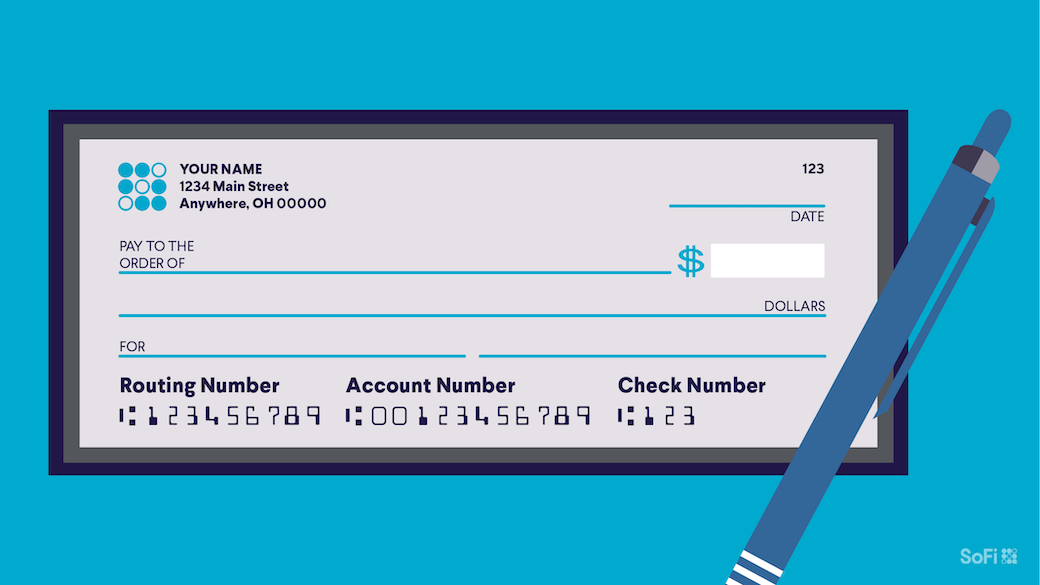
blank check with ach routing number

Using Your Online or Mobile Bank Account

Another way to get your ACH routing number is to go to your bank’s website and sign into your account. Methods vary by bank but, typically, here’s how you do it: Click on the last four digits of your account number (which appears above your account information) and choose “see full account number” next to your account name. A box will then open to display your bank account number and routing number.

You can also find your ACH routing number by signing into your bank’s mobile app. Typically, you just need to choose your account title and then tap “show details,” and your bank account and routing number will appear.

Using the Internet

If you don’t have access to online banking, you can also find your ACH routing number by going to your bank’s official website. You can then use the search function to look for “ACH routing number” or check the “Help” or “FAQ” sections.

Another option is to do a simple internet search. Put “ACH number” and the name of your bank into a search engine and you should be able to find it. Keep in mind that some large banks may have multiple regional ACH numbers. You want to make sure you are getting the one associated with your location.

Contacting Customer Service

If you can’t get online, you can always contact your bank’s customer service department by phone. They can provide you with the correct ACH routing number.

What Are ACH Routing Numbers Used For?

ACH routing numbers serve several essential functions in the banking system. Here are some of the main uses for ACH routing numbers:

•   Direct deposit Employers use ACH routing numbers to deposit salaries directly into employees’ bank accounts. This method is fast, secure, and convenient for both employers and employees.

•   Bill payments Many people use ACH routing numbers to pay bills electronically. This includes payments for utilities, mortgages, and other recurring expenses.

•   Tax refunds The IRS and state tax agencies use ACH routing numbers to deposit tax refunds directly into taxpayers’ bank accounts.

•   Transfers between accounts ACH routing numbers are used to transfer money between different bank accounts, whether within the same bank or between different banks. This is common for personal transactions, such as moving funds from a checking account to a savings account.

ACH vs ABA Routing Numbers: The Differences

An ABA (American Bankers Association) routing number is similar to an ACH routing number in that it identifies your bank. However, these numbers are used in different contexts.

ACH routing numbers are specifically used for electronic transactions processed through the Automated Clearing House network. This includes direct deposits, bill payments, and other electronic funds transfers. ABA routing numbers (also known as check routing numbers) are used for processing paper checks and for wire transfers. ABA and ACH simply refer to the method in which the money is moved.

These days, the same nine-digit number can serve as both an ACH routing number and an ABA routing number, which means that the ABA and ACH routing number for your bank is likely the same. If that’s the case, your bank will simply refer to its ABA/ACH routing number simply as its “routing number.”

Some banks, however, may provide separate ACH numbers (for electronic transfers) and ABA numbers (for checks and wire transfers).

ACH vs ABA Routing Numbers: History

ABA numbers were created in 1910 by the American Bankers Association (ABA) to help facilitate the sorting, bundling, and shipping of paper checks. They are still used for the processing of paper checks (and also for wire transfers).

More than a half century later, in the late 1960s, a group of California banks banded together to find a speedier alternative to check payments. They launched the first ACH in the U.S. in 1972; that was a key milestone in the evolution of electronic banking.

ACH vs ABA Routing Number: Numerical Differences

In the past, ABA and ACH numbers were slightly different, specifically the first two digits. Today, though, they are typically identical. Your bank’s ABA routing number and ACH routing number are likely to be one and the same. The reason is that both ABA and ACH numbers are used for the same purpose — transferring funds to the correct destination.


Test your understanding of what you just read.


The Takeaway

An ACH routing number is a nine-digit code that identifies a bank during an electronic financial transaction. The ACH system has been used for decades and makes life easier by keeping transactions quick and secure. While ACH numbers used to be different from ABA routing codes, today these two numbers are typically the same.

Whether you are setting up direct deposits, paying bills, or transferring money between accounts, it’s essential to know your bank’s ACH routing number. You can find it by looking at your checks, logging into your account, or doing a simple online search. It’s that easy.

Interested in opening an online bank account? When you sign up for a SoFi Checking and Savings account with eligible direct deposit, you’ll get a competitive annual percentage yield (APY), pay zero account fees, and enjoy an array of rewards, such as access to the Allpoint Network of 55,000+ fee-free ATMs globally. Qualifying accounts can even access their paycheck up to two days early.


Better banking is here with SoFi, NerdWallet’s 2024 winner for Best Checking Account Overall.* Enjoy 3.30% APY on SoFi Checking and Savings with eligible direct deposit.

FAQ

Is the routing number different for ACH and wire transfers?

In some cases, the routing number for ACH transactions may be different from the routing number used for wire transfers. ACH routing numbers are used for electronic transactions processed through the Automated Clearing House network, such as direct deposits and bill payments.

Wire transfers, which are often faster and more direct, require an ABA or wire transfer routing number. It’s a good idea to confirm with your bank to ensure you use the correct routing number for the type of transaction you are making.

For SoFi wire transfers, the routing number is the same for ACH and wire transfers: 031101334.

Do all banks have an ACH routing number?

All banks and credit unions that process ACH transactions have an ACH routing number. This nine-digit number is your bank’s digital address, and is essential for facilitating electronic transactions such as direct deposits and bill payments. Each financial institution has its own specific ACH routing number to ensure that transactions are routed correctly.

Is your ACH number your account number?

No, your ACH routing number is not the same as your account number. The ACH routing number is a nine-digit code that identifies your bank or financial institution. Your account number, on the other hand, is a unique identifier for your specific bank account within that institution.

Both numbers are required for electronic transactions, but they serve different purposes. The routing number directs the transaction to the correct bank, while the account number specifies the particular account to be credited or debited within that bank.


Photo credit: iStock/fizkes

Annual percentage yield (APY) is variable and subject to change at any time. Rates are current as of 12/23/25. There is no minimum balance requirement. Fees may reduce earnings. Additional rates and information can be found at https://www.sofi.com/legal/banking-rate-sheet

Eligible Direct Deposit means a recurring deposit of regular income to an account holder’s SoFi Checking or Savings account, including payroll, pension, or government benefit payments (e.g., Social Security), made by the account holder’s employer, payroll or benefits provider or government agency (“Eligible Direct Deposit”) via the Automated Clearing House (“ACH”) Network every 31 calendar days.

Although we do our best to recognize all Eligible Direct Deposits, a small number of employers, payroll providers, benefits providers, or government agencies do not designate payments as direct deposit. To ensure you're earning the APY for account holders with Eligible Direct Deposit, we encourage you to check your APY Details page the day after your Eligible Direct Deposit posts to your SoFi account. If your APY is not showing as the APY for account holders with Eligible Direct Deposit, contact us at 855-456-7634 with the details of your Eligible Direct Deposit. As long as SoFi Bank can validate those details, you will start earning the APY for account holders with Eligible Direct Deposit from the date you contact SoFi for the next 31 calendar days. You will also be eligible for the APY for account holders with Eligible Direct Deposit on future Eligible Direct Deposits, as long as SoFi Bank can validate them.

Deposits that are not from an employer, payroll, or benefits provider or government agency, including but not limited to check deposits, peer-to-peer transfers (e.g., transfers from PayPal, Venmo, Wise, etc.), merchant transactions (e.g., transactions from PayPal, Stripe, Square, etc.), and bank ACH funds transfers and wire transfers from external accounts, or are non-recurring in nature (e.g., IRS tax refunds), do not constitute Eligible Direct Deposit activity. There is no minimum Eligible Direct Deposit amount required to qualify for the stated interest rate. SoFi Bank shall, in its sole discretion, assess each account holder's Eligible Direct Deposit activity to determine the applicability of rates and may request additional documentation for verification of eligibility.

See additional details at https://www.sofi.com/legal/banking-rate-sheet.

SoFi Checking and Savings is offered through SoFi Bank, N.A. Member FDIC. The SoFi® Bank Debit Mastercard® is issued by SoFi Bank, N.A., pursuant to license by Mastercard International Incorporated and can be used everywhere Mastercard is accepted. Mastercard is a registered trademark, and the circles design is a trademark of Mastercard International Incorporated.

Financial Tips & Strategies: The tips provided on this website are of a general nature and do not take into account your specific objectives, financial situation, and needs. You should always consider their appropriateness given your own circumstances.

Tax Information: This article provides general background information only and is not intended to serve as legal or tax advice or as a substitute for legal counsel. You should consult your own attorney and/or tax advisor if you have a question requiring legal or tax advice.

SOBK-Q224-1885644-V1

Read more
What Would Happen if I Deposited $10,000 Into My Bank Account?

What Would Happen if I Deposited $10,000 Into My Bank Account?

A cash deposit of more than $10,000 into your bank account requires special handling. Your bank must report the deposit to the federal government. That’s because the IRS requires banks and businesses to file Form 8300 and a Currency Transaction Report, if they receive cash payments over $10,000. Depositing more than $10,000 will not result in immediate questioning from authorities, however. The report is done simply to help prevent fraud and money laundering. You have nothing to lose sleep over so long as you are not doing anything illegal.

Key Points

•   Banks are required to report when customers deposit more than $10,000 in cash at once.

•   A Currency Transaction Report must be filled out and sent to the IRS and FinCEN.

•   The Bank Secrecy Act of 1970 and the Patriot Act of 2001 dictate that banks keep records of deposits over $10,000 to help prevent financial crime.

•   Structuring a deposit is when an individual splits up several deposits so that a single deposit of more than $10,000 cash does not happen.

•   Penalties for not filing Form 8300 or filing a fraudulent form include fines and possible prison sentences.

Are Financial Institutions Required to Report Large Deposits?

Banks and credit unions are required to report when a customer deposits cash over $10k. Maximum deposit limits vary by bank, but in this case, anything above $10,000 (even a penny more) is the amount to know.
The Bank Secrecy Act and the Patriot Act dictate that financial institutions create a paper trail of financial activity that could be suspicious. The reasoning is that law enforcement authorities can better control money laundering activities and tax evasion by having a record of these larger deposits. Other malicious activities like terrorism, drug trading, and broad financial crimes might be prevented.

Do You Have to Report Large Deposits?

You might have to report large deposits to your bank account if you own a business. (Performing a small direct deposit typically does not need to be reported.) The IRS rules also apply to financial activities performed by a business or individual involved in the business. You must complete IRS Form 8300 to report any transaction or even a series of related transactions that total $10,000.

About that “series of related transactions” part: Transactions are considered related when they take place within 24 hours of each other or if the person or business simply suspects they are related.

What Is IRS Form 8300?

IRS Form 8300 is used to help regulators prevent financial crime. The form is separate from other banking guidelines like funds availability rules. It is sent to the IRS and the Financial Crimes Enforcement Network (FinCEN). The form is used to report cash payments over $10,000 received in a trade or business.

On IRS Form 8300 , you must identify the individual from whom the cash was received and the person on whose behalf the transaction was conducted. In addition, you need to include a description of the transaction and method of payment. Additional disclosure of information may spell out the business that received the cash and whether multiple parties were involved.

What Happens When Deposits Are Reported?

A paper trail of potentially suspicious deposits is created after Form 8300 is transmitted to the IRS. Depositing cash at an ATM or with a bank teller, so long as it is below the $10K threshold, will usually not be reported. Law enforcement agencies can use the paper trail for future investigations if conditions warrant it.

To understand this in a bit more detail, know that first, when a cash deposit of more than $10,000 is reported, you are identified through your Social Security number (SSN) and other personal information.

What Is the Bank Secrecy Act?

The Bank Secrecy Act of 1970, mentioned above, may sound somewhat intimidating. What it actually does is require that banks keep records of each customer who deposits more than $10,000 in cash at one time in a single account. The paper trail is sent to various law enforcement groups to track where the money moves to. The Bank Secrecy Act includes civil and criminal penalties for entities not complying with the requirements.

Moreover, the 2001 Patriot Act made the Bank Secrecy Act broader; it can now better detect activity related to terrorism. Again, this is nothing to be concerned about as long as you aren’t engaged in any illegal activities like bank fraud.

Increase your savings
with a limited-time APY boost.*


*Earn up to 4.00% Annual Percentage Yield (APY) on SoFi Savings with a 0.70% APY Boost (added to the 3.30% APY as of 12/23/25) for up to 6 months. Open a new SoFi Checking and Savings account and pay the $10 SoFi Plus subscription every 30 days OR receive eligible direct deposits OR qualifying deposits of $5,000 every 31 days by 3/30/26. Rates variable, subject to change. Terms apply here. SoFi Bank, N.A. Member FDIC.

Reporting the Deposit

There are several steps involved in reporting a cash deposit over $10,000, whether the deposit is made to a standard or premium checking account or a savings account. There is likely nothing to be concerned about if you are just going about your daily business and not involved in illegal activity.

Banks Must Verify ID and Other Important Information

The Currency Transaction Report is used to verify a depositor’s information. The SSN, name, and address are provided to the FinCEN.

Banks Will Review All Cash Transactions

Financial institutions go through all their channels when a suspicious deposit over $10,000 is made. A series of several smaller amounts that add up to a deposit of more than $10,000 is also treated as a large deposit. Cash put into an account at a teller window or through an ATM can be linked and considered a structured deposit (more on that below). These are much more serious potential events than everyday banking activities, such as making a small cash deposit or ATM withdrawal.

Banks Will Determine If You Are Structuring Deposits

Structuring a deposit is when an individual splits up several deposits so that a single deposit of more than $10,000 cash does not happen. Someone might do this to avoid the bank having to file a Currency Transaction Report to FinCEN and resulting in a paper trail. This suspicious activity raises red flags as it suggests someone is intentionally trying to fly under the regulators’ radar. If a bank determines someone is structuring, then that activity might face additional scrutiny.

All Information Will Go Into a Currency Transaction Report

The personal information and deposit details mentioned earlier go into a Currency Transaction Report within 15 days of the transaction being considered. Reports are kept on file at the bank for five years, too. Once again, however, most people need not be too concerned with this, provided your banking is legal. Rather, it may be better to focus on account basics, like savings account withdrawal fees, not the ramifications of pernicious illegal activity, as long as they are following all the laws.

Penalties for Non-Compliance

You may wonder what happens if an individual tries to skirt the protocols described above. Here are details:

•   Civil penalties for not filing Form 8300 include fines of $250 per return. If this is considered to be intentional disregard, the fine can be the greater of $25,000 or the amount of cash received in the transaction up to $100,000.

•   Criminal penalties for not filing Form 8300 or filing a fraudulent form include a monetary fine of up to $100,000 for individuals and $500,000 for businesses. Prison sentences of up to five years are also a possible penalty for non-compliance.

Are There Any Exemptions to Consider?

A bank can file for an exemption if one of its business customers routinely deposits over $10k. It’s important to know that some businesses cannot get an exemption. For example, law firms, pawn dealers, accounting firms, and trade unions are some corporation types for which the IRS will not grant an exemption.

The Takeaway

You don’t have anything to worry about if you deposit more than $10,000 in cash to your checking account or your savings account, assuming you are doing nothing wrong. A large deposit is simply reported by a bank to regulators to track possible suspicious activity. Businesses must also file IRS Form 8300 within a specific time frame after a $10,000 cash payment.

Structuring deposits (breaking up funds into smaller amounts for deposit, so as to avoid filing a form 8300) is another no-no. Since there are significant penalties for attempting to skirt the law, it’s wise to not attempt such moves.

No matter how much you are (lawfully) depositing, it’s wise to make sure you have the bank account best suited to your needs and financial situation. For instance, you could look for an online high-yield savings account and/or an account that has no or low account fees. Explore the options to see what may be right.

Interested in opening an online bank account? When you sign up for a SoFi Checking and Savings account with eligible direct deposit, you’ll get a competitive annual percentage yield (APY), pay zero account fees, and enjoy an array of rewards, such as access to the Allpoint Network of 55,000+ fee-free ATMs globally. Qualifying accounts can even access their paycheck up to two days early.


Better banking is here with SoFi, NerdWallet’s 2024 winner for Best Checking Account Overall.* Enjoy 3.30% APY on SoFi Checking and Savings with eligible direct deposit.

FAQ

How much money can I deposit in the bank without being reported?

A deposit over $10,000 is the amount to consider; amounts under that threshold may not have to be reported. There’s a catch, though: If a customer makes several small cash payments or deposits within a 12-month window, filing Form 8300 might have to be done should the payments or deposits exceed $10,000. These are known as “structured” deposits and can raise red flags if not reported.

How often can you deposit $10,000?

You can deposit more than $10,000 whenever you’d like, but just be aware that the receiving financial institution is required to report those funds to the IRS. If you are a business owner and depositing over $10k in cash is a frequent practice, the bank can file an exemption after the first large deposit to avoid filling out future reports to the IRS.

How do you explain a large deposit?

Depositing over $10k only results in an IRS form being filed by the bank. You often won’t have to do anything to explain it unless you are suspected of fraud or money laundering. The money is deposited like any other amount would be.


Photo credit: iStock/TARIK KIZILKAYA

Third-Party Brand Mentions: No brands, products, or companies mentioned are affiliated with SoFi, nor do they endorse or sponsor this article. Third-party trademarks referenced herein are property of their respective owners.

Financial Tips & Strategies: The tips provided on this website are of a general nature and do not take into account your specific objectives, financial situation, and needs. You should always consider their appropriateness given your own circumstances.

SoFi Checking and Savings is offered through SoFi Bank, N.A. Member FDIC. The SoFi® Bank Debit Mastercard® is issued by SoFi Bank, N.A., pursuant to license by Mastercard International Incorporated and can be used everywhere Mastercard is accepted. Mastercard is a registered trademark, and the circles design is a trademark of Mastercard International Incorporated.

Annual percentage yield (APY) is variable and subject to change at any time. Rates are current as of 12/23/25. There is no minimum balance requirement. Fees may reduce earnings. Additional rates and information can be found at https://www.sofi.com/legal/banking-rate-sheet

Eligible Direct Deposit means a recurring deposit of regular income to an account holder’s SoFi Checking or Savings account, including payroll, pension, or government benefit payments (e.g., Social Security), made by the account holder’s employer, payroll or benefits provider or government agency (“Eligible Direct Deposit”) via the Automated Clearing House (“ACH”) Network every 31 calendar days.

Although we do our best to recognize all Eligible Direct Deposits, a small number of employers, payroll providers, benefits providers, or government agencies do not designate payments as direct deposit. To ensure you're earning the APY for account holders with Eligible Direct Deposit, we encourage you to check your APY Details page the day after your Eligible Direct Deposit posts to your SoFi account. If your APY is not showing as the APY for account holders with Eligible Direct Deposit, contact us at 855-456-7634 with the details of your Eligible Direct Deposit. As long as SoFi Bank can validate those details, you will start earning the APY for account holders with Eligible Direct Deposit from the date you contact SoFi for the next 31 calendar days. You will also be eligible for the APY for account holders with Eligible Direct Deposit on future Eligible Direct Deposits, as long as SoFi Bank can validate them.

Deposits that are not from an employer, payroll, or benefits provider or government agency, including but not limited to check deposits, peer-to-peer transfers (e.g., transfers from PayPal, Venmo, Wise, etc.), merchant transactions (e.g., transactions from PayPal, Stripe, Square, etc.), and bank ACH funds transfers and wire transfers from external accounts, or are non-recurring in nature (e.g., IRS tax refunds), do not constitute Eligible Direct Deposit activity. There is no minimum Eligible Direct Deposit amount required to qualify for the stated interest rate. SoFi Bank shall, in its sole discretion, assess each account holder's Eligible Direct Deposit activity to determine the applicability of rates and may request additional documentation for verification of eligibility.

See additional details at https://www.sofi.com/legal/banking-rate-sheet.

This article is not intended to be legal advice. Please consult an attorney for advice.

External Websites: The information and analysis provided through hyperlinks to third-party websites, while believed to be accurate, cannot be guaranteed by SoFi. Links are provided for informational purposes and should not be viewed as an endorsement.
*Awards or rankings from NerdWallet are not indicative of future success or results. This award and its ratings are independently determined and awarded by their respective publications.

SOBK-Q224-1926391-V1

Read more

How to Write a Check: A Step-by-Step Guide

The basic steps of check-writing sound pretty straightforward: Fill out the date, amount, payee name, and add your signature.

There are, however, right and wrong ways to complete this process. And, despite the current age of online banking, there may still be times when you need to write checks and want to do so correctly. Make an error, and your check may not be cashed, which can lead to hassles and fees.

By learning the simple step-by-step process, you can fill out a check properly when you need to.

Key Points

•   Writing a check involves filling out the date, amount, payee name, and your signature.

•   Errors in check writing can lead to uncashed checks and potential fees.

•   Postdating a check allows it to be deposited at a future date.

•   Writing the dollar amount in words and numbers helps prevent fraud.

•   Signing the check is crucial as an unsigned check is invalid.

1. Date the Check

First things first: Write today’s date on the space provided in the upper right-hand corner of the check. Putting the date on your check will provide evidence of when you wrote the check.

You can also postdate a check and request for the recipient not to deposit the amount until on or after that future date.

filling out date on a check


2. Add the Recipient’s Name

In the line, “Pay to the order of,” write the name of the individual or company you are paying. Be sure to double check the spelling of the person’s name and the official vendor name to avoid any payment mishaps.

You can also make a check out to “cash,” but this poses a security risk. If you or the payee loses the check, anyone who finds it will be able to cash it. You can also write a check to yourself if you need to transfer funds from your checking account to another personal account.

adding recipients name to check

3. Write the Payment Amount in Numbers

Write the dollar and cents amount in the rectangular box, located to the right of the payee line. (Example: $156.99.) It’s essential to write the payment amount clearly for the ATM or bank worker.

filling in payment amount on check

4. Write the Payment Amount in Words

To help prevent error or fraud, write the check amount out in words on the line provided.

How to Write a Check with Cents

To write a check with cents, you’ll express the cents amount as a fraction. For example, $156.99 would read as “One hundred and fifty-six and 99/100.”

How to Write a Check with No Cents

If the dollar amount is whole ($156.00), it should read “one hundred and fifty-six and 00/100.” A banker or ATM will check that your numerical amount matches the spelled-out amount.

Recommended: What Is an Outstanding Check?

writing payment amount on check

5. Sign the Check

One of the biggest mistakes check writers make is forgetting to sign the check. Neglecting to do so makes the check invalid and uncashable. Be sure and write your signature on the bottom right-hand line of the check.

adding signature to a check

6. Add a Memo

Adding a note in the memo line on a check is optional, but it’s a good idea. Doing so will help you remember why you wrote the check in the first place: “July 1st rent” or “Beyoncé tix reimbursement.”

Some payees may require additional information which you can put on the memo line on the bottom-left corner. The IRS, for example, will ask you to write your Social Security number on your check.

adding a memo to a check

Example of Writing a Check

Now that you’ve read about writing a check, here’s what a properly filled out one looks like:

example of a filled out check

Tips for Filling Out Checks

The steps on how to write a check are pretty clear. But there are additional tips that can help protect your account and ensure a successful transaction.

Use a Pen

Protect your money. Always fill out a check in ink — preferably blue or black ink for easier readability. Using a pencil is a recipe for theft. You don’t want your payee and dollar amounts being erased and rewritten (aka an altered check).

Don’t Sign a Blank Check

Don’t sign your name on the bottom of the check until it is completely filled out. If a check has your signature, but no payee name or dollar amount, you are leaving yourself wide open for any thief with a pen to fill in the blanks.

Keep Your Signature Consistent

Maintaining a consistent signature can help a bank teller or ATM detect signs of identity fraud. You’ll be better able to prove someone other than you signed your check if you have clear signature samples.

Save a Copy of Your Check

Having a copy of your check can act as proof of payment. You can take a picture of it with your cell phone. Some banks will issue checkbooks with carbon copies—a duplicate check attached to the back of a paper one. If you press down hard enough, your writing will transfer onto the duplicate check.

Recommended: Overdraft vs Non-Sufficient Funds Fees: What’s the Difference?

Increase your savings
with a limited-time APY boost.*


*Earn up to 4.00% Annual Percentage Yield (APY) on SoFi Savings with a 0.70% APY Boost (added to the 3.30% APY as of 12/23/25) for up to 6 months. Open a new SoFi Checking and Savings account and pay the $10 SoFi Plus subscription every 30 days OR receive eligible direct deposits OR qualifying deposits of $5,000 every 31 days by 3/30/26. Rates variable, subject to change. Terms apply here. SoFi Bank, N.A. Member FDIC.

How to Protect Your Accounts When Writing Paper Checks

After mailing or handing over a check, it’s wise to keep tabs on its path and your bank account. Here are some smart moves that can help keep your records straight.

Record the Payment

Most checkbooks come with a check register — a place to record your check usage and current bank balance. It’s important to dot down:

•   The check number

•   The date you wrote the check

•   The payee information

•   The dollar amount

Doing so will help you balance your checkbook and avoid ending up with a negative balance.

Monitor for Fraud or Lost Checks

Having a record of your checks will help you avoid overdraft fees and keep track of any outstanding checks that payees have yet to cash. When you receive your monthly statement, compare it against your check register to catch any suspicious activity.

This can reveal a check that might have been cashed for a different amount than what you filled it out for. This could indicate a kind of fraud called “check washing,” in which a criminal gets a hold of your check, erases information, and fills it out to themselves.

Or you might spot that a check hasn’t been cashed in a timely manner, indicating that it’s a lost check, worth following up on.

Check Your Available Balance

You don’t want to write a check for more money than you currently have, so keep an eye on your bank balance to avoid bouncing a check. Whether you have a traditional or online checking account, you should be able to easily monitor this on your financial institution’s website or app.

Consider Automated Payments

While checks can still have their time and place in your financial life, online and mobile banking can make it easy to pay bills and otherwise send funds to other accounts. This can be accomplished quickly, easily, and securely by automating your finances.

For example, instead of writing paper checks, you could set up recurring transfers to pay bills online every month or make one-off payments as needed. These actions can be done safely and simply, and they eliminate the need for envelopes and postage stamps, too.

Recommended: ACH vs Checks: Key Differences


Test your understanding of what you just read.


The Takeaway

It’s possible that check payments could eventually become a thing of the past. Until then, it’s important to know how to write a check and avoid making little errors that could result in big headaches.

Most bank accounts come with checks, but that’s not the only feature to consider when shopping for a new account.

Interested in opening an online bank account? When you sign up for a SoFi Checking and Savings account with eligible direct deposit, you’ll get a competitive annual percentage yield (APY), pay zero account fees, and enjoy an array of rewards, such as access to the Allpoint Network of 55,000+ fee-free ATMs globally. Qualifying accounts can even access their paycheck up to two days early.

Better banking is here with SoFi, NerdWallet’s 2024 winner for Best Checking Account Overall.* Enjoy 3.30% APY on SoFi Checking and Savings with eligible direct deposit.

FAQ

What makes a check invalid?

Banks can refuse to cash a check due to a missing signature, insufficient account funds, invalid or illegible account numbers, or if too much time has passed since the check was dated (typically six months).

Can someone steal your identity with a check?

It is possible for criminals to use the information on your check — your name, your address, your routing number — to steal your identity. They might be able to apply for loans in your name or open bank accounts.

Where is the bank routing number on a check?

The bank routing number is at the bottom of the check, to the left. Just to the right of it is your account number, and then at the far right, the check number.

Who signs the back of a check?

The payee endorses the back of the check in order to make a deposit or cash it.


Photo credit: iStock/payphoto

SoFi Checking and Savings is offered through SoFi Bank, N.A. Member FDIC. The SoFi® Bank Debit Mastercard® is issued by SoFi Bank, N.A., pursuant to license by Mastercard International Incorporated and can be used everywhere Mastercard is accepted. Mastercard is a registered trademark, and the circles design is a trademark of Mastercard International Incorporated.

Annual percentage yield (APY) is variable and subject to change at any time. Rates are current as of 12/23/25. There is no minimum balance requirement. Fees may reduce earnings. Additional rates and information can be found at https://www.sofi.com/legal/banking-rate-sheet

Eligible Direct Deposit means a recurring deposit of regular income to an account holder’s SoFi Checking or Savings account, including payroll, pension, or government benefit payments (e.g., Social Security), made by the account holder’s employer, payroll or benefits provider or government agency (“Eligible Direct Deposit”) via the Automated Clearing House (“ACH”) Network every 31 calendar days.

Although we do our best to recognize all Eligible Direct Deposits, a small number of employers, payroll providers, benefits providers, or government agencies do not designate payments as direct deposit. To ensure you're earning the APY for account holders with Eligible Direct Deposit, we encourage you to check your APY Details page the day after your Eligible Direct Deposit posts to your SoFi account. If your APY is not showing as the APY for account holders with Eligible Direct Deposit, contact us at 855-456-7634 with the details of your Eligible Direct Deposit. As long as SoFi Bank can validate those details, you will start earning the APY for account holders with Eligible Direct Deposit from the date you contact SoFi for the next 31 calendar days. You will also be eligible for the APY for account holders with Eligible Direct Deposit on future Eligible Direct Deposits, as long as SoFi Bank can validate them.

Deposits that are not from an employer, payroll, or benefits provider or government agency, including but not limited to check deposits, peer-to-peer transfers (e.g., transfers from PayPal, Venmo, Wise, etc.), merchant transactions (e.g., transactions from PayPal, Stripe, Square, etc.), and bank ACH funds transfers and wire transfers from external accounts, or are non-recurring in nature (e.g., IRS tax refunds), do not constitute Eligible Direct Deposit activity. There is no minimum Eligible Direct Deposit amount required to qualify for the stated interest rate. SoFi Bank shall, in its sole discretion, assess each account holder's Eligible Direct Deposit activity to determine the applicability of rates and may request additional documentation for verification of eligibility.

See additional details at https://www.sofi.com/legal/banking-rate-sheet.

Financial Tips & Strategies: The tips provided on this website are of a general nature and do not take into account your specific objectives, financial situation, and needs. You should always consider their appropriateness given your own circumstances.

Non affiliation: SoFi isn’t affiliated with any of the companies highlighted in this article.

SOBK-Q224-1878350-V1

Read more
notebook with pencil

How to Apply for Student Loans

College students often use a combination of funding including grants, scholarships, student loans, and savings to pay for their college education. Scholarships and grants are helpful because they typically don’t have to be repaid. In many cases, though, students rely on borrowed funds to help pay for some college costs.

Student borrowers have two major options available to them — private and federal student loans. While both types can be used by students to help pay for college, there are big differences in how a student will apply for them.

Continue reading for more details on the differences between private and federal student loans and their application process.

Key Points

•   Both federal and private student loans can help students pay for college.

•   Federal student loans often offer lower interest rates and more flexible repayment options compared to private loans

•   To apply for federal student loans, students must complete the Free Application for Federal Student Aid (FAFSA®) each academic year.

•   After maximizing federal aid, students can consider private student loans to cover remaining expenses.

•   Students can apply for private student loans directly through the lender’s website, keeping in mind that private loans may require a credit check and possibly a cosigner.

Federal Student Loans vs Private Student Loans

Federal student loans are provided by the federal government. Private student loans are issued by institutions such as banks, some schools, and other private lenders. In order to make an educated borrowing decision, it’s important to understand the major differences between federal vs private student loans. These differences include:

Repayment Terms

Federal student loans have a standardized set of repayment options. Borrowers can choose any of the federal plans and can adjust their repayment plan at any time without incurring any costs by contacting their loan servicer.

These repayments include income-driven repayment options, which aim to make repaying student loans more affordable by linking monthly payments to your income.

The repayment terms on private student loans are set by the lender at the time the loan is borrowed. Some lenders may offer flexible repayment terms, but they are not required to do so. Thoroughly review the loan terms before borrowing.

Interest Rates

All federal student loans have fixed interest rates, which are determined annually by Congress.

Private student loans may have either fixed or variable interest rates. With variable rates, the starting rate depends on factors such as your credit score, income, and employment history, and it can change as the economy fluctuates. Lenders determine the interest rate on a loan based on reviewing borrower information such as income, credit history, and score, among other factors.

In-School Deferment Options

Your choice between federal and private student loans may also determine when you start paying back your loans.

If you have a federal student loan, you generally aren’t required to start making payments until you graduate, leave college altogether, or reduce your course load below half-time. Many federal loans offer a six-month grace period after you leave school or cut back to below half-time, meaning you don’t have to make student loan payments during this time.

Certain private lenders allow you to wait to make payments on your private student loans just as you would with federal loans, but others require you to start paying them while you’re still in school full-time. This varies depending on the lender, so it’s important to check the specifics before taking out a loan.

Recommended: Using In-School Deferment as a Student

Which Type of Student Loan Should You Apply for First?

Federal student loans tend to be more flexible in regards to repayment options and loan forgiveness, and sometimes offer lower interest rates than private student loans. Because private loans are awarded based on borrower criteria, including credit history, undergraduate students with limited credit history may need to add a cosigner to strengthen their chances of being approved for a private student loan.

Generally speaking, federal loans are prioritized over private student loans. But, in situations where borrowers have exhausted their federal borrowing options, private student loans can help fill financing gaps.

Application Process of Federal and Private Student Loans

Navigating the application process for student loans is an important step in financing your college education. Whether you’re considering federal or private student loans, understanding how each process works can help you make informed decisions and avoid unnecessary delays.

But first, we’re looking at student loan deadlines for both federal and private loans.

How Does the Application Process Differ Between Federal and Private Student Loans?

We’ll dive into an overview of how to apply for student loans, broken down by federal and private loans. But you should know that there are two main differences in the processes: where to apply and when to apply.

Federal Student Loan Deadlines

For federal student loans, you’ll fill out the Free Application for Federal Student Aid, better known as the FAFSA®. You will need to fill out the FAFSA each year you are in school.

When it comes to timing, there are important FAFSA deadlines set by the state and sometimes your individual college. Some states offer aid on a first-come, first-served basis, so procrastinating may not be in your best interest. Jumping on the FAFSA early could make a difference in how much aid you receive.

Private Student Loan Deadlines

To apply for a private student loan, you’ll fill out an application directly with an individual lender. While private student loans are known for being more stringent with their terms and requirements, they can actually be more flexible when it comes to application timing. There’s no universal private student loan deadline. That’s one reason you may prefer to apply for federal student loans before private ones — to see how much federal financial aid you receive first, then, if needed, you can fill in the gaps with private loans.

Recommended: When to Apply for Student Loans: Student Loan Deadlines

Applying for Federal Student Loans

To apply for federal student loans, the first step is to fill out the FAFSA.

Filling out the FAFSA

You can fill out the FAFSA online at the Student Aid website. You can list up to 10 colleges on your FAFSA form. If you want to list more than 10, you just have to follow a couple of extra steps.

The FAFSA form will ask for personal and financial information about the student and their parents (if the student is a dependent). These questions cover your age, marital status, level of degree you’re acquiring, military status, and your own dependents.

You’ll provide the necessary financial information. This includes your federal income tax returns and tax documents (and/or your parents’ returns and documents, if you’re considered a dependent). The website includes an IRS Data Retrieval Tool, and once you enter the relevant information, it should be able to pull up you and/or your parent’s tax return(s).

Just a heads up — you won’t submit the most recent tax return. For example, if you’re applying for aid for the 2024-25 school year, you’ll attach your 2022 tax returns.

Last but not least, you and/or your parents will provide bank statements. These statements should be current at the time you fill out the application, not from the year of the tax documents you submitted.

Recommended: SoFi’s FAFSA Guide

Completing FAFSA Follow-up Steps

After receiving your Student Aid Report, you may want to double-check with the schools you listed on the FAFSA® to make sure they received your information and to ask if they need you to fill out any more documents. Some schools require different documents, so it may be beneficial to contact each one.

Once a school has processed your information, you’ll receive an award letter from the institution that officially reports how much aid you’ll be receiving. Colleges differ in how long they wait to send out award letters, so if you’re feeling antsy, you can call to inquire about their reward deadline.

Now for a huge follow-up step: applying for private student loans if scholarships, grants, and federal loans don’t cover everything.

Types of Federal Student Loans

There are four types of federal student loans: Direct Subsidized Loans, Direct Unsubsidized Loans, Direct PLUS Loans for graduate and professional students, and Direct PLUS Loans for parents.

Direct Subsidized vs Unsubsidized Loans

Direct Subsidized Loans are available for undergraduate students. These loans are for students in financial need, and you don’t have to pay the interest until six months after you’ve graduated, left school, or dropped below half-time enrollment. These six months are referred to as the “grace period.” Interest will still accrue while you’re in school, but the government covers interest while you’re enrolled and during the grace period.

Direct Unsubsidized Loans for graduate and undergraduate students, but they aren’t disbursed based on your financial situation. The government doesn’t cover the cost of interest while you’re in school, so interest will accumulate throughout your time in college.

Direct PLUS Loans

The third type of federal student loan is a Direct PLUS Loan for graduate or professional students. The student takes out the loan, which is unsubsidized.

The fourth type is the Direct PLUS Loan for parents. This loan is for the parents of undergraduate students, so the parents would apply for and are held responsible for paying back the loan. Parent PLUS Loans are also unsubsidized.

Direct PLUS Loans require a credit check, unlike Direct Subsidized and Unsubsidized Loans.

Applying for Private Student Loans

As mentioned above, you can typically apply for private student loans directly on the lenders’ websites. If you’re having trouble deciding where to apply for private loans, but have already narrowed down your top schools, you can contact those institutions. Some colleges have “preferred lender” lists.

However, you aren’t necessarily bound by those lender lists. You may still want to research private student loans to find the right interest rates, interest rate types (fixed or variable), payment schedules, and included fees for your specific needs. Remember, private student loans tend to vary in their terms, so a little research can’t hurt.

Lender Requirements

Make sure you meet the requirements to receive a private student loan. For example, will you be enrolled in school at least half-time?

You should also make sure you’re attending a school that’s eligible for private student loans. If you’re attending a community college or trade school, you may or may not be able to receive a private loan.

Keep in mind that private student loan lenders tend to check things like your credit, income, and job history when you apply. This step will affect everyone differently, but if you’re fresh out of high school, this step could throw you for a loop. What if you’ve never had a job? What if you didn’t even know credit scores were a thing before this moment?

Considering a Cosigner

One thing that may help in this predicament is finding a student loan cosigner. Your options for a cosigner are fairly flexible, but many borrowers choose someone they trust, such as a parent, close relative, or trusted friend.

A cosigner agrees to take equal responsibility for the loan. If the student borrower cannot make payments, the cosigner is legally obligated to repay the debt, which can help the student qualify for better loan terms.

Still, it may be possible to get a private loan without a cosigner if you have low credit and/or income. Just be prepared to possibly pay more in interest!

Other Ways to Finance Your Education

While federal and private student loans are tools for receiving money to pay for college, there are other options. These include scholarships, grants, and Federal Work-Study.

Scholarships and Grants

Scholarships are gift aid, which means they don’t usually need to be repaid, and are typically merit-based. You can search for scholarships based on skill, such as academic, athletic, or music scholarships.

There are also scholarships available for people of certain demographics, such as ones for minorities or for women. You could even find scholarships for people of a certain religion/denomination or for those who’ve engaged in community service.

Grants are gift aid awarded based on your financial need. Some grants are provided by the government (state or federal), while others may be offered by your school or a private company.

Recommended: SoFi’s Scholarships Search Tool

Work-Study Program

The Federal Work-Study Program awards students with financial need the option to work part-time jobs to help pay for college. If you are interested in participating in the work-study program, you can indicate your interest when you fill out the FAFSA.

If you do not qualify for work-study, you may consider getting a part-time job.

The Takeaway

To apply for a federal student loan and other forms of federal financial aid, students will fill out the FAFSA annually. Students interested in private student loans will fill out applications directly with private lenders.

Other ways to pay for college include cash savings, scholarships, grants, and Federal Work-Study.

If you’ve exhausted all federal student aid options, no-fee private student loans from SoFi can help you pay for school. The online application process is easy, and you can see rates and terms in just minutes. Repayment plans are flexible, so you can find an option that works for your financial plan and budget.


Cover up to 100% of school-certified costs including tuition, books, supplies, room and board, and transportation with a private student loan from SoFi.

FAQ

What is the first step in applying for federal student loans?

The initial step is completing the Free Application for Federal Student Aid (FAFSA), which determines eligibility for federal student loans and other financial aid.

How does the application process differ between federal and private student loans?

Federal student loans require completing the FAFSA annually, with specific deadlines set by the federal government, states, and individual colleges. Private student loans are applied for directly through individual lenders and typically have more flexible application timelines.

When should I apply for private student loans?

While private student loans don’t have strict deadlines, it’s advisable to apply after determining your federal aid eligibility and once you’ve decided on a school. Applying early ensures funds are available when tuition payments are due.


SoFi Private Student Loans
Please borrow responsibly. SoFi Private Student loans are not a substitute for federal loans, grants, and work-study programs. We encourage you to evaluate all your federal student aid options before you consider any private loans, including ours. Read our FAQs.

Terms and conditions apply. SOFI RESERVES THE RIGHT TO MODIFY OR DISCONTINUE PRODUCTS AND BENEFITS AT ANY TIME WITHOUT NOTICE. SoFi Private Student loans are subject to program terms and restrictions, such as completion of a loan application and self-certification form, verification of application information, the student's at least half-time enrollment in a degree program at a SoFi-participating school, and, if applicable, a co-signer. In addition, borrowers must be U.S. citizens or other eligible status, be residing in the U.S., Puerto Rico, U.S. Virgin Islands, or American Samoa, and must meet SoFi’s underwriting requirements, including verification of sufficient income to support your ability to repay. Minimum loan amount is $1,000. See SoFi.com/eligibility for more information. Lowest rates reserved for the most creditworthy borrowers. SoFi reserves the right to modify eligibility criteria at any time. This information is subject to change. This information is current as of 4/22/2025 and is subject to change. SoFi Private Student loans are originated by SoFi Bank, N.A. Member FDIC. NMLS #696891 (www.nmlsconsumeraccess.org).

SoFi Loan Products
SoFi loans are originated by SoFi Bank, N.A., NMLS #696891 (Member FDIC). For additional product-specific legal and licensing information, see SoFi.com/legal. Equal Housing Lender.


Financial Tips & Strategies: The tips provided on this website are of a general nature and do not take into account your specific objectives, financial situation, and needs. You should always consider their appropriateness given your own circumstances.

Third-Party Brand Mentions: No brands, products, or companies mentioned are affiliated with SoFi, nor do they endorse or sponsor this article. Third-party trademarks referenced herein are property of their respective owners.

Third Party Trademarks: Certified Financial Planner Board of Standards Center for Financial Planning, Inc. owns and licenses the certification marks CFP®, CERTIFIED FINANCIAL PLANNER®

SOISL-Q225-040

Read more

22 Money Moves To Make This Month

Getting more from your money doesn’t have to be a long-term project. Making some simple and strategic money moves over the next 30 days can help you reduce spending and increase savings, and take some of the stress out of dealing with finances.

The methods below can put you on track to achieving your financial goals.

Key Points

•   Set financial goals to guide your spending and saving.

•   Create a budget to manage expenses and increase savings.

•   Set up direct deposit and automatic savings transfers.

•   Increase retirement contributions to maximize employer matches.

•   Negotiate bills and cut small expenses to save more.

Steps to Manage Your Personal Finances

As you put these personal finance moves into practice, remember that you’re aiming for progress, not perfection. Rather than try to tackle all the tips listed below in the next 30 days, you might simply choose a few to focus on.

1. Set Financial Goals

If you haven’t done so already, set some important long-term goals, like saving for retirement or your child’s child’s education. This can help you figure out how much money you need to dedicate to these milestones.

Setting short-term goals can be helpful, too. Maybe you’re saving for a special vacation next year. Or perhaps you’re planning to buy a new car in five years. Mapping out your game plan could help get you there.

2. Create a Budget

Start by adding up your necessary expenses, such as housing costs, utilities, insurance, car payments, and groceries, and subtract that amount from your monthly take-home income. Put what’s left toward paying down debt, and then make deposits into a high-yield bank account where your money can grow.

3. Set Up Direct Deposit

Are you still trekking to the bank to deposit your paycheck? Sign up for direct deposit so your money can go directly to your bank account.

While you’re at it, set up an automatic transfer so that a portion of your paycheck goes into savings every month.

Recommended: How to Manage Money

4. Increase Retirement Contributions

If you’re eligible to participate in your company’s 401(k) plan, make sure your contributions are enough to take advantage of your employer’s matching funds, if they offer a matching contribution.

Each matching contribution varies by company. Many companies match 50 cents for every dollar you contribute, up to 6%.

5. Make $10 or $25 in Spending Cuts

Look for small expenses you can cut, and then direct the extra cash to savings or paying down debt, such as credit card debt. For instance, bring lunch to work a couple of days a week instead of eating out.

6. Look for Helpful Apps

A good app can help you monitor your spending and savings, keep you on budget, and set financial goals. Research your options and also see what your bank has to offer. Many institutions provide free budgeting apps that integrate directly with your online banking account, create budgets, and help track your money in one place.

7. Negotiate Your Bills

Call your Internet and cell phone providers to ask about lowering your monthly bills. There may be discounts or cheaper plans you can take advantage of.

When you call, be firm but courteous. Check out competitors’ rates, and if they’re lower, use those prices as a bargaining chip in your conversation.

8. Review Insurance Policies

Do you have enough car and home insurance to cover your needs? Do you have too much? Review your policies and add or subtract coverage as necessary. And shop around for providers that offer good coverage for less money.

Increase your savings
with a limited-time APY boost.*


*Earn up to 4.00% Annual Percentage Yield (APY) on SoFi Savings with a 0.70% APY Boost (added to the 3.30% APY as of 12/23/25) for up to 6 months. Open a new SoFi Checking and Savings account and pay the $10 SoFi Plus subscription every 30 days OR receive eligible direct deposits OR qualifying deposits of $5,000 every 31 days by 3/30/26. Rates variable, subject to change. Terms apply here. SoFi Bank, N.A. Member FDIC.

9. Check Your Credit Score

Your credit score is a number that represents your creditworthiness. Lenders use it to determine whether to let you borrow money and at what interest rate. Check your credit score. If it needs some work, focus on ways to improve your credit profile, such as reducing debt and paying your bills on time.

10. Review Your Credit Report for Potential Mistakes

You can request a free credit report from the major credit reporting bureaus — Experian®, Transunion®, and Equifax® — at Annual CreditReport.com. Review your report for mistakes that could be negatively affecting your credit score, and contact the credit bureaus about any errors you find.

11. Look for Credit Cards that Offer the Best Rewards

Earn on your spending with credit cards that offer rewards. Look for those that match your interests. For instance, if you love to travel, find a card that offers travel rewards. But watch out for cards with high interest rates. If you’re not someone who pays their card off every month, it may be worth steering clear of these.

12. Use Credit Card Points

Your credit card rewards aren’t doing you any good if you don’t redeem them. So have some fun and plan a trip or a new purchase with the rewards you’ve accumulated.

13. Consider Refinancing Your Loans

If you have outstanding loans, such as a mortgage or student loan debt, explore refinancing at a lower interest rate.

A lower rate could help you save money in the long run. You may even be able to accelerate your repayment, depending on the terms you select when you refinance.

14. Sell Some Stuff to Make Money

If you’ve done some decluttering of the extra items around your house, think about selling the things you no longer need. They’ll go to a new home, and you’ll get some extra cash in your pocket.

15. Consider Cutting Costly Habits

The cost of certain habits can really add up. If you’ve been meaning to quit smoking or stop impulse shopping, for instance, use financial planning as an incentive to do so. You’ll save money and potentially get on the road to a happier, even healthier, you.

16. Talk about Money with Your Partner

Set aside some time to discuss finances with your significant other. Discuss goals for your money, spending habits, repaying debts, and so on. Conversations like this help make sure you’re both on the same page, and can help prevent money conflicts in the future.

17. Figure Out Your Market Value

Has it been a while since you’ve had a pay raise? Do some research to determine what you’re worth and how much you should be making. Then, use that information to ask your boss for a salary increase, or to find a job that pays you more.

18. Negotiate Credit Card APR

If your credit cards carry a high-interest rate, ask the credit card company to lower your APR to help you manage your debt. If you have a low credit score, they may say no. But you won’t know unless you ask.

Even if they turn you down, speaking to the credit card company may be helpful. For instance, they should be able to tell you what you can do to make lowering your interest rate more likely.

19. Use Your FSA Funds

If flexible spending accounts (FSAs) are part of your employee benefits package, be sure to use them for doctors appointments or qualified purchases. Money in these accounts may not carry over year to year, so if you don’t use it, you lose it.

20. Cancel Unused Subscriptions and Memberships

Did you subscribe to a music or other monthly service you rarely use? Score extra savings by canceling unused subscriptions. The Federal Trade Commission (FTC) recently announced “Click to Cancel,” a rule that requires companies that sell subscriptions to make canceling a service as easy as it was to sign up. Companies have until July 14, 2025 to comply.

21. Talk to a Financial Planner

When it comes to making money moves, you don’t have to go it alone. A financial planner can help you develop your goals and suggest strategies to help you reach them. You can look for a qualified planner with an hourly fee you can afford. It may be worth it if it can help you save more overall.

22. Consider a New Bank Account

As you take steps to improve your financial health, it makes sense to evaluate your bank account. There may be options that offer you more, such as a lower (or no) minimum balance, lower (or no) fees, and/or higher interest. Explore what’s out there to see what’s most beneficial for you.

The Takeaway

Smart money moves you can make this month include setting goals, reviewing and adjusting your budget, checking for unnecessary subscriptions, spending your FSA funds, using your credit card points, checking your credit score, and re-evaluating your bank account to make sure you’re earning a competitive rate and not getting dinked by monthly fees.

Interested in opening an online bank account? When you sign up for a SoFi Checking and Savings account with eligible direct deposit, you’ll get a competitive annual percentage yield (APY), pay zero account fees, and enjoy an array of rewards, such as access to the Allpoint Network of 55,000+ fee-free ATMs globally. Qualifying accounts can even access their paycheck up to two days early.


Better banking is here with SoFi, NerdWallet’s 2024 winner for Best Checking Account Overall.* Enjoy 3.30% APY on SoFi Checking and Savings with eligible direct deposit.

FAQ

Where is the best place to put money right now?

The best place to put money right now depends on your financial goals and risk tolerance. For short-term savings, a high-yield savings account or money market account is safe and accessible. For longer-term growth, consider low-cost index funds or diversified mutual funds. If you’re risk-averse, certificates of deposit (CDs) or bonds offer stability. High-growth potential can be found in stocks or real estate, but these come with higher risk.

What is the 15-65-20 rule for money?

The 15-65-20 rule is a budgeting guideline that suggests dividing your income into three categories: 15% for savings and investments, 65% for essential living expenses (like housing, food, and utilities), and 20% for discretionary spending (like entertainment and hobbies). This rule helps ensure you save for the future, cover your necessities, and still enjoy life. It represents a balanced approach to financial management.

How to grow your money in a month?

To grow your money in a month, focus on short-term, low-risk strategies. Start by cutting unnecessary expenses and redirecting that money into a high-yield savings account or money market account. Consider selling unused items online for quick cash. You can also take on a side hustle like freelancing or gig work to boost your income. While investing in stocks can offer returns, it carries risk — so stick to safe, more liquid options if you need to access the money soon.


SoFi Checking and Savings is offered through SoFi Bank, N.A. Member FDIC. The SoFi® Bank Debit Mastercard® is issued by SoFi Bank, N.A., pursuant to license by Mastercard International Incorporated and can be used everywhere Mastercard is accepted. Mastercard is a registered trademark, and the circles design is a trademark of Mastercard International Incorporated.

Annual percentage yield (APY) is variable and subject to change at any time. Rates are current as of 12/23/25. There is no minimum balance requirement. Fees may reduce earnings. Additional rates and information can be found at https://www.sofi.com/legal/banking-rate-sheet

Eligible Direct Deposit means a recurring deposit of regular income to an account holder’s SoFi Checking or Savings account, including payroll, pension, or government benefit payments (e.g., Social Security), made by the account holder’s employer, payroll or benefits provider or government agency (“Eligible Direct Deposit”) via the Automated Clearing House (“ACH”) Network every 31 calendar days.

Although we do our best to recognize all Eligible Direct Deposits, a small number of employers, payroll providers, benefits providers, or government agencies do not designate payments as direct deposit. To ensure you're earning the APY for account holders with Eligible Direct Deposit, we encourage you to check your APY Details page the day after your Eligible Direct Deposit posts to your SoFi account. If your APY is not showing as the APY for account holders with Eligible Direct Deposit, contact us at 855-456-7634 with the details of your Eligible Direct Deposit. As long as SoFi Bank can validate those details, you will start earning the APY for account holders with Eligible Direct Deposit from the date you contact SoFi for the next 31 calendar days. You will also be eligible for the APY for account holders with Eligible Direct Deposit on future Eligible Direct Deposits, as long as SoFi Bank can validate them.

Deposits that are not from an employer, payroll, or benefits provider or government agency, including but not limited to check deposits, peer-to-peer transfers (e.g., transfers from PayPal, Venmo, Wise, etc.), merchant transactions (e.g., transactions from PayPal, Stripe, Square, etc.), and bank ACH funds transfers and wire transfers from external accounts, or are non-recurring in nature (e.g., IRS tax refunds), do not constitute Eligible Direct Deposit activity. There is no minimum Eligible Direct Deposit amount required to qualify for the stated interest rate. SoFi Bank shall, in its sole discretion, assess each account holder's Eligible Direct Deposit activity to determine the applicability of rates and may request additional documentation for verification of eligibility.

See additional details at https://www.sofi.com/legal/banking-rate-sheet.

*Awards or rankings from NerdWallet are not indicative of future success or results. This award and its ratings are independently determined and awarded by their respective publications.

Financial Tips & Strategies: The tips provided on this website are of a general nature and do not take into account your specific objectives, financial situation, and needs. You should always consider their appropriateness given your own circumstances.

We do not charge any account, service or maintenance fees for SoFi Checking and Savings. We do charge a transaction fee to process each outgoing wire transfer. SoFi does not charge a fee for incoming wire transfers, however the sending bank may charge a fee. Our fee policy is subject to change at any time. See the SoFi Bank Fee Sheet for details at sofi.com/legal/banking-fees/.
Disclaimer: Many factors affect your credit scores and the interest rates you may receive. SoFi is not a Credit Repair Organization as defined under federal or state law, including the Credit Repair Organizations Act. SoFi does not provide “credit repair” services or advice or assistance regarding “rebuilding” or “improving” your credit record, credit history, or credit rating. For details, see the FTC’s website .

Third-Party Brand Mentions: No brands, products, or companies mentioned are affiliated with SoFi, nor do they endorse or sponsor this article. Third-party trademarks referenced herein are property of their respective owners.

Third Party Trademarks: Certified Financial Planner Board of Standards Center for Financial Planning, Inc. owns and licenses the certification marks CFP®, CERTIFIED FINANCIAL PLANNER®

SOBNK-Q225-067

Read more
TLS 1.2 Encrypted
Equal Housing Lender