young woman in front of ocean

The Strategic Guide to Early Retirement

An early retirement used to be considered a bit of a dream, but for many people it’s a reality — especially those who are willing to budget, save, and invest with this goal in mind.

If you’d like to retire early, there are concrete steps you can take to help reach your goal. Here’s what you need to know about how to retire early.

Key Points

•   Early retirement requires significant savings, often guided by the Rule of 25, which suggests saving 25 times annual expenses.

•   The FIRE movement encourages saving 50-75% of income to retire early.

•   Effective budgeting and reducing expenses are crucial for accumulating necessary retirement funds.

•   Investment strategies should balance growth and risk, adjusting as retirement nears.

•   Health insurance planning is essential when retiring before qualifying for Medicare at age 65.

Understanding Early Retirement

Early retirement typically refers to retiring before the age of 65, which is when eligibility for Medicare benefits begins. Some people may want to retire just a few years earlier, at age 60, for instance. But others dream of retiring in their 40s or 50s or even younger.

Clarifying Early Retirement Age and Goals

You’re probably wondering, how can I retire early? That’s an important question to ask. First, though, you have to decide at what age to retire.

Some people dream of retiring at 50 — or even earlier. According to SoFi’s 2024 Retirement Survey of 500 U.S. adults, 12% want to retire at age 49 or younger. Here’s how that group respondents breaks down:

Source: SoFi Retirement Survey, April 2024

Reasons for Retiring

In the same 2024 SoFi retirement survey, respondents cite the following as the top factors influencing their reasons to retire:

Insights into the Financial Independence, Retire Early (FIRE) Movement

There’s a movement of people who want to retire early. It’s called the FIRE movement, which stands for “financially independent, retire early.” FIRE has become a worldwide trend that’s inspiring people to work toward retiring in their 50s, 40s, and even their 30s. In the 2024 SoFi Retirement Survey, 12% of respondents say the retirement age they’re aiming for is 49 or younger.

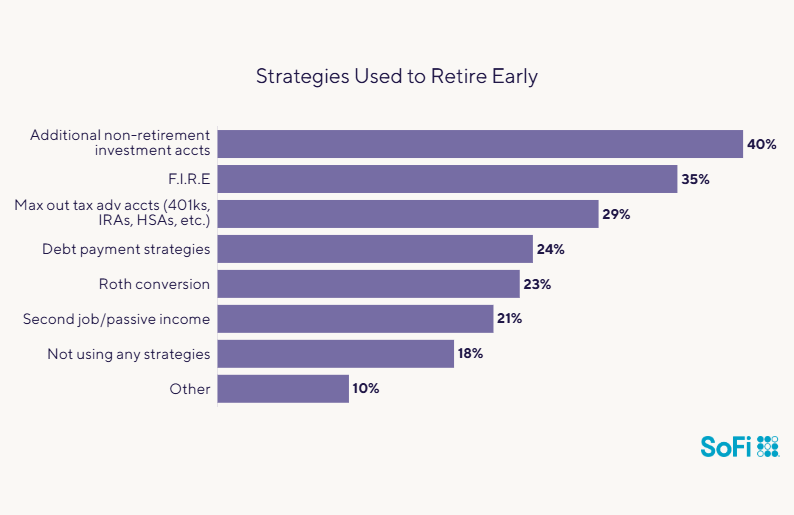
Here’s how FIRE works: In order to retire at a young age, people who follow the movement allocate 50% to 75% of their income to savings. However, that can be challenging because it means they have to sacrifice certain lifestyle pleasures such as eating out or traveling. Of the SoFi survey respondents who said they want to retire at age 49, 18% are not using any strategies that might help them retire early.

Another 35% of that group are using the FIRE method, while others are using a variety of different methods to try to reach their early retirement goal as shown here:

Source: SoFi Retirement Survey, April 2024

💡 Quick Tip: Did you know that a traditional IRA, is a tax-deferred account? That means you don’t pay taxes on the money you put in it (up to an annual limit) or the gains you earn, until you retire and start making withdrawals.

Financial Planning for Early Retirement

In order to start planning to retire early, first ask yourself how confident you are about pulling it off. In the SoFi Retirement Survey, 68% of respondents say they are very or somewhat confident in their ability to retire at their target age, while 15% are very or somewhat doubtful they can do it.

Once you’ve assessed your confidence level, the next step is to calculate how much money you’ll need to live on once you stop working. How much would you have to save and invest to arrive at an amount that would allow you to retire early? Here’s how to help figure that out.

Many people wonder: How much do I need to retire early? There isn’t one answer to that question. The right answer for you is one that you must arrive at based on your unique needs and circumstances. That said, to learn whether you’re on track for retirement it helps to begin somewhere, and the Rule of 25 may provide a good ballpark estimate.

The Rule of 25 recommends saving 25 times your annual expenses in order to retire. Why? Because according to one rule of thumb, you should only spend 4% of your total nest egg every year. By limiting your spending to a small percentage of your savings, the logic goes, your money is more likely to last.

Here’s an example: if you spend $75,000 a year, you’ll need a nest egg of $1,875,000 in order to retire.

$75,000 x 25 = $1,875,000

With that amount saved, and assuming an annual withdrawal rate of 4%, you would have $75,000 per year in income.

Obviously, this is just an example. You might need less income in retirement or more — perhaps a lot less or a lot more, depending on your situation. If your desired income is $50,000, for example, you’d need to save $1,250,000.

The Benefits of Social Security

Once you reach the age of 62, which some consider a traditional retirement age, you are then able to claim Social Security benefits. (Age 67 is considered “full retirement” age for those born in 1960 and later, and you can wait to claim benefits until age 70.)

The longer you wait to claim Social Security, the higher your monthly payments will be. You could add those Social Security benefits to your income or consider reinvesting the money, depending on your circumstances as you get older.

Recommended: Typical Retirement Expenses to Prepare For

Effective Savings Strategies

How do you save the amount of money you’d need for your early retirement plan?

Having a budget you can live with is critical to making this plan a success. The essential word here isn’t budget, it’s the whole phrase: a budget you can live with.

There are countless ways to manage how you budget. There’s the 50-30-20 plan, the envelope method, the zero-based budget, and so on. You could test a couple of them for a couple of months each in order to find one you can live with.

Another strategy for saving more is to get a side hustle to bring in some extra income. You can put that money toward your early retirement goal.

Adjusting Your Financial Habits

As you consider how to retire early, one of the first things you’ll need to do is cut your expenses now so that you can save more money. These strategies can help you get started.

Lifestyle Changes to Accelerate Savings

Take a look at your current spending and expenses and determine where you could cut back. Maybe instead of a $4,000 vacation, you plan a $2,000 trip instead, and then save or invest the other $2,000 for retirement.

You may be able to live more of a minimalist lifestyle overall. Rather than buying new clothes, for instance, search through your closets for items you can wear. Eat out less and cook at home more. Cut back on some of the streaming services you use. Scrutinize all areas of your spending to see what you can eliminate or pare back.

Debt Management Before Retirement

Obviously, it’s very difficult to achieve a big goal like saving for an early retirement if you’re also trying to pay down debt. It’s wise to work to pay off any and all debts you might have (credit card, student loan, personal loan, car loan, etc.).

That’s not only because being debt-free feels better — it also saves you money. For example, the interest rate you’re paying on credit card or store cards can be quite high, often above 15% or even 20%. If you owe $6,000 on a credit card at 17% interest, for example, when you pay that off, you’re essentially saving the interest that debt was costing you each year.

Health Care Planning: A Critical Component of Early Retirement

When you retire early, you need to think about health insurance since you’ll no longer be getting it through your employer. Medicare doesn’t begin until age 65, so start researching the private insurance market now to understand the different plans available and what you might need.

It’s critical to have the right health insurance in place, so make sure you devote proper time and attention to this task.

Investment Management for Future Retirees

Next up, you’ll need to decide what to invest in and how much to invest in order to grow your savings without putting it at risk.

Understanding Your Investment Options

How do you invest to retire early? You can invest in stocks, bonds, mutual funds, exchange-traded funds (ETFs), target date funds, and more.

One major factor to consider is how aggressively you want to invest. That means: Are you ready to invest more in equities, say, taking on the potential for greater risk in order to possibly reap potential gains? Or would you feel more at ease if you invested using a more conservative strategy, with less exposure to risk (but potentially less reward)?

Whichever strategy you choose, you may want to invest on a regular cadence. This approach, called dollar-cost averaging, is one way to maximize potential market returns and mitigate the risk of loss.

Balancing Growth and Risk in Your Investment Portfolio

Because you have less time to save for retirement, you will likely want your investments to grow. But you also need to consider your risk tolerance, as mentioned above. Think about a balanced, diversified portfolio that has the potential to give you long-term growth without taking on more risk than you are comfortable with.

As you get closer to your early retirement date, you can move some of your savings into safer, more liquid assets so that you have enough money on hand for your living, housing, and healthcare expenses.

Retirement Accounts: 401(k)s, IRAs, and HSAs

If your employer offers a retirement plan like a 401(k) or 403(b), that’s the first thing you want to take advantage of — especially if your employer matches a percentage of your savings.

The other reason to save and invest in an employer-sponsored plan is that in most cases the money you save the plan reduces your taxable income. These accounts are considered tax deferred because the amount you save is deducted from your gross income. So the more you save, the less you might pay in taxes. You do pay ordinary income tax on the withdrawals in retirement, however.

The caveat here is that you can’t access those funds before you’re 59½ without paying a penalty. So if you plan to retire early at 50, you will need to tap other savings for roughly the first decade to avoid the withdrawal penalties you’d incur if you tapped your 401(k) or Individual Retirement Account (IRA) early.

Be sure to find out from HR if there are any other employee benefits you might qualify for, such as stock options or a pension, for instance.

Additionally, if your employer offers a Health Savings Account as part of your employee benefits, you might consider opening one.

A Health Savings Account allows you to save additional money: For tax year 2025, the HSA contribution caps are $4,300 for individuals and $8,550 for family coverage. For tax year 2026, the HSA contribution caps are $4,400 for individuals and $8,750 for family coverage.

Your contributions are considered pre-tax, similar to 401(k) or IRA contributions, and the money you withdraw for qualified medical expenses is tax free (although you’ll pay taxes on money spent on non-medical expenses).

Finally, consider opening a Roth IRA. The advantage of saving in a Roth IRA vs. a regular IRA is that you’re contributing after-tax money that can be withdrawn penalty- and tax-free at any time.

To withdraw your earnings without paying taxes or a penalty, though, you must have had the account for at least five years (as per the Roth IRA 5-Year Rule), and you must be over 59 ½.

Recommended: How to Open an IRA in 5 Steps

The Pillars of Early Retirement

Retiring early means you’ll need to have income coming in to help support you. You may have a pension, which can also help. Once you’ve identified the income you’ll be generating, you’ll need to withdraw it in a manner that will help it last over the years of your retirement.

Establishing Multiple Income Streams

Having different streams of income is important so that you’re not just relying on one type of money coming in. For instance, your investments can be a source of potential income and growth, as mentioned. In addition, you may want to get a second job now in addition to your full-time job — perhaps a side hustle on evenings and weekends — to generate more money that you can put toward your retirement savings.

The Role of Social Security and Pensions in Early Retirement

Social Security can help supplement your retirement income. However, as covered above, the earliest you can collect it is at age 62. And if you take your benefits that early they will be reduced by as much as 30%. On the other hand, if you wait until full retirement age to collect them, you’ll receive full benefits. If you were born in 1960 or later, your full retirement age is 67. You can find out more information at ssa.gov.

If your employer offers a pension, you should be able to collect that as another income stream for your retirement years. Generally, you need to be fully vested in the plan to collect the entire pension. The amount you are eligible for is typically based on what you earned, how long you worked for the company, and when you stop working there. Check with your HR department to learn more.

The Significance of Withdrawal Strategies: Rules of 55 and 4%

When it comes to withdrawing money from your investments after retirement, there are some rules and guidelines to be aware of. According to the Rule of 55, the IRS allows certain workers who leave their jobs to take penalty-free distributions from their current employer’s workplace retirement account, such as a 401(k) or 403(b), the year they turn 55.

The 4% rule is a general rule of thumb that recommends that you take 4% of your total retirement savings per year to cover your expenses.

To figure out what you would need, start with your desired yearly retirement income, subtract the annual amount of any pension or additional revenue stream you might have, and divide that number by 0.4. The resulting amount will be 4%, and you can aim to withdraw no more than that amount every year. The rest of your money would stay in your retirement portfolio.

Monitoring Your Progress Towards Early Retirement

To stay on course to reach your goal of early retirement, keep tabs on your progress at regular intervals. For instance, you may want to do a monthly or bi-monthly financial check-in to see where you’re at. Are you saving as much as you planned? If not, what could you do to save more?

Using an online retirement calculator can help you keep track of your goals. From there you can make any adjustments as needed to help make your dreams of early retirement come true.

How to Manage Early Retirement When You Get There

The budget you make in order to save for an early retirement is probably a good blueprint for how you should think about your spending habits after you retire. Unless your expenses will drop significantly after you retire (for instance, if you move or need one car instead of two, etc.), you can expect your spending to be about the same.

That said, you may be spending on different things. Whatever your retirement looks like, though, it’s wise to keep your spending as steady as you can, to keep your nest egg intact.

The Takeaway

An early retirement may appeal to many people, but it takes a real commitment to actually embrace it as your goal. These days, many people are using movements like FIRE (financial independence, retire early) to help them take the steps necessary to retire in their 30s, 40s, and 50s.

You can also make progress toward an early retirement by determining how much money you’ll need for post-work life, budgeting, and cutting back on expenses . And by saving and investing wisely, you may be able to make your goal a reality.

Prepare for your retirement with an individual retirement account (IRA). It’s easy to get started when you open a traditional or Roth IRA with SoFi. Whether you prefer a hands-on self-directed IRA through SoFi Securities or an automated robo IRA with SoFi Wealth, you can build a portfolio to help support your long-term goals while gaining access to tax-advantaged savings strategies.

Help grow your nest egg with a SoFi IRA.

FAQs

How much do you need to save for early retirement?

There isn’t one right answer to the question of how much you need to save for early retirement. It depends on your specific needs and circumstances. However, as a starting point, the Rule of 25 may give you an estimate. This guideline recommends saving 25 times your annual expenses in order to retire, and then following the 4% rule, and withdrawing no more than 4% a year in retirement to cover your expenses.

Is early retirement a practical goal?

For some people, early retirement can be a practical goal if they plan properly. You’ll need to decide at what age you want to retire, and how much money you’ll need for your retirement years. Then, you will need to map out a budget and a concrete strategy to save enough. It will likely require adjusting your lifestyle now to cut back on spending and expenses to help save for the future, which can be challenging.


INVESTMENTS ARE NOT FDIC INSURED • ARE NOT BANK GUARANTEED • MAY LOSE VALUE

SoFi Invest is a trade name used by SoFi Wealth LLC and SoFi Securities LLC offering investment products and services. Robo investing and advisory services are provided by SoFi Wealth LLC, an SEC-registered investment adviser. Brokerage and self-directed investing products offered through SoFi Securities LLC, Member FINRA/SIPC.

For disclosures on SoFi Invest platforms visit SoFi.com/legal. For a full listing of the fees associated with Sofi Invest please view our fee schedule.

Tax Information: This article provides general background information only and is not intended to serve as legal or tax advice or as a substitute for legal counsel. You should consult your own attorney and/or tax advisor if you have a question requiring legal or tax advice.

Exchange Traded Funds (ETFs): Investors should carefully consider the information contained in the prospectus, which contains the Fund’s investment objectives, risks, charges, expenses, and other relevant information. You may obtain a prospectus from the Fund company’s website or by emailing customer service at [email protected]. Please read the prospectus carefully prior to investing.

Financial Tips & Strategies: The tips provided on this website are of a general nature and do not take into account your specific objectives, financial situation, and needs. You should always consider their appropriateness given your own circumstances.

SOIN0224019
CN-Q425-3236452-112

Read more
When Can I Retire This Formula Will Help You Know_780x440

When Can I Retire Calculator

When it comes to figuring out when you can retire, there are a number of factors to consider, including Social Security, other sources of income like a pension, and expenses such as health care costs.

Thankfully, there’s retirement calculators for figuring out these costs, which might help you plan for the future. But first, to decide when you can retire, determine at what age you want to retire and then see how that decision affects your finances.

Key Points

•   Factors to consider when deciding when to retire include Social Security benefits, other sources of income, and expenses like health care costs.

•   The full retirement age for Social Security benefits varies based on birth year.

•   Early retirement can result in reduced Social Security benefits, while delaying retirement can increase monthly benefits.

•   Different retirement accounts, such as Roth IRAs and traditional IRAs, have specific rules for withdrawals.

•   Other sources of retirement income to consider include part-time work, pensions, inheritance, and rental income.

When Can You Get Full Social Security Benefits?

As you consider when to apply for Social Security, you’ll want to understand at what age the government allows people to retire with full Social Security benefits. Not only that, at what age can people start withdrawing from their retirement accounts without facing penalties? For Social Security, the rules are based on your birth year.

The Social Security Administration (SSA) has a retirement age calculator. For example, people born between 1943 and 1954 could retire with full Social Security benefits at age 66.

Meanwhile, those born in 1955 could retire at age 66 and two months, and those born in 1956 could retire at age 66 and four months. Those born in or after 1960 can retire at age 67 to receive full benefits. This can help with your retirement planning.

When you plan to retire is important as you consider your Social Security benefits. What you can collect at full retirement age is different from what you can collect if you retire early or late.

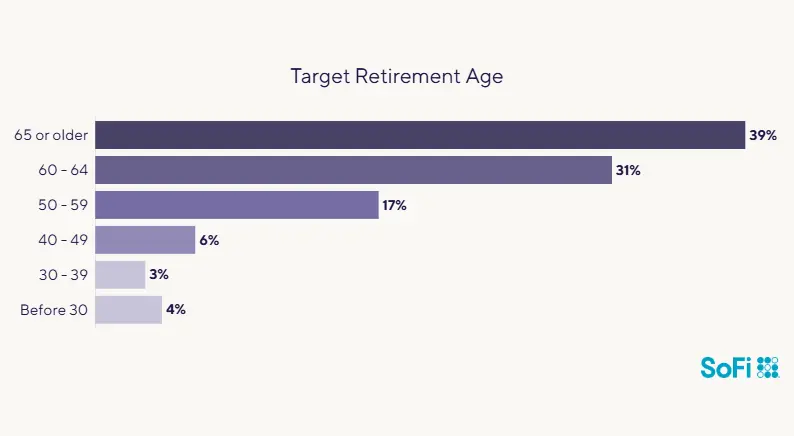
In a 2024 SoFi Retirement Survey, two out of three respondents say they are somewhat or very confident they can retire on time: 70% are hoping to leave the workforce at age 60 or older. Others hope to retire early —17% would like to retire between the ages of 50 and 59.

Target Retirement Age
Source: SoFi’s 2024 Retirement Survey

Social Security Early Retirement

A recipient’s benefits will be permanently reduced if they retire before full retirement age. That’s because the earlier a person retires, the less they’ll receive in Social Security.

Let’s use Jane Doe as an example and say she was born in 1960, so full retirement age is 67. If she retires at age 66, she’ll receive 93.3% of Social Security benefits; at age 65 will get Jane 86.7%. If she retires on her 62nd birthday — the earliest she can receive Social Security — she’ll only receive 70% of earnings.

Here’s a retirement planner table for those born in 1960, which shows how one’s benefits will be reduced with early retirement.

How Early Retirement Affects Your Social Security Benefits
Source: Social Security Administration

Social Security Late Retirement

If a person wants to keep working until after full retirement age, they could earn greater monthly benefits. This is helpful to know when choosing your retirement date.

For example, if the magic retirement number is 66 years but retirement is pushed back to 66 and one month, then Social Security benefits rise to 100.7% per month. So if your monthly benefit was supposed to be $1,000, but you wait until 66 years and one month, then your monthly allotment would increase to $1,007.

If retirement is pushed back to age 70, earnings go up to 132% of monthly benefits. But no need to calculate further: Social Security benefits stop increasing once a person reaches age 70. Here is a SSA table on delayed retirement .

Other Retirement Income to Consider

In retirement, you may have other income sources that can help you support your lifestyle and pay the bills. These might include:

Part-Time Work

Working after retirement by getting a part-time job, especially if it’s one you enjoy, could help cover your retirement expenses. And as long as you have reached your full retirement age (which is based on your year of birth, as noted above), your Social Security benefits will not be reduced, no matter what your earnings are.

However, if you retire early, you need to earn under an annual limit, which is $23,400 in 2025, and $24,480 in 2026, to keep your full benefits. If you earn more than that, you’ll lose $1 in Social Security benefits for every $2 you earn over the limit.

Pension

A pension plan, also sometimes known as a defined benefits plan, from your employer is usually based on how long you worked at your company, how much you earned, and when you stopped working. You’ll need to be fully vested, which typically means working at the company for five years, to collect the entire pension. Check with the HR rep at your company to get the full details about your pension.

A pension generally gives you a set monthly sum for life or a lump sum payment when you retire.

Inheritance

If you inherit money from a relative, these funds could also help you pay for your retirement. And fortunately, receiving an inheritance won’t affect your Social Security benefits, because Social Security is based on money you earn.

Rental Income

Another potential money-earning idea: You could rent out a home you own, or rent out just the upper floors of the house you live in, for some extra income in retirement. Like an inheritance, rental income will generally not affect your Social Security benefits.

Major Expenses in Retirement

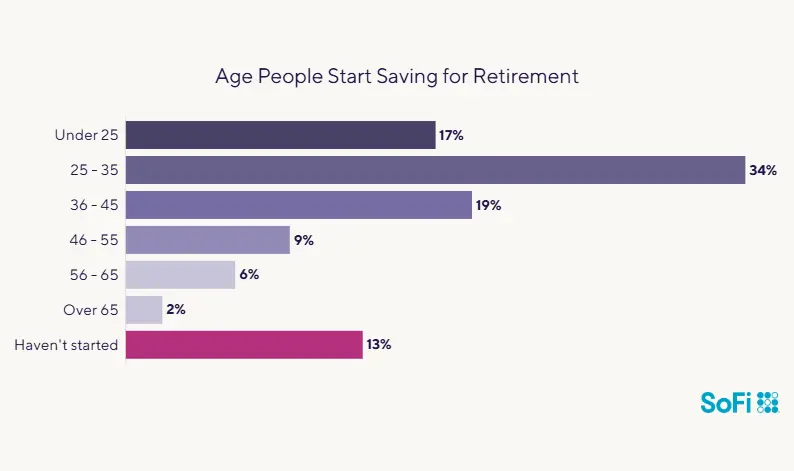
It’s important to draw up a budget for retirement to help determine how much money you might need. The amount may be higher than you realize — which is one of the reasons it’s beneficial to start saving early. In SoFi’s retirement survey, more than half of respondents (51%) say they started saving before age 35.

Age People Start Saving for Retirement
Source: SoFi’s 2024 Retirement Survey

As you put together your retirement budget, these are some of the major expenses retirees commonly face.

Healthcare

For most people, health care costs increase as they get older, as medical problems can become more serious or pervasive. According to Fidelity, based on 2024 numbers, the average amount that a couple who are both age 65 will spend on health care during their first year of retirement is $12,800.

Housing

Your mortgage, home insurance, and the costs of maintaining your house can be a significant monthly and yearly expense. In fact, according to the Bureau of Labor Statistics’ 2023 Consumer Expenditures report, Americans aged 65 and older spent an average of $21,445 on housing in 2023.

Travel

If you’re planning to take trips in retirement, or even just drive to visit family, transportation costs can quickly add up. The Bureau of Labor Statistics Consumer Expenditures report found that in 2023, people over age 65 averaged about $9,033 in transportation costs a year, including vehicles, maintenance, gas, and insurance.


💡 Quick Tip: You can’t just sit on the money you save in a traditional IRA account forever. The government requires withdrawals each year, starting at age 73 (for those born in 1950 or later). These are called required minimum distributions or RMDs.

When Can You Withdraw From Retirement Accounts?

Now that you have a sense of your expenses in retirement, let’s look at retirement accounts. Each type of account has different rules about when money can be taken out.

If a Roth IRA account has existed for at least five years, withdrawals can generally be taken from the account after age 59 ½ without consequences. These are known as qualified withdrawals. Taking out money earlier or withdrawing money from a Roth IRA that’s been open for fewer than five years could result in paying penalties and taxes.

There is a little wiggle room. Contributions (but not earnings) can be withdrawn at any time without penalty, no matter the age of the account holder or the age of the account.

Roth IRA withdrawal rules also have some exceptions. Qualified withdrawals may be made from an account that’s been open at least five years for the purchase of a first home (up to a $10,000 lifetime limit), due to a disability, or after the account holder’s death to be paid to their estate or a beneficiary.

People with a traditional IRA can make withdrawals after age 59 ½ without being penalized. The government will charge a 10% penalty on withdrawals before age 59 ½. There are some exceptions, such as the purchase of a first home (up to a $10,000 lifetime limit), some medical and educational expenses, disability, and death.

People with 401(k)s can make withdrawals after age 59 ½ without paying a 10% penalty. Again, there are some exceptions. For example, an individual can generally retire at age 55 and make withdrawals without penalty. There are also exceptions for those under age 59 ½ for hardship withdrawals, disability, and death, among others.

It’s important to be aware that with a traditional IRA and a 401(k), individuals must start making required minimum distributions (RMDs) by age 73 or face a penalty.


Test your understanding of what you just read.


The Takeaway

Deciding at what age to retire is a personal choice. However, by planning ahead for some common expenses, and understanding the age at which you can get full Social Security benefits, you can use a retirement calculator formula to estimate how much money you’ll need each year to live on. And you can supplement your Social Security benefits with other forms of income and by making smart decisions about savings and investments.

Prepare for your retirement with an individual retirement account (IRA). It’s easy to get started when you open a traditional or Roth IRA with SoFi. Whether you prefer a hands-on self-directed IRA through SoFi Securities or an automated robo IRA with SoFi Wealth, you can build a portfolio to help support your long-term goals while gaining access to tax-advantaged savings strategies.

Easily manage your retirement savings with a SoFi IRA.

FAQ

How do I calculate my retirement age?

To calculate your full retirement age, which is the age you can receive your full retirement benefits, you can use the Social Security administration’s retirement age calculator . Essentially, if you were born in 1960 or later, your full retirement age is 67. For those born between 1954 and 1959, the full retirement age is between 66 and 67, depending exactly how old they are when they retire (such as age 66 and two months). And for those born between 1943 and 1954, full retirement age is 66.

The earlier you retire before your full retirement age, the less you’ll receive in benefits. Conversely, the longer you keep working, up to age 70, the more you can receive.

Can you legally retire before 55?

Yes, you can legally retire before age 55. However, your Social Security benefits typically won’t kick in until age 62. And even then, because you’ll be tapping into those benefits before your full retirement age of 66 or 67, you’ll get a reduced amount.

The rule of 55 generally allows you to withdraw funds from a 401(k) or 403(b) at age 55 without paying a penalty. That may be something to look into if you’re planning to retire early.

Can you retire after 20 years of work?

In some lines of work, you can retire after 20 years on the job and likely get a pension. This includes those in the military, firefighters, police officers, and certain government employees.

That said, anyone in any industry can retire at any time. However, Social Security benefits don’t typically begin until age 62.


INVESTMENTS ARE NOT FDIC INSURED • ARE NOT BANK GUARANTEED • MAY LOSE VALUE

SoFi Invest is a trade name used by SoFi Wealth LLC and SoFi Securities LLC offering investment products and services. Robo investing and advisory services are provided by SoFi Wealth LLC, an SEC-registered investment adviser. Brokerage and self-directed investing products offered through SoFi Securities LLC, Member FINRA/SIPC.

For disclosures on SoFi Invest platforms visit SoFi.com/legal. For a full listing of the fees associated with Sofi Invest please view our fee schedule.

Financial Tips & Strategies: The tips provided on this website are of a general nature and do not take into account your specific objectives, financial situation, and needs. You should always consider their appropriateness given your own circumstances.

Disclaimer: The projections or other information regarding the likelihood of various investment outcomes are hypothetical in nature, do not reflect actual investment results, and are not guarantees of future results.

Third-Party Brand Mentions: No brands, products, or companies mentioned are affiliated with SoFi, nor do they endorse or sponsor this article. Third-party trademarks referenced herein are property of their respective owners.

Third Party Trademarks: Certified Financial Planner Board of Standards Center for Financial Planning, Inc. owns and licenses the certification marks CFP®, CERTIFIED FINANCIAL PLANNER®

External Websites: The information and analysis provided through hyperlinks to third-party websites, while believed to be accurate, cannot be guaranteed by SoFi. Links are provided for informational purposes and should not be viewed as an endorsement.

SOIN-Q325-038
CN-Q425-3236452-125

Read more
A smiling couple on a couch reviews documents on a laptop as they complete their gift tax return.

What Is a Gift Tax Return and When Is It Due?

An individual preparing to file a federal tax return will want to think back on gifts given in the prior year. If a gift exceeds a certain threshold, the IRS wants it reported by Tax Day — but only extremely wealthy taxpayers will ever have to pay taxes on their lifetime of gifts.

In 2025, you could have made gifts worth up to $19,000 per recipient without reducing your lifetime exemption, being required to report the gift to the IRS, or paying federal gift tax.

Gifts over that value count toward the lifetime gift and estate tax exemption of $13.99 million (per spouse, if married), rising even higher in 2026.

Key Points

•   Annual exclusion limits for gift tax are $19,000 for 2025 and 2026.

•   The donor is typically responsible for filing and paying gift tax, if applicable.

•   Failure to file a gift tax return can result in penalties and interest.

•   Records of gifts must be kept indefinitely for tax purposes.

•   Lifetime exemption for gift tax is $13.99 million per individual in 2025 and $15 million per individual in 2026.

Check your score with SoFi

Track your credit score for free. Sign up and get $10.*


What Is a Gift and What Is Not?

According to the IRS, gift tax is applicable when property is transferred from one person to another, with the giver receiving nothing, or less than full value, in return. The tax applies even when the donor doesn’t consider the transfer a gift.

The IRS defines the federal gift tax broadly, including when the gift is monetary or a physical property, or a donor allowing someone to stay in their property or earn income from the property without getting something equal in return.

Someone who makes an interest-free or reduced-interest loan may also be seen as giving a gift.

When you make a gift other than cash, you must assess the property’s fair market value: the price a willing buyer would pay in the open market. If you’re buying a house from a family member, you might ask for a gift of equity.

Generally, the IRS does not consider these taxable gifts:

•   Gifts that are not more than the annual exclusion for the calendar year

•   Another person’s tuition, as long as payments are made directly to the educational institution

•   Another person’s medical expenses, as long as the payments are made directly to medical service providers

•   Gifts to a spouse who is a U.S. citizen

•   Gifts to a political organization

•   Gifts to IRS-approved charities

What Is a Gift Tax Return?

Par for the course with the IRS, there’s a form involved if you made a gift exceeding the annual limit: Form 709. It is to be filled out the year after the giving of the gift. So if a relevant gift was given in 2025, the information belongs on the 2026 tax return form.

Information on this form lets the IRS know that a gift has been given that falls within the scope of the gift tax.

Married couples may “split” gifts and essentially double their annual exclusion. If you are married and your spouse consented, you could have given up to $38,000 to an unlimited number of individuals in 2025 and 2026 with no gift or estate tax consequences.

Spouses who split gifts always have to file Form 709, even when no taxable gift was incurred.

The gift tax is tied to the estate tax. As of tax year 2025, you can leave up to $13.99 million to relatives or friends free of any federal estate tax. If you’re married, your spouse is entitled to a separate $13.99 million exemption. Clearly this is the province of high earners.

Who Files the Gift Tax Return: the Giver or the Recipient?

Taxes typically fall on the donor, not the recipient.

There may be special circumstances when the recipient will agree to pay the tax. If you make this agreement, the IRS suggests that you contact your tax professional for guidance on how to proceed.

Annual Exclusion for 2025

You could have made an unlimited number of tax-free gifts in 2025 as long as no one received more than $19,000.

If you held back, just know that you can once again make an unlimited number of tax-free gifts of up to $19,000 in 2026, when the lifetime gift tax exemption increases to $15 million per person.

Need help monitoring where your money is coming and going? A spending app lets you set budgets, organize spending, and manage upcoming bills.

When Do You Need to File a Gift Tax Return?

This follows the regular tax filing deadline, which is April 15 in 2026.

If you need a gift tax return extension when you’re not filing a tax extension for your general income tax return, file Form 8892. This will typically give you a six-month extension.

How to File a Gift Tax Return

First, you use the federal gift tax return Form 709 that’s available online through the IRS. The IRS also provides gift tax return instructions. The agency includes determining if you need to file a form and, if so, for what gifts.

You may need to decide whether you and a spouse will split the gift taxes.

Form 709 is complicated. Whether you’re a seasoned tax filer or filing taxes for the first time, a tax pro could be of great help.

Recommended: How Long Does It Take for the IRS to Mail a Refund?

What Happens If I Don’t File a Gift Tax Return?

You could be fined by the IRS, and the taxing authority is becoming more vigilant in levying these failure-to-pay penalties. The fine equals 0.5% for every month that the tax isn’t paid, based on the amount of the gift. So, as time goes by, the fine gets bigger, up to a maximum of 25%. If the IRS determines that fraud was involved, the fine can go up to 15%.

If this oversight isn’t discovered in a person’s lifetime, the estate could be assessed the accumulated fine.

How Long Should You Keep Gift Tax Returns?

Keep them indefinitely! They will likely be needed by the executor of your estate.

Recommended: 41 Things to Do With Your Tax Refund

The Takeaway

A gift tax return might inspire dread, but it’s simply a way for the IRS to track eligible gifts made in a year and over a lifetime. Most people will never pay gift taxes.

Want to keep tabs on gifts and track all of your money in one place? A money tracker app may be able to help.

Take control of your finances with SoFi. With our financial insights and credit score monitoring tools, you can view all of your accounts in one convenient dashboard. From there, you can see your various balances, spending breakdowns, and credit score. Plus you can easily set up budgets and discover valuable financial insights — all at no cost.

See exactly how your money comes and goes at a glance.

FAQ

What triggers a gift tax return?

The main trigger is exceeding the annual limit of what you can give without taxation. The annual amount per donee is $19,000 in both 2025 and 2026.

Do I have to file a gift tax return if I receive a gift?

In general, it’s the donor of the gift, not the recipient, who pays the tax.

What happens if I don’t file a gift tax return?

The IRS may levy fines. If it doesn’t happen in your lifetime, the situation may be uncovered by the IRS after your death, and fines can be levied on the estate.


Photo credit: iStock/VioletaStoimenova

SoFi Relay offers users the ability to connect both SoFi accounts and external accounts using Plaid, Inc.’s service. When you use the service to connect an account, you authorize SoFi to obtain account information from any external accounts as set forth in SoFi’s Terms of Use. Based on your consent SoFi will also automatically provide some financial data received from the credit bureau for your visibility, without the need of you connecting additional accounts. SoFi assumes no responsibility for the timeliness, accuracy, deletion, non-delivery or failure to store any user data, loss of user data, communications, or personalization settings. You shall confirm the accuracy of Plaid data through sources independent of SoFi. The credit score is a VantageScore® based on TransUnion® (the “Processing Agent”) data.

Tax Information: This article provides general background information only and is not intended to serve as legal or tax advice or as a substitute for legal counsel. You should consult your own attorney and/or tax advisor if you have a question requiring legal or tax advice.

Non affiliation: SoFi isn’t affiliated with any of the companies highlighted in this article.

Financial Tips & Strategies: The tips provided on this website are of a general nature and do not take into account your specific objectives, financial situation, and needs. You should always consider their appropriateness given your own circumstances.

Third Party Trademarks: Certified Financial Planner Board of Standards Center for Financial Planning, Inc. owns and licenses the certification marks CFP®, CERTIFIED FINANCIAL PLANNER®

SORL-Q425-075

Read more

Health Care Costs in Retirement: How to Plan Ahead

When planning for retirement, people often assume Medicare will cover their medical bills, but in fact many retirees will face out-of-pocket costs that, over time, could reach into the six figures.

While it’s difficult to predict for sure what your actual health care costs in retirement will be — especially in light of today’s longevity — it’s wise to work with a ballpark figure in order to create a safety net of savings that will cover you, no matter what your needs will be in the years to come.

Key Points

•   Planning for retirement should take health care costs into account, such as potential out-of-pocket costs and long-term care.

•   According to research, the average 65-year-old individual may need $165,000 in savings to cover medical expenses in retirement (and double that amount for couples).

•   Medicare covers medical costs such as preventive care, doctor visits, prescription drugs, inpatient hospital stays, short-term rehab, and hospice.

•   Medicare Advantage Plans are Medicare-approved, private insurance plans that may cover medical basics as well as other expenses, such as vision, hearing, and dental.

•   Health savings accounts (HSAs) and long-term care insurance can help pay for medical expenses not covered by Medicare.

Health Care in Retirement

The cost of health care in retirement can be overwhelming. According to the annual Fidelity Retiree Health Care Cost Estimate in 2024, a typical retired couple aged 65 could spend as much as $330,000 in after-tax savings on medical expenses during the course of their retirement.

That figure doesn’t include related health costs such as dental services, over-the-counter medications, or long-term care — which are not currently covered by original Medicare.

Long-term care expenses can be especially onerous, with the median cost of a private room in a nursing home running about $116,800 per year, according to the 2023 Genworth Cost of Care Survey. This, too, is an expense that many people may need to factor into their retirement plans, given the growing number of people living into their 80s and 90s — or longer.

This “new longevity,” as it’s sometimes called, may also lead to additional health-related costs down the line that are difficult to anticipate now, but require educated estimates nonetheless — especially for women, who live on average about five years longer than men.

Recommended: Different Types of Retirement Accounts

How Much to Budget for Health Care Costs in Retirement

To create a realistic plan for retirement, and make optimal financial decisions about investing for retirement, insurance coverage, and the timing of important government benefits — the starting point is to look at how much money will be coming in, and how much will be going out to pay for likely health issues.

Social Security Benefits

While Social Security benefits depend on an individual’s work history, as well as the age when they first file for Social Security, the key thing to know about this source of income is that it’s limited. The average monthly payout in November 2025 was $1,869.20. The maximum possible benefit amount is $4,018 per month for those who retire at full retirement age in 2025, and the maximum possible benefit is $4,152 per month for those who retire at full retirement age in 2026.

Individuals can file for Social Security starting at age 62, generally speaking, but “full retirement age” is 67 for those born in 1960 and later. To get a more accurate estimate of your own benefit amount, go to SSA.gov.

Private Sources of Income

Fortunately, most retirees also have savings or a pension, which can add to their income. Nearly 80% of retirees reported having one or more sources of private income, in addition to Social Security, according to the Economic Well-Being of U.S. Households in 2022, by the Federal Reserve Board.

For example, you may have opened a retirement account like an IRA or an employer-sponsored plan, such as a 401(k), that may offer an additional source of income.

If you’re freelance or a small business owner, you may have a SEP IRA or a SIMPLE IRA — common retirement plan options for the self-employed.

The point is to have a grasp of your income sources in retirement, as well as your anticipated cash flow, so that you can cover medical costs in retirement.

Understanding Health Care Costs

As costs vary considerably depending on one’s region, age, and overall health, it can be difficult to estimate the precise amount to set aside for health care in retirement.

Start by assessing your overall health today, and speaking to your doctor(s) about any chronic conditions, genetic predispositions, and any other risk factors that could impact the care you need as you get older.

Unfortunately, there’s almost no way to predict with any accuracy the types of conditions or care you might need, or what they will cost, when preparing for retirement. But in some cases this thought exercise may help you anticipate some upcoming costs, so you can factor that into your overall estimate.

Of course, not all of your medical costs in retirement will be out of pocket; Medicare (and Medicaid, if you qualify) cover many medical expenses. But this insurance is another expense to factor in.

What Does Medicare Cost, What Does It Cover?

Medicare is a medical insurance program offered by the federal government for those 65 years and older, and those who are disabled. Medicare will pay certain health care expenses in retirement, but with restrictions. Dental, vision, and hearing care, including hearing aids, are not covered by Original Medicare, generally known as Parts A and B.

Also, as noted above: Medicare does not cover long-term care, like an assisted living or nursing home facility.

Note that you must apply for Medicare benefits within a certain window, or risk being penalized with higher premiums. Generally, the Initial Enrollment period begins three months before you turn 65, and it ends three months after the month in which you turned 65. Some exceptions apply (for example, if you have health insurance through your employer, or were affected by a natural disaster).

Be sure to check the terms that might apply to your situation to avoid a penalty.

Understanding Medicare Coverage

The following terms generally apply to those with a modified adjusted gross income (MAGI) over $103,000, or $206,000 for a married couple. If your premium is subject to an income adjustment, it could be as high as $594 per month (though according to the Centers for Medicare and Medicaid Services (CMS), the highest rate generally applies to people with incomes over $500,000, or $750,000 for a married couple).

•   Medicare Part A covers inpatient hospital stays and treatment, as well as skilled nursing care (i.e. short-term rehab), limited in-home care and hospice. As long as you or your spouse had sufficient Medicare taxes withheld through your job (generally at least 10 years), you won’t pay a monthly premium for Part A. The deductible for Part A is $1,736 in 2026, an increase of $60 from $1,676 in 2025.

•   Medicare Part B covers outpatient care, preventive care, and visits to doctors. The monthly premium for Part B is $202.90 for 2026, an increase of $17.90 from $185.00 in 2025. The annual deductible for 2026 is $283, an increase of $26 from the annual deductible of $257 in 2025. 

•   Medicare Part D covers prescription drugs. The average estimated monthly Part D plan premium in 2026 is $34.50.

Medicare Part C, or Medicare Advantage Plans, is a bit of a separate case. Medicare Advantage plans are private insurance plans that are Medicare-approved, and may cover vision, hearing, or dental needs, as well as the medical basics and prescriptions covered by Parts A, B, and D. Medicare Advantage plans are optional.

While the Advantage Plans are designed to fill in certain gaps in coverage, you want to make sure the costs are manageable, and that you’re not paying for overlapping policies.

Medicare Costs

In other words, assuming at least one hospital stay that requires you to pay the deductible, the basic cost of Medicare alone is about $4,600 per year. Again, that doesn’t include:

•   Vision care

•   Dental care

•   Hearing care or hearing aids

•   Long-term care

Most people will need some or all of those types of health care as they get older, which could add to your potential out-of-pocket expenses over time, and speaks to the need for some emergency savings.

Other Ways to Pay for Health Care

In addition to Medicare, there are other ways to pay for medical expenses during retirement, including HSA accounts and long-term care insurance.

Health Savings Account (HSA)

When choosing a health insurance plan before you retire, consider one that comes with a health savings account (HSA) that may help you save money for retirement medical expenses. These accounts generally come with high-deductible health plans (HDHPs), and provide three substantial tax benefits:

•   Contribution deductions

•   Tax-deferred growth

•   Withdrawals without taxation for qualified medical costs

The accounts take pre-tax deposits to cover health care costs that are not covered by insurance. The unspent money in an HSA rolls over from year to year. Most important, the money in an HSA account belongs to you, even when you are no longer participating in the original high-deductible plan.

What Your HSA Savings May Cover

HSA funds can be used to pay for a variety of medical expenses in retirement. For instance, prescription drugs, eyeglasses, hearing aids, and other medical supplies can generally be purchased with HSA funds.

Additionally, you can use HSA savings to cover deductibles and co-payments for medical care. Medicare premiums and long-term care insurance premiums can also be covered using HSA funds.

By utilizing catch-up payments and employer contributions, those who are already over 50 can still get the most out of these programs. A catch-up payment of $1,000 per year, in addition to the maximum contribution limit, is allowed for people 55 and older. One can use an HSA to pay for yearly physicals or other preventative exams covered by an HDHP.

A benefit of utilizing an HSA to cover medical expenses in retirement is that the money in the account can be invested, allowing it to increase in value over time. This might be helpful for people who wish to have a dedicated source of savings to cover medical bills.

It’s worth noting that funds in an HSA must be used for qualified medical expenses in order to be withdrawn tax-free. It’s a good idea to consult a tax professional or review IRS guidelines to ensure that HSA funds are being used appropriately.

Long-Term Care Insurance

Another approach to bridge the Medicare gap is to get long-term care insurance. This kind of insurance can provide a monthly benefit for long-term care, either for a few years or for the rest of one’s life.

The expenses of long-term care such as in-home care, assisted living, and nursing facility care, can be covered in part by long-term care insurance. These services are often required by people who are unable to do activities of daily living on their own, such as eating, dressing, or bathing, due to a chronic disease or disability.

That said, these policies can be complex, as well as expensive, and it may be wise to consult with a professional before purchasing coverage.

The Takeaway

Medical expenses can be a large portion of one’s retirement budget. As daunting as it may seem, calculating these expenditures ahead of time and developing an insurance and spending plan will help you save more of your retirement funds for other needs.

Invest in what matters most to you with SoFi Active Invest. In a self-directed account provided by SoFi Securities, you can trade stocks, exchange-traded funds (ETFs), mutual funds, alternative funds, options, and more — all while paying $0 commission on every trade. Other fees may apply. Whether you want to trade after-hours or manage your portfolio using real-time stock insights and analyst ratings, you can invest your way in SoFi's easy-to-use mobile app.


Invest with as little as $5 with a SoFi Active Investing account.

FAQ

How much does the average person spend on health care in retirement?

Health care costs depend on a variety of factors, but on average a healthy person over age 65 could spend as much as $165,000 during their retirement ($330,000 per couple).

How do I prepare for health care expenses in retirement?

A few ways to prepare include making a retirement budget, saving in a retirement account, funding a health savings account while still employed, making sure to get adequate medical insurance through Medicare and/or private Advantage plans once you turn 65. You may want to consider long-term care insurance as well.

How do I save for out-of-pocket medical expenses?

Ways to save on out-of-pocket medical expenses include shopping around for the best prices on health care services, making use of preventive care services to help reduce the need for more expensive treatments in the future, and purchasing insurance to help cover unexpected medical costs. In addition, funding a health savings account (HSA) when it’s offered is a tax-advantaged way to set aside money for health care costs.


Photo credit: iStock/jacoblund

INVESTMENTS ARE NOT FDIC INSURED • ARE NOT BANK GUARANTEED • MAY LOSE VALUE

SoFi Invest is a trade name used by SoFi Wealth LLC and SoFi Securities LLC offering investment products and services. Robo investing and advisory services are provided by SoFi Wealth LLC, an SEC-registered investment adviser. Brokerage and self-directed investing products offered through SoFi Securities LLC, Member FINRA/SIPC.

For disclosures on SoFi Invest platforms visit SoFi.com/legal. For a full listing of the fees associated with Sofi Invest please view our fee schedule.

Tax Information: This article provides general background information only and is not intended to serve as legal or tax advice or as a substitute for legal counsel. You should consult your own attorney and/or tax advisor if you have a question requiring legal or tax advice.

Disclaimer: The projections or other information regarding the likelihood of various investment outcomes are hypothetical in nature, do not reflect actual investment results, and are not guarantees of future results.

Financial Tips & Strategies: The tips provided on this website are of a general nature and do not take into account your specific objectives, financial situation, and needs. You should always consider their appropriateness given your own circumstances.

SOIN0522016
CN-Q425-3236452-110

Read more
Guide to Achieving a Better Life Experience (ABLE) Accounts

Guide to Achieving a Better Life Experience (ABLE) Accounts

An ABLE account — short for Achieving a Better Life Experience — is a tax-advantaged savings vehicle that’s designed for eligible people with disabilities. Designated beneficiaries can use an ABLE savings account to set aside money to pay for qualified disability-related expenses.

An ABLE savings account can offer substantial tax benefits for qualified individuals, as contributions grow tax deferred and qualified withdrawals are also tax free. Also referred to as a 529 A account (owing to its similarity to a 529 college savings plan), the ABLE account is designed to make saving and investing more advantageous for people with disabilities and their families.

What Is an ABLE Account?

An ABLE account is a tax-advantaged savings account for people with disabilities and their families. ABLE savings accounts allow people to pay for qualified disability expenses (QDEs) without impacting their ability to qualify for Medicaid or other government assistance programs.

The Achieving a Better Life Experience Act became law in December 2014. The intention behind the ABLE Act and the creation of ABLE accounts was to ease financial stress associated with paying for many of the QDEs associated with different disabilities. Qualified expenses include: housing, education, assistive technologies, specially equipped vehicles, and even food.

Under the ABLE Act, states have the authority to establish an ABLE disability account program. As of June 2022, all 50 states offer at least one ABLE savings account program, according to the ABLE National Resource Center. However, plans are currently inactive in Idaho, North Dakota, South Dakota, and Wisconsin.

💡 Quick Tip: Did you know online banking can help you get paid sooner? Feel the magic of payday up to two days earlier when you set up direct deposit with SoFi.^

How Do ABLE Accounts Work?

An ABLE account is a type of tax-deferred savings account similar to a 529 college savings plan. These accounts work by allowing designated beneficiaries to contribute money, up to prescribed limits.

The money can come from various sources, including individual or corporate contributions, or a trust. The money in an ABLE savings account does not affect your eligibility for other government benefits.

Also like a 529 plan, the money grows on a tax-deferred basis and can be withdrawn tax free when it’s used to pay for qualified disability expenses. Broadly speaking, QDEs are any expenses a person with disability pays in order to maintain their health, independence, and quality of life.

However, withdrawals from an ABLE savings account for non-qualified expenses can result in those distributions being subject to tax. Using money in an ABLE disability account for non-qualified expenses could also affect eligibility for government assistance.

Benefits of an ABLE Account

Generally speaking, ABLE savings accounts are designed to make paying for certain expenses easier for people with disabilities. Here are some of the main advantages of opening an ABLE savings account.

Tax-Deferred Growth and Tax-Free Withdrawals

One of the main draws of ABLE accounts is their tax-advantaged status. The money that goes into an ABLE account can be invested and allowed to grow on a tax-deferred basis. As long as distributions are used to pay for QDEs, withdrawals are always 100% tax-free.

ABLE accounts have an edge over savings accounts, since designated beneficiaries can invest their money in the market. That means they have an opportunity to grow their savings through the power of compound interest.

Flexibility

The ABLE account allows for flexibility, since the money can be used to pay for a wide range of disability-related costs. With a traditional 529 plan, savers are limited to using funds to pay for education-related expenses. The ABLE savings account allows designated beneficiaries (i.e. the disabled individual or family member) to use the money for the categories noted above — housing, transportation, technology, food, etc. — as well as employment training, health and wellness costs, legal and administrative fees, and more.

Friends, family members, and others can contribute to ABLE accounts on behalf of the designated beneficiary, up to the annual limit. For 2025, the annual contribution limit, including rollovers from 529 plans, is $19,000; for 2026, the annual limit is $20,000.

And beneficiaries don’t have to worry about those contributions affecting their ability to qualify for Medicaid, Supplemental Security Income (SSI), or other forms of government aid, assuming they’re within certain limits. To learn more about who can make qualified contributions, check the ABLE website, or consult the ABLE program in your state.

One further note: In addition, a U.S.-resident ABLE account owner who doesn’t participate in an employer-sponsored retirement plan can contribute up to an additional $15,060 from their earnings into their ABLE account in 2025. The amount that can be added to the account is higher for residents of Alaska at $18,810 and Hawaii at $17,310. In 2026, a U.S.-resident ABLE account owner who doesn’t participate in an employer-sponsored retirement plan can contribute up to an additional $15,650. The amount that can be added to the account is higher for residents of Alaska at $19,550 and Hawaii at $17,990. (More details on this below.)

Financial Autonomy

ABLE accounts afford designated beneficiaries with a measure of financial independence, since they can set up an ABLE account themselves and make contributions on their own behalf. Individuals can also manage the account, and decide how to invest their savings and when to take qualified distributions for eligible expenses.

An ABLE account can give a person with disabilities more control than something like a special needs trust, a type of trust fund. In a special needs trust, the trust grantor sets aside assets for a disabled beneficiary but that beneficiary doesn’t have a say in how the money can be used.

Increase your savings
with a limited-time APY boost.*


*Earn up to 4.00% Annual Percentage Yield (APY) on SoFi Savings with a 0.70% APY Boost (added to the 3.30% APY as of 12/23/25) for up to 6 months. Open a new SoFi Checking and Savings account and pay the $10 SoFi Plus subscription every 30 days OR receive eligible direct deposits OR qualifying deposits of $5,000 every 31 days by 3/30/26. Rates variable, subject to change. Terms apply here. SoFi Bank, N.A. Member FDIC.

Drawbacks of an ABLE Account

While ABLE accounts have some positives, they’re not necessarily right for everyone who has a disability. Here are some of the potential drawbacks to consider when deciding whether to open an ABLE account.

Non-Deductible Contributions

Contributions to an ABLE savings account do not offer a tax break in the form of a deduction. (This is also true of some state 529 plans.) So even if you fully fund an ABLE account up to the annual limit each year, you can’t use those contributions as tax deductions.

Age Restrictions

An ABLE account can only be established for someone who has a blindness or disability that began before age 26. So someone who becomes disabled at age 27 or later would not be able to open an ABLE disability account.

The age requirement puts this type of special needs savings account out of reach for some individuals, though they could still be named the beneficiary of a special needs trust.

Worth knowing: There’s legislation afoot to raise the age of eligibility to “before 46” versus “before 26” in 2026.

Means Testing

Money held in an ABLE account is subject to means testing for the purposes of qualifying for Supplemental Security Income and Medicaid. The first $100,000 in ABLE account assets is disregarded for SSI but going over that limit can result in a suspension of your benefit payments.

The $100,000 account balance threshold doesn’t affect Medicaid eligibility. But if a designated beneficiary passes away with money remaining in their ABLE account, the state can lay claim to those assets in order to recoup any Medicaid benefits that were received.

Opening an ABLE Account

People with disabilities can open an ABLE account in any state, as long as that state’s plan is open for enrollment. The ABLE National Resource Center maintains a map with details for each state’s program, including whether out-of-state residents are accepted.

Once you find an eligible program, you can open an ABLE account online. There’s some basic information you’ll need to provide, including:

•   Your name

•   Date of birth

•   Social Security number

•   Bank account number

Parents can open an ABLE account on behalf of a minor child with disabilities. You also have to meet the definition of a designated beneficiary. In New York, for example, you must be able to show that one of the following is true:

•   You’ve been classified as blind as defined in the Social Security Act

•   You’re entitled to SSI or Social Security Disability Insurance (SSDI) due to a disability

•   You have a disability that’s included on the Social Security Administration’s List of Compassionate Allowances Conditions

•   You have a written diagnosis from a licensed physician documenting a physical or mental impairment which severely limits function, and is expected to last at least one year, or can cause death

Similar to opening a bank account, there may also be a low minimum deposit requirement to open an ABLE account.

Requirements of an ABLE Account

There are certain requirements that must be met in order to open an ABLE account. Generally, you’re eligible for one of these accounts if you:

•   Become eligible for Supplemental Security Income based on disability or blindness that began before age 26; or

•   Are entitled to disability insurance benefits, childhood disability benefits, or disabled widow’s or widower’s benefits based on a disability or blindness that began before age 26; or

•   Certify that you have a medical impairment resulting in blindness or disability that began before age 26.

Again, age and disability status are the most important requirements for ABLE savings accounts. You can open an ABLE account in your home state or in another state, if that state’s program allows non-residents to enroll. It’s important to note, however, that you can only have one ABLE account in your name.

How Much Can You Contribute to an ABLE Account?

The annual contribution limit is typically pegged to the gift tax exclusion limit each year, which is $19,000 for 2025. But in 2026, the limit increases to $20,000. Eligible designated beneficiaries can, however, contribute additional money if they’re employed and do not participate in an employer-sponsored retirement plan for the year.

The IRS limits those contributions to an amount up to the lesser of:

•   The designated beneficiary’s compensation for the year, OR

•   The poverty line amount for a one-person household as established by the Community Services Block Grant Act

For 2025, the allowable amount for persons with disabilities in the continental United States is up to $15,060. The limit for residents of Alaska $18,810 and Hawaii at $17,310. For 2026, the allowable amount for persons with disabilities in the continental United States is up to $15,650. The limit for residents of Alaska $19,950 and Hawaii at $17,990.

Funds from a 529 college savings account can be rolled into an ABLE account. Any rollovers count toward the annual contribution limit. So if $6,000 have been contributed to the plan for the year already, in theory you could rollover up to $13,000 into an ABLE account from a 529 savings account for 2025, and up to $14,000 in 2026.

How Can You Use ABLE Money?

As discussed earlier, money in an ABLE savings account can be used to pay for qualified disability expenses. That means expenses that are paid by or for the designated beneficiary and are related to their disability.

Examples of things you can use ABLE money for include such living expenses and other costs as:

•   Education

•   Housing expenses

•   Food

•   Transportation

•   Employment and career training and support

•   Assistance technology and related services

•   Health care

•   Prevention and wellness

•   Financial management and administrative services

•   Legal expenses

•   Funeral and burial expenses

•   Day-to-day living expenses

The IRS can perform audits to ensure that ABLE account funds are only being used for qualified disability expenses. So designated beneficiaries may want to keep a detailed record of withdrawal and how those funds are used, including copies of receipts.

ABLE Accounts vs Special Needs Trusts

A special needs trust (SNT) is another option for setting aside money for disability expenses. In a special needs trust, the beneficiary does not own any of the trust assets but the money in the trust can be used on their behalf. A trustee manages trust assets according to the direction of the trust grantor.

Here’s how ABLE accounts and special needs trusts compare at a glance. You may benefit from consulting a tax professional to understand when and how income from an SNT may be taxed.

ABLE Account

Special Needs Trust

Tax Treatment Growth is tax-deferred and qualified withdrawals are tax-free; there is no tax deduction for contributions. Income generated by the trust (i.e. withdrawals) is generally taxable to the beneficiary during their lifetime.
Control Designated beneficiaries can control how assets in their account are managed. The trustee manages the trust on behalf of the beneficiary, according to the wishes of the grantor.
Contribution Limits Contribution limits correspond to annual gift tax exclusion limits. No limit on contributions, though the gift tax may apply to contributions over the exclusion limit.
Medicaid/SSI Impact Up to the first $100,000 in assets is not counted for SSI purposes; balances are not counted for Medicaid eligibility. Assets are not counted toward Medicaid or SSI eligibility.
Use of Funds Funds can be withdrawn tax-free to pay for qualified disability expenses. Funds can be withdrawn for any purpose, though they’re typically used for disability expenses. The beneficiary may owe taxes.
Age Requirement Disability must have occured before age 26. Beneficiaries must be under age 65 when the trust is created.

Alternatives to ABLE Accounts

If you don’t qualify for an ABLE account or you’re looking for ways to save on behalf of a disabled child or dependent, there are other accounts you might consider. Here are some options to weigh when looking for alternatives to ABLE accounts.

Special Needs Trust

As mentioned, an SNT can also be used to pay for disability-related expenses. Establishing a trust can be a little more involved than opening an ABLE account, since you’ll need to create the trust on paper, name a trustee, and fund it with assets. But doing so could make sense if you care for a disabled child or dependent and you want to ensure that they’ll be taken care of should something happen to you.

529 College Savings Account

A 529 college savings account is designed to help parents and other individuals save money for education while enjoying some tax benefits. Contributions can be made on behalf of a beneficiary with disabilities. That money can grow tax-deferred, then be withdrawn tax-free to pay for qualified education expenses.

You might open a 529 college savings account for yourself or your child to help them pay for school without incurring student debt.

Bank Accounts

Opening one or more bank accounts is another way to set aside money to pay for disability expenses. Bank accounts won’t yield any tax breaks but they can allow for convenience and accessibility.

•   Opening deposits: Brick-and-mortar banks might require an opening deposit of anywhere from $5 to $100 while online banks might allow you to open a checking or savings account with as little as $1 or even $0, with funds to be deposited in the future.

•   You’ll need government-issued ID, like a driver’s license, to open an account.

•   So how long does it take to open a bank account? Not long, if you’re doing it online. Typically, when you have your basic forms of ID ready, the time it takes to open an online account is minimal.

•   When can you create a bank account online? The simple answer is when you’re old enough to do so. Keep in mind that the legal age to open a bank account in your name is typically 18 so if you’re underage, you may need your parents to open the account for you.

•   Online banks and traditional banks can offer a variety of account options. Student checking and savings accounts, for example, are designed for younger teens. Older teens who are headed off to university might be interested in opening a bank account for college students.

Banks can also offer certificate of deposit (CD) accounts and money market accounts.

If you’re wondering whether you can open a bank account with no ID, the answer is no. You’ll need some form of personal identification, such as a government-issued ID, in order to open a bank account online or at a brick-and-mortar bank.

The Takeaway

An ABLE account can make it easier for someone with disabilities to meet their needs while maintaining control over their finances. With an ABLE account, the money that’s contributed grows tax-free and can be withdrawn tax free to pay for qualified expenses relating to the care of a disabled person. Another benefit: Those qualified expenses aren’t limited to health care. The range of expenses include housing, food, transportation, employment — as well as health and wellness and preventive care.

In addition, you may want to consider other options, such as online bank accounts, for growing your savings.

Interested in opening an online bank account? When you sign up for a SoFi Checking and Savings account with eligible direct deposit, you’ll get a competitive annual percentage yield (APY), pay zero account fees, and enjoy an array of rewards, such as access to the Allpoint Network of 55,000+ fee-free ATMs globally. Qualifying accounts can even access their paycheck up to two days early.


Better banking is here with SoFi, NerdWallet’s 2024 winner for Best Checking Account Overall.* Enjoy 3.30% APY on SoFi Checking and Savings with eligible direct deposit.

FAQ

What is considered an ABLE account?

An ABLE account is a tax-advantaged account that’s administered through a state program for the purposes of helping persons with disabilities to save and invest money. An ABLE account’s tax status sets it apart from bank accounts, college savings accounts, or Individual Retirement Accounts (IRAs). You can sign up with your state program.

Should you have both an ABLE account and a special needs trust?

It’s possible to have both if that’s desired. An ABLE account can be managed by its designated beneficiary, allowing them control over their finances. Special needs trusts are managed by a trustee on behalf of the beneficiary, meaning they cannot direct how the money is spent. Having both an ABLE account and a special needs trust can help to ensure that someone with disabilities is taken care of financially while allowing them a measure of independence.

Is a Roth IRA an ABLE account?

No. A Roth IRA is a tax-advantaged account that’s used for retirement savings. Roth IRAs are funded with after-tax dollars and qualified distributions are tax-free. They’re not limited to persons with disabilities while an ABLE account is designed to be used specifically for qualified disability expenses.


About the author

Rebecca Lake

Rebecca Lake

Rebecca Lake has been a finance writer for nearly a decade, specializing in personal finance, investing, and small business. She is a contributor at Forbes Advisor, SmartAsset, Investopedia, The Balance, MyBankTracker, MoneyRates and CreditCards.com. Read full bio.


Photo credit: iStock/FG Trade

SoFi Checking and Savings is offered through SoFi Bank, N.A. Member FDIC. The SoFi® Bank Debit Mastercard® is issued by SoFi Bank, N.A., pursuant to license by Mastercard International Incorporated and can be used everywhere Mastercard is accepted. Mastercard is a registered trademark, and the circles design is a trademark of Mastercard International Incorporated.

Annual percentage yield (APY) is variable and subject to change at any time. Rates are current as of 12/23/25. There is no minimum balance requirement. Fees may reduce earnings. Additional rates and information can be found at https://www.sofi.com/legal/banking-rate-sheet

Eligible Direct Deposit means a recurring deposit of regular income to an account holder’s SoFi Checking or Savings account, including payroll, pension, or government benefit payments (e.g., Social Security), made by the account holder’s employer, payroll or benefits provider or government agency (“Eligible Direct Deposit”) via the Automated Clearing House (“ACH”) Network every 31 calendar days.

Although we do our best to recognize all Eligible Direct Deposits, a small number of employers, payroll providers, benefits providers, or government agencies do not designate payments as direct deposit. To ensure you're earning the APY for account holders with Eligible Direct Deposit, we encourage you to check your APY Details page the day after your Eligible Direct Deposit posts to your SoFi account. If your APY is not showing as the APY for account holders with Eligible Direct Deposit, contact us at 855-456-7634 with the details of your Eligible Direct Deposit. As long as SoFi Bank can validate those details, you will start earning the APY for account holders with Eligible Direct Deposit from the date you contact SoFi for the next 31 calendar days. You will also be eligible for the APY for account holders with Eligible Direct Deposit on future Eligible Direct Deposits, as long as SoFi Bank can validate them.

Deposits that are not from an employer, payroll, or benefits provider or government agency, including but not limited to check deposits, peer-to-peer transfers (e.g., transfers from PayPal, Venmo, Wise, etc.), merchant transactions (e.g., transactions from PayPal, Stripe, Square, etc.), and bank ACH funds transfers and wire transfers from external accounts, or are non-recurring in nature (e.g., IRS tax refunds), do not constitute Eligible Direct Deposit activity. There is no minimum Eligible Direct Deposit amount required to qualify for the stated interest rate. SoFi Bank shall, in its sole discretion, assess each account holder's Eligible Direct Deposit activity to determine the applicability of rates and may request additional documentation for verification of eligibility.

See additional details at https://www.sofi.com/legal/banking-rate-sheet.

*Awards or rankings from NerdWallet are not indicative of future success or results. This award and its ratings are independently determined and awarded by their respective publications.

^Early access to direct deposit funds is based on the timing in which we receive notice of impending payment from the Federal Reserve, which is typically up to two days before the scheduled payment date, but may vary.

Financial Tips & Strategies: The tips provided on this website are of a general nature and do not take into account your specific objectives, financial situation, and needs. You should always consider their appropriateness given your own circumstances.

Third-Party Brand Mentions: No brands, products, or companies mentioned are affiliated with SoFi, nor do they endorse or sponsor this article. Third-party trademarks referenced herein are property of their respective owners.

External Websites: The information and analysis provided through hyperlinks to third-party websites, while believed to be accurate, cannot be guaranteed by SoFi. Links are provided for informational purposes and should not be viewed as an endorsement.
Tax Information: This article provides general background information only and is not intended to serve as legal or tax advice or as a substitute for legal counsel. You should consult your own attorney and/or tax advisor if you have a question requiring legal or tax advice.

SOBK-Q224-1938535-V1
CN-Q425-3236452-126

Read more
TLS 1.2 Encrypted
Equal Housing Lender